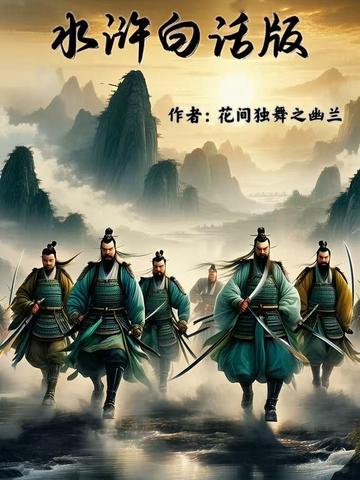
Water Margin is one of the Four Great Classical Novels of ancient China. It was written by Shi Nai'an in the late Yuan and early Ming dynasties, though some scholars believe Luo Guanzhong also helped revise it. Set in the late Northern Song dynasty, the novel follows the Liangshan heroes as they band together, resist oppression, accept an imperial amnesty, and ultimately meet defeat, revealing the turmoil and conflicts of their time.
Main Story
The story follows 108 heroes who are driven to Liangshan for various reasons. They champion justice, resist oppression, and struggle against corrupt officials. In the end, Liangshan accepts an imperial amnesty and joins the court's military campaigns, but the heroes are persecuted and killed amid political infighting, left with unfulfilled ambitions, or meet tragic ends.
Themes and Style
Water Margin exposes the corruption and darkness of feudal society and celebrates the oppressed people's spirit of resistance against tyranny. Its characters are vividly drawn, including the generous and righteous Song Jiang, the formidable Lu Zhishen and Wu Song, and the resourceful Wu Yong. Its lively language and dramatic plot combine a strong sense of realism with a romantic heroic legend.
Legacy and Influence
Water Margin has had a profound influence on later literature and theater, and has been adapted into numerous TV and film productions, as well as storytelling performances. Its portrayal of outlaws and brotherhood in China's history also helped shape the traditional Chinese ideal of chivalry and justice.



Dear readers: Hello! Thank you for approaching the masterpiece! I hope you enjoy my book! I hope to see your addition to the bookshelf, likes, comments and five-star reviews! Your recognition will be my biggest motivation for coding!
Rereading Water Margin gives me a different feeling but the same emotion.
Among the several vernacular versions of Water Margin that I have read, this one seems to be the most attractive!
This book is also the most accurately translated and fluently written work I have ever read. With such a smooth and vivid vernacular version, the difficulty of reading the classics has been greatly reduced. The author has worked hard!