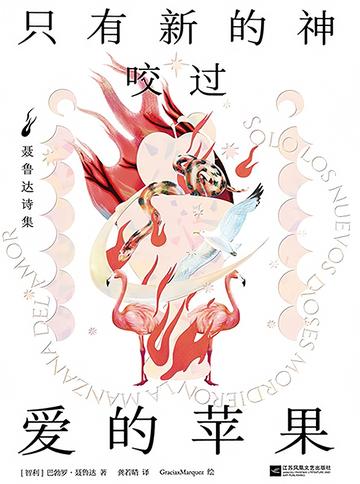
"I like that you are silent" in "Twenty Love Poems and a Song of Despair" has become a famous saying, but the reason why Neruda is Neruda is much more than that. Neruda alone is a lyrical encyclopedia. Similar to his friend Pablo Picasso of the same name, the poet possesses amazing creativity and constantly changes his own style throughout his life, from the sad and charming "Twenty Love Poems and a Song of Despair" to the all-encompassing "Song of Despair". The overall creative style is difficult to be summarized by any label such as Romanticism, Symbolism, Realism or Surrealism. Neftali Ricardo Reyes Basoalto (the poet's real name) successfully created the myth called "Neruda": a heartthrob who charmed with words, a Bohemian wanderer who left his country, a revolutionary who guided the public with poetry, a prophet who listened to the future with his "third ear"... The various aspects of the poet are revealed in texts from different periods. For a writer of this magnitude, it is necessary to present his works comprehensively so that readers can better understand and grasp them. Neruda should be one of the most famous Spanish-language poets in the Chinese-speaking world, but even so, there are still many works that have not been translated, and "The Burning Sword" (La espada encendida) is one of the remaining gems. This collection of poems, published in 1970, is a unique piece of Neruda's late creation.
"The Burning Sword" is a song of life and hope, a re-belief in human love in the face of disaster: "... This is where the book ends and begins." Gone is the green boy who murmured "Tonight I can write the saddest poem", and the epic passion of "The love of America climbs with me" is missing. In the end, what is left is only the difficult and simple confidence that has gone through vicissitudes of life: "I love you. We will survive."
——Professor Fan Ye, translator and translator of "One Hundred Years of Solitude"