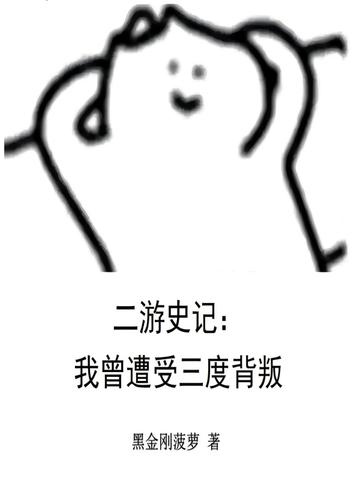
A History of Gacha Games: I Was Betrayed Three Times
二游史记:我曾遭受三度背叛
- Status
- Ongoing
- Length
- 801k Words
- Genre
- Urban
- Subgenre
- Urban High-Concept
- Updated
- 1y ago
- Source
- Fanqie
Synopsis
351Chapters
97Reads
7.1Score
4Listens
103.9kReads · all time
More by this author


In booklists 3



Genshin Impact Stories Set Outside Teyvat
402Books8.6MViews2dUpdated





Game Development, MiHoYo Really Gets It?
163Books15.7MViews2moUpdated
Come Rant and Share Novels About Online Drama and Public Opinion Battles
Looking for books similar to The History of Gacha Games: I Was Betrayed Three Times.
21Books10.9kViews1yUpdated
Reader comments 50
Translated by Google Translate
King Kong Pineapple, Second Journey to History, Three Betrayals, Nine Lives of Upheaval, needless to say its gold content [sneaky laugh]
This is a parallel universe where everything is possible. Do you have such a parallel universe? It's really mediocre and okay.
This is already the third book of this plot. I pray that I can see the end of this book.
I have already resurrected my third life. I will wait and see when the fourth life will come.
I have seen this kind of book on the recommendation list three times, but I didn't expect it to be banned three times [face covering]
Sharp review: Stragglers - an exquisitely packaged "chuunibyou" feast, the epitome of miHoYo's narrative opportunism 1. Empty "black and deep disability": the narrative of a giant baby cloaked in tragedy The background story of Skirmisher is essentially a stitched show filled with Japanese ACG clichés - being abandoned by the gods, betrayed by the world, and anxious about self-existence. It seems to be full of philosophical depth, but in fact it is a "pain literature" at the level of middle school students' compositions. His "revenge" logic is comparable to a naughty child crying after smashing an antique store: "It's all your fault for not giving me candy!" What's even more ridiculous is that Yggdrasil rewrites this deus ex machina-style plot tool, making his massacres (such as the five thunder and lightning transmissions to wipe out families) directly zero. It can be called the cheapest whitewashing technique in the history of the second dimension: there is no price for doing evil, and you can be reborn after being miserable. 2. Character collapse: the history of degradation from villain to giant baby As an executive of the Fools, Skirmisher at least maintained the oppressive feeling of a villain; but after version 3.3, He became an awkward child who needed to be rescued by the player's "overflow of maternal love". MiHoYo tries to cover up the paleness of the character's motivations with "a foul-mouthed arrogance": an "immortal" who has lived for hundreds of years, but his mind is stuck in the rebellious stage of adolescence, and his understanding of the world is comparable to a collection of quotations from short video internet celebrities. His "depth" is all supported by the god-level modeling of the art team and the acting skills of the voice actors - when the skin of the beautiful boy is peeled off, the core of this character is so hollow that you can hear the echo. 3. Business calculations overwhelm narrative logic: the victory of fandom-oriented characters The essence of Skirmishers' high popularity is miHoYo's precise feeding of market data: gloomy and beautiful appearance, battle damage elements, contrasting cute lines, and XP system that accurately targets the two-dimensional audience. In order to sell cards, the screenwriter did not hesitate to distort the plot logic (such as the abrupt "adoption" plot of the Grass God) and force the villain into the "card-drawable" camp. This creative logic of "appearance is justice, wash it off to see the flow" exposes the complete surrender of "Genshin Impact" from character creation to commodity marketing. 4. Cultural appropriation and philosophy collide The Oriental symbols such as Noh masks and Sanskrit horoscopes piled up on the skirmishers are more like cheap accessories to decorate the "high-end" than a cultural fusion. The screenwriter tried to endorse it with Buddhist concepts such as "impermanence" and "revolution of karma", but it only stayed at the level of a noun repeater - a character who destroys others because of "fear of pain" talks about "enlightenment", which is comparable to a nouveau riche holding up a sign to buy the "Heart Sutra" at an auction. The existence of stragglers proves a dangerous tendency in the narrative of "Genshin Impact": when capital discovers that players are willing to pay for the label of "beautiful, powerful and miserable", any plot with a broken outlook and broken logic can use "complex human nature" as a fig leaf. This character is not a tragic hero, but a mirror that reflects the excessive pursuit of morbid aesthetics and the collective failure of true narrative depth in contemporary two-dimensional culture.
There are so many children to play! Ha ha! It's a pity that I am a free prostitute! Play if you can, don't play if you don't want to! Watching community wars every day is very funny!
Hold on, as long as the author keeps writing, I will do anything!
I still advise you to play Genshin Impact. An educator once did an experiment where Chinese children and American children were thrown from a building. The Chinese children used the space bar to open the wings of the wind and were rescued and won. But American children don't play Genshin Impact and just admit defeat. Cultivating the awareness of playing Genshin Impact from an early age is more important than any education. This is the benefit of playing Genshin Impact.
I want to give it five stars because I have played all the games mentioned in the book 🙂🙂 No matter whether the rhythm is real or fake, I just need to watch and have fun. Fight it, fight it, fight it, fight it, fight it, fight it, fight it, fight it, fight it, fight it, fight it, fight it, fight it, fight it, fight it, fight it, fight it, fight it