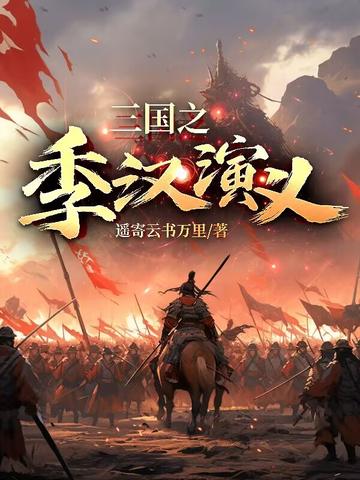
The Romance of Jihan in the Three Kingdoms
三国之季汉演义
- Status
- Completed
- Length
- 1.7M Words
- Genre
- Historical
- Subgenre
- Historical & Ancient
- Audience
- Male
- Updated
- 7mo ago
- Source
- Fanqie
Stats
Tags
Synopsis
Reader comments
In booklists 43
Explore more →
High Quality Three Kingdoms
It doesn't matter who you are in time travel. As long as you have a high status, not the emperor, and know the historical data, you are better than being the lord first. Don't deliberately belittle certain characters and make a strategy to strengthen the game. Don't be short and weak, or weak in the mid-term, with about a million words.
Top-Notch Three Kingdoms Books (Not for Beginners)
There Are so Many Books About the Three Kingdoms. Why Are There Only so Many Good Books? Is There More?
There are so many books on the Three Kingdoms, why are there only a few high-scoring ones? Are there no others?
Three Kingdoms Can Assist Liu Bei, Including Generals and Counselors, but Don't Push the Book Randomly
Travel to the Three Kingdoms and Defect to Cao Cao
Counselor or general
The Three Kingdoms Follows Liu Daer, and It Must Be Followed from the Beginning of the Plot.
The Pinnacle of Three Kingdoms Novels, Don't Be Systematic.
You need brains, not systems.
What Is the Most Popular Historical Text About Quan Tomato?
Read Shuhuang
Where Is the Book About the Unification of the Three Kingdoms by the Shu Han Dynasty! Don't Take Advantage of Liu Guanzhang!
Asking for the Text of Ji Han (Liu Bei Group)
I have always liked Ji Han and want to read a novel about Ji Han's success and the rise of the Han Dynasty. Everyone, see clearly, it's Ji Han, the Liu Bei Group, don't push Cao, Yuan Sunlu or anything like that anymore
Three Kingdoms, Self-Reliance, System, Force
Looking for Someone Who Unified the World with Shu Han in the Late Three Kingdoms Period?
Looking for Masterpieces of the Three Kingdoms with a Score of 9 or Above
I want to see traveling through the Three Kingdoms, but there is no system. Excellent work with a score of 9 or above.
Three Kingdoms: Become a Prince Yourself
Today's Sanguowen is all about working for others. It is impossible to work part-time. It is impossible in this life. There is no backbone at all.
Seeking History + Imaginary + Fighting + Rebellion + High Quality + Peace in Troubled Times
It means that the protagonist performs meritorious service on the border, and then rises step by step, fights with the northern nomads, and then the world is in chaos. The protagonist brings peace to the troubled world.
I'm Looking for High-Quality Historical Articles, Not Mindless and Cool Articles, and Don't Come Here If You Want to Bring Down Your Wits.
I want high-quality historical articles that are good-looking, not intellectually subdued, and not brainless. They can be enjoyable, but don't treat readers as fools. The food officer who deceived Cao Cao at the beginning, and the literary protagonist who always possesses the power of a king, should not be here. They have no new ideas and no brains...
Looking for High-Scoring Masterpieces of the Three Kingdoms with a Score of 9.5 or Above
There Is No Masterpiece in Mini
I would like to read a book similar to "We are in a mini world, and my brain is my cousin."
The Three Kingdoms Focus on Development, with War on the Side! and It's the Kind of Dimensionality Reduction Attack!
My Five Favorite Historical Novels
Emperor's Text Is Magnificent
Is There Anyone from Liu Bei of the Three Kingdoms? It Can Be Liu Bei or a General or Counselor Kneeling Down to Beg for Help!
Looking for Historical Novels, Personally I Prefer Historical Novels
I want to read a book similar to "The Soul Crosses the Spring and Autumn Period and Becomes a Lord (The Little Lord of the Spring and Autumn Period)". Dear book friends, would you like to ask if there are any other realistic novels like "Medieval Life", "Spring and Autumn Little Lords" and "Diary of an Anxi Soldier" that focus on history, politics, economy, war and farming.
"That Cicada That Sword That Year" Is Such a Beautiful Book, Why so Few People Read It
This book is a masterpiece in my mind. It is a kind of enjoyment to read, and people can enter the scene without knowing it.
So well written! ! I just finished watching Old Three Kingdoms. The last few dozen episodes of Prime Minister and Jiang Wei really felt so regretful, and Liu Chen's suicide was really emotional. Then I looked for any books about the later period of the Three Kingdoms, and I finished reading this one in a few days. I wrote It's so good, I cried while reading it a few times. I'm from Sichuan, the Northern Expedition. Jiange is under the jurisdiction of our city, just next to our district and county. Hanzhong is also a neighboring province to the north of us. It's right next to me, a few hundred meters away from my house. The Mingyue Gorge plank road that Xiang built before is still there now. I have walked that road many times. Our school organizes students to go on outings every year. It is on the plank road. For people in northern Sichuan, the sense of immersion is really strong. I was so excited during the Northern Expedition. Who knows, it has been thousands of years since Prime Minister Zhuge passed away. We have not yet succeeded in the Northern Expedition in Sichuan, and Hanzhong has not even been included in the territory of Sichuan Province. I have read a lot of novels, and I think this is the best one I have ever read. For me, the early Three Kingdoms is also pretty good, but the Northern Expedition of the Prime Minister in the late Shu Han Dynasty is my favorite part of the plot.
Talent recommendation! Ma Long, Wei Shu, Zhang Hua, Le Guang! He Pan, Luo Shang, Lai Zhong, Wang Pei! Wu Yan! One: In March of the fourth year of Taishi (268), Luo Xian followed Sima Yan to serve a banquet in Hualin Garden. Sima Yan issued an imperial edict to ask the children of the ministers of Shu, and also asked the ancestors who could be used at the right time. Luo Xian recommended people from Shu County. Chang Ji, Du Zhen, Shouliang, Chen Shou from Brazil, Gao Gui from Nanjun, Lu Ya and Xu Guo from Nanyang, Fei Gong from Jiangxia, Zhuge Jing from Langxie, Chen Yu from Runan, and Sima Yan all summoned and appointed them. These people were all talented people in Shu, and later they became famous all over the world. Two: Li Qiu, Huang Chong, Zhuge Shang, Zhang Zun, Fu Jian and Zhao Guang died heroically. A loyal minister is capable but upright. Zhang Tong was born in Runan County, Yuzhou (north of Pingyu County, Zhumadian City, Henan Province). In his last years, Liu Chan became the governor of the palace. Liu Chan surrendered to the Wei Dynasty and moved east to Luoyang. The ministers of Shu had no followers, but Zhang Tong and Que Zheng gave up their wives and remained single as attendants. In Wei, he was granted the title of Marquis. Zhang Wei, Shu County Shouliang, Jianwei Feiji, Li Yi, Wang Chong and famous Shu Han ministers Shouliang, Li Mi, Chen Shou, Li Xiang, Du Lie, Fan Changsheng (who had the talent of a prime minister and was regarded as a prime minister of the Han Dynasty in history), Wang Hua, Wang Dai, Zhang Yi. Ma Feng was the second son of Ma Dai, general of Pingbei of Shu Han Dynasty, and he was promoted to general of Yamen. Huo Biao, because of Huo Yi's contribution to guarding Nanzhong, was able to serve as an official in Nanzhong for generations, and was the prefect of Yue County in Jin Dynasty. He later surrendered to the Han general Li Shou. Liu Lin, the son of Liu Feng, the adopted son of Liu Bei of the Shu Han Dynasty, was an official at Yamen General. Luo Xian's son Luo Xi and nephew Luo Shang. 1 Zhang Wei (239-310), named Jianxing, was a native of Wuyang County, Qianwei County, Yizhou. The son of Shu Han general Zhang Yi. Zhang Wei was dedicated to learning when he was young. He became famous with Shouliang and Jianwei Feiji of Shu County, and he was promoted to the prefect of Guanghan. 2 Li Yi (?-306), Whose courtesy name was Yungang. A native of Guanghan (now Santai County, Sichuan). A general in the Western Jin Dynasty[1] had a bold and open-minded temperament and lived a luxurious life when he was young. When he was in his twenties, he went to the county school to study, and he was proficient in the exegesis of "Poetry" and "Li". Later, he was appreciated by Wang Jun, the prefect of Guanghan, and was appointed as the chief administrator of Guanghan. When Wang Jun was appointed as the governor of Yizhou, Li Yi was appointed as the chief secretary of Yizhou, and was elected as a scholar. Later, he followed Wang Jun in his campaign against Wu and joined the army together with He Pan. After the state of Wu was pacified, he was granted the title of Marquis of the Pass due to his meritorious service. He successively served as the Army Protector of Longxi, Magistrate of Fanxian County, and Governor of Yunnan. He was also appointed as the prefect of Jianwei by Emperor Wu of Jin Dynasty, and was transferred to envoy Chijie and Nanyi Xiaowei. After he took office, he put down the rebellion of Mao Shen and others. Therefore, the imperial court re-established Ningzhou, appointed Li Yi as the governor of Ningzhou, gave him the title of General Longxiang, and created the title of Marquis of Chengdu County. After that, the Yi people rebelled in large numbers and captured counties. Ningzhou suffered from famine for several consecutive years and infectious diseases were prevalent. One hundred thousand people died, and the officials and people dispersed to Jiaozhou. Li Yi was besieged in Zhouzhi. There were no reinforcements for several years, and he eventually died of illness in the city. 3. Wang Chong entered Luoyang, the capital, together with the famous Shu Han ministers Shouliang, Li Mi, Chen Shou, Li Xiang and Du Lie. They were known as the representative heroes of Liang and Yizhou. Although Shouliang, Li Mi, Chen Shou, Li Xiang, and Du Lie had good friendships, they all became estranged in the end. Only Wang Chong, with his generous and gentle character, treated the five of them equally, regardless of each other, and maintained a deep friendship. 4 Wang Hua's second brother Wang Zhen, named Zhongyuan, served as the prefect of Badong in Jin Dynasty; his third brother Wang Dai, given the courtesy name Jiyuan, served as the county magistrate of Tang Dynasty in Jin Dynasty; his fourth brother Wang Chong, given the courtesy name Youyuan, served as the prefect of Shu County in Jin Dynasty. Hou Shouliang, together with Wang Hua, Li Mi, Chen Shou, Li Xiang and Du Lie, entered Luoyang, the capital, and together they were known as the representative figures of Liang and Yizhou. 5 Fan Changsheng, also known as Yanjiu, also known as Chongjiu, or Mingwen (one writing branch), with the character Yuan. A native of Fuling Danxin (Qianjiang District), he is one of the "Eight Immortals of Shu". Born into a wealthy aboriginal family, he was the leader of the Tianshi Dao in Chengdu during the Western Jin Dynasty. He was the prime minister of the Dacheng regime of the refugee uprising army in the Western Jin Dynasty and was named the "Grand Master of Heaven and Earth at Four Seasons and Eight Festivals". Under Fan Changsheng's persuasion to "recuperate and recuperate, and use less money to promote religion", the Dacheng regime prospered for a time. 6 Zhang Yi was a native of Nanchong, Bajun, Yizhou. The grandson of Zhang Yi, the famous general of the Three Kingdoms. The governor of Liangzhou in the Western Jin Dynasty. Outstanding generals of the late Shu Han Dynasty: Jiang Wei, Dong Jue, Zhang Yi, Liao Hua, Liu Yin, Luo Xian, Huo Ge, Yan Yu. Slightly better, Jiang Xian, Lai Zhong. 7: Xiang Tiao (son of Xiang Lang), Xiang Chong (brother of Xiang Chong), Ma Bing (son of Ma Liang). Yin Zong (a great scholar in the late Shu Han Dynasty), Deng Liang (son of Deng Zhi). Xiangtiao Xiang Tiao, courtesy name Wenbao, was born in Yicheng, Xiangyang (now Yicheng, Hubei Province). During the Three Kingdoms period, he was a minister of the Shu Han Dynasty and the son of General Zuo Xiang Lang. Erudite and knowledgeable, he held various posts in prefectures and counties, and was known for his talents. He was granted the title of Marquis of Xianming Pavilion, and successively served as Yushi Zhongcheng. After the fall of Shu, he served in the Western Jin Dynasty and became the prefect of Jiangyang and the Sima of the Nanzhong Army. Xiang Tiao was erudite and knowledgeable. He had held various posts in prefectures and counties, and was also known as an official. In the tenth year of Yanxi's reign, after his father Xiang Lang died of illness, Xiang Tiao was granted the title of Marquis of Xianming Ting. Jing Yaozhong served as Yushi Zhongcheng. After the fall of Shu, he served in the Jin Dynasty and became the prefect of Jiangyang and the Sima of the Nanzhong Army. [1] Relative members Father: Xiang Lang, courtesy name Juda, was the county magistrate of Linju in the Eastern Han Dynasty. After defecting to Liu Bei, he successively served as the governor of Zigui, Yidao, Wu (Shan), and Yiling counties, the governor of Brazil, the governor of Zanggao, the governor of Fangling, the infantry school captain, the prime minister Chang Shi, Guang Luxun, and the rank of General Zuo, Tejin, and the title of Xianming Tinghou. Historical records 1. "Xiangyang Ji": "Last Words Jiezi" says: "It is said that the master is in and out of the crowd. This saying is that harmony between heaven and earth will lead to the survival of all things, harmony between monarchs and ministers will lead to peace in the country, and harmony among the nine tribes will lead to movement and tranquility. This is why the saint People keep peace and survive to perish. I, the young son of Chu, lost his life early and was groomed by his two brothers, so that he became poor because of his behavior. Poverty is not a human problem, but harmony is the most precious thing. Please encourage him!" 2. "Three Kingdoms": Xiang Lang died in the tenth year of Yanxi. The third son, Tiao Si, Jing Yaozhong, was the censor Zhongcheng. 3. "Xiangyang Ji" says: Xiangtiao, also named Wenbao, was also erudite and knowledgeable. He entered the Jin Dynasty and became the prefect of Jiangyang and the Sima of the South Central Army. [1] Three: 1. Ma Long (date of birth and death unknown), courtesy name Xiaoxing, was from Pinglu, Dongping. A famous general in the Western Jin Dynasty and a weapons expert. When he was young, he was both wise and brave, loved fame and honor, and started his career as a martial artist. During the Taishi period of the Western Jin Dynasty, he was recommended by the prefectures and counties and moved to Sima Du. In the first month of the fifth year of Xianning (279), when the leader of Xianbei in Hexi, Tufashu, led a rebellion, he served as the guard against the captives, the prefect of Wuwei, and innovated weapons and equipment. He served as General Xuanwei, put down the "Qin Liang Rebellion", killed Bald Tree Function, and regained Liangzhou. In the early years of Taikang, he served as the Protector of Pinglu and the Governor of Xiping. He guarded the border for more than ten years. He worked hard in battle and defense, developed production, and gained a great reputation. In the first year of Taixi (290), he was awarded the title of Colonel Protector of Dongqiang and Marquis of Fenggao County. He eventually died in office. He is the author of a book called "A Summary of the Eight Formations" and a volume called "The Fenghou Holding Qijing".
I read it for two days to catch up with the latest chapter. The author's angle of entry is very novel, and he forcibly opened up a path in the beginning of Tianbeng. The plot is fascinating and there are not many poisonous points. It is a rare Three Kingdoms novel. I hope the author will continue to work hard and make more updates [shy][shy]
Very good. I thought it would be a big cheat at the beginning of Skyfall, but I didn't expect it to be that way. And it makes mistakes, and it feels very real, because sometimes there are various unexpected factors in planning, including good luck and bad luck, and the protagonist is not omniscient and omnipotent. Compared with those smooth sailing novels, this novel is real and flesh-and-blood. The disadvantage is that it describes the plot of a foreign country in a large section. These plots are important, but I am not interested in reading them.
The real plot is online, the main line of the entire era is really clear, and the characters are very real. The writing level is also online, and it's so enjoyable to work through every step of the way. I have read a lot of Three Kingdoms and Shu Han texts, and this one can already be ranked in the top three. Really, I predict here that it will become the myth of Tomato Three Kingdoms.
It's really good-looking, especially the military aspect. It's about conquering it bit by bit instead of taking over a large area of land directly with a miracle. This kind of steady and steady plot arrangement is both immersive and exciting. The plot almost raises the ceiling in the Three Kingdoms. It only lacks a little bit of the gorgeous literary grace of ancient Chinese prose.
I have read more than 110 chapters so far, and I feel pretty good. There are not too many poisonous points. Moreover, the protagonist will make mistakes and is not omnipotent. It just gives people the feeling of eating two mouthfuls of rice with some wine. It is not too uncomfortable. It is a good book among the many Three Kingdoms novels I have read. I will deduct two stars for you when the rating comes up to give you a sense of urgency [Like] [Like]
In the early stages of the novel, the author's nose was darker, but now it is getting better and better. The characterization of the characters seems to have gradually become more substantial. As long as this novel can be written smoothly, it will at least become a tomato compared to the three good Three Kingdoms novels. Coupled with the superiority and uniqueness of the subject matter, as long as the author can persist in writing, it will definitely become the spiritual food of many people. So, author, please update me quickly.
It is a rare Three Kingdoms novel that enlightens the people's wisdom and can provide excellent routes for supplementing talents for Shu Han. I don't know if there will be land reform in the future, otherwise I feel that with the resources of Shu, it is impossible to mobilize the people's enthusiasm for production, and the national power of Shu Han will not be able to defeat Wei.
It's not bad. This book is well-founded. The protagonist basically doesn't have a lot of problems. All developments are reasonable. As an excellent flower gardener, he did a good job. He didn't use the gunpowder, a big killer, until later, and it was only used twice. I think a good book has shaped the personality of the protagonist, so this book is successful. If some supporting characters are also flesh and blood, it will be even more successful. At the beginning, I was still thinking about the former prince, so Okay, I forgot about it later, "According to the decree of the Han Emperor, the North King of Hanping was posthumously made emperor, with the posthumous title Yi!" It wasn't until I saw this that I realized that I had not forgotten this character that I liked most at the beginning. Your Majesty did a great job, who could not like your Majesty? There really is an aristocratic family, [laughs], but the ending always felt a bit short, as it did not explain whether the prince inherited his majesty's political ambitions, and whether the aristocratic family had truly resolved it, which is a story for later generations.
The writing is very good, and the content is richer than other historical novels. Military, people's livelihood, scientific research, and court are more or less involved. Unlike some novels that only focus on a certain aspect or just a few aspects repeatedly, I guess you won't get tired of reading it until you conquer Chang'an in the later stage.
The logic is normal, the plot is reasonable, the writing is good, and the thinking is clear!
Among so many Three Kingdoms books, it is one of the few that doesn't waste time on writing romantic scenes between men and women. It's rare. Moreover, the protagonist is not a bad copycat or a super Lu Ban. The plot is not overly flawless. It is considered to be the best book about the Three Kingdoms that I have read in the past two years. I hope it won't break in the middle.
I have read so many Three Kingdoms and this one is well written. The author is careful. The characters and deeds that appear in it are all recorded in history books! Although the rating is a bit low, it does not prevent it from being a good novel.
Objective and true, the author's writing is very good
Tomato is the most comfortable Three Kingdoms novel I have seen so far.
A rare good book, King of the North has always been in my heart. It is so beautiful. Five stars presented.
This is a rare good book about Shu Han in Tomato. It is worth reading.
The main advantage is that there are no big poisonous points that affect the look and feel (I can't think of them anyway). This is the biggest advantage. The text density is relatively high. Although it is less, it is much more readable than those days when there were more than 80,000 words.
The pace is gentle, which is good, and there is no explosive development of productivity in the Industrial Revolution like other time-travel novels! [Like] One person's influence on history is very limited. What the protagonist in the book can do is already the limit of his personal ability. However, small variables trigger the butterfly effect, and many opportunities and coincidences add up to become the force that changes the direction of history! Keep following updates! [Understood]
It's very interesting to read, mainly because it's not as brainless as other time-travel novels. In many places, the limitations of the times are considered. It's really well written, very logical, no cheating, everything is done step by step.
It's very interesting. It's very difficult for the author. Good reviews
This is the first time I have seen someone write about such a late stage situation, and there is no system or IQ loss. I look forward to turning the tide for Ji Han.
It's good to read, and the author basically didn't make up anything. Liu Chen's plot to kill Zhong Hui and Deng Ai was also justified. Well worth seeing Follow up and see how long it lasts
Very good. Both the application of strategies and the way of expressing the romance of the Three Kingdoms are extremely eye-catching. The tension created in the early stage is gripping. The characters are rich and three-dimensional. The protagonist is brave and resourceful, and the supporting characters have diverse images. It is really beautiful.
The imagination and catalog are pretty good, but based on the early plot, there is a high probability that Zhong will know that Liu Chen is in Jiange and will ask them to return to Chengdu to destroy Deng Ai. He will write to Sima Zhao to destroy Shu. This will not only shock the emperor with his great achievements, but also allow Sima Zhao to usurp the throne and destroy the country. It is the best of both worlds.
When I saw many friends who care about the history of the Three Kingdoms debating with the author in the comment area, I knew that this book was good. I haven't read it for a long time now, but I can still see the author's delicate and rigorous writing style from the early description and mid-term strategy. I haven't read such a thoughtful and refreshing article in a long time.
This book should be ranked number one among the Tomato, Jedi Counterattack in the Late Shu Han fandom. I have read almost all the fanfics after the death of Prime Minister Tomato. This book not only fully inherits the romance and regret of the Shu Han, but also writes out that idealism, it also fully incorporates the thoughts of the Little Red Book, sublimating the benevolent Shu Han spirit to the great man of the people. It can be said to be a perfect display and sublimation of the idealism of the Han Dynasty. To be honest, most of the other Shu Han novels did not write that kind of idealism. Maybe many authors wanted to write about the romance of the Shu Han Dynasty at first, but slowly they became ordinary hegemony novels, because idealism must be rooted in ideals. Only by grasping this root can we truly capture the spirit of the Shu Han Dynasty. By the end, the most powerful thing about this book is not the idealistic spirit of the Shu Han people, nor the rhetoric of peopleism, but the fact that the author actually wrote down the strategic action method of Xiaohongshu. In novels about fighting for hegemony, it can be said that whoever masters the spirit and action methods of Xiaohongshu will be the winner of the general trend. So halfway through reading, I confirmed that Shu Han is invincible, not because he has spirit, but because the protagonist has ideas and learned the action methods of Xiaohongshu at the same time.
The first novel that fascinated me, but it must not have a female protagonist [awkward laugh][awkward laugh][awkward laugh] Later, when Guan Yi held Sima hostage, I think it was impossible for Sima Yan to give him food and grass. Because about being able to attack Chang'an like Sima Yan did. You can run away with food, grass and people.
Super invincible, universe invincible, super good-looking