Stats
5.8Score
Synopsis
No synopsis yet.
We haven’t got an English blurb for this one. It appears once the source description has been translated.
We haven’t got an English blurb for this one. It appears once the source description has been translated.
It is best not to take out weapons that are too advanced. Weapons from the 1950s and 1960s are enough. Otherwise, the common man will be guilty of carrying the weapon.
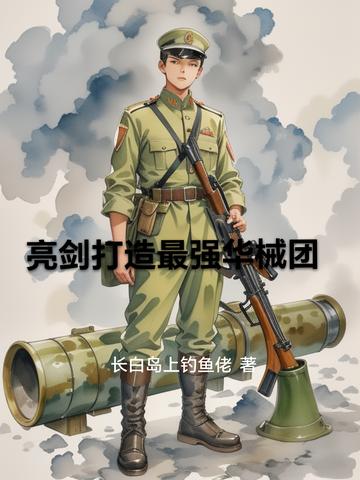
Although the various settings are a bit flawed, the flaws are not concealed. It is a very good book. It is only responsible for the transfer of weapons, equipment and supplies, without excessive interference, and carefully considers various rationalities. It is good and worth looking forward to. I didn't know the author's setting before, so I didn't notice some problems. Relying on our own strength to defeat little Japan and avoid historical regrets is the wish of every real Chinese. To achieve this step, we need to change the historical dilemma of backward weapons and equipment of the Chinese army and lack of guns and ammunition. This is a systemic and comprehensive issue. Weapons and equipment on land, sea and air, ranging from aircraft, artillery and warships, to rifles and grenades, as well as bullets and artillery shells, must be taken into consideration. It can be said that the protagonist has a long way to go. To complete this historical mission, it is very important to choose a reliable support target. The Eighth Route Army and the New Fourth Army have been proven by history, and there is no problem with this. What we can do is to prevent the old revolutionaries from having to worry about weapons and ammunition. Then, on this basis, we will develop some high-yielding and improved varieties to increase grain production. We will have grain in our hands and not panic. Then we will find ways to help the old revolutionaries expand their financial resources, break the blockade, and expand their friends on the unified line. There are too many means available, including medicines, weapons and ammunition, fine crops, and so on. To achieve this, there is one thing that needs to be changed. We need to contact the top management and not be limited to an independent group. Because the level is too low and the samples are too small, there is no comparability at all. If it is just limited to one place, the weapons and equipment used in the past are not suitable, and it is normal for it to go in the opposite direction. For example, tanks, many people write about hundreds or even thousands of Type 59 tanks. However, during the Anti-Japanese War, the Type 59 tanks, not to mention logistical support and training, could not be solved just by traffic conditions. There were few bridges across the country that could withstand 30 tons. There is also training. A qualified 59 tank crew must train for at least two years, and then there is fuel and air defense. The result is deceiving people. Plains and mountains require different weapons and equipment, as do squads, platoons, companies, regiments, brigades, and divisions. How to match these things to maximize their power needs to be carefully considered, and only senior leaders have the time and energy to conduct analysis and research. It's impossible to do it with just one group. Moreover, Li Yunlong himself is not suitable because his overall view is problematic. There is a small detail in "Bright Sword". During the War of Liberation, Kong Jie, who had been suppressed by Li Yunlong during the Anti-Japanese War, surpassed Li Yunlong by a large margin in every aspect, and even Ding Wei fell behind. The reason is Kong Jie's overall view of the situation and his obedience to orders. Because the tasks are different. During the Anti-Japanese War, due to supply difficulties, the first task of the Eighth Route Army and the New Fourth Army was to ensure their own survival, and then to fight the Japanese. At this stage, Li Yunlong was like a fish in water, and his superiors turned a blind eye because he was able to survive. Later, Zhao Gang also said this problem, except Li Yunlong, no one else would be able to do it. But during the War of Liberation, Li Yunlong's shortcomings were infinitely magnified. For example, when he was injured, he went up with the reconnaissance company. Where were the troops? Who will direct? When fighting in a large corps, what matters is the execution of orders and prohibitions, and the importance of working in unison. Any problem in any link may lead to catastrophic consequences. The most typical case in history is Li Guang. As long as this man led an army of more than a thousand people, there were few incidents without incident. It was normal to suffer heavy losses. It was normal for the entire army to be wiped out and to escape alone. The inevitable result of running the army in a mess. I summarized the money-making routines in other excellent novels of the same type. Basically, they all focus on food, clothing, housing and transportation. You can resell clothes and cloth from the past, and you can moisturize things silently. Although the things are inconspicuous, the demand is very high, which is a big fortune. Not to mention food, the demand has never been smaller since ancient times. Moreover, there was no pollution during the Anti-Japanese War. The fish and shrimps of this era are of high quality that can only be found now, not to mention some special varieties. Transportation is also an object in great demand. Many people focus on cars, but ignore the simplest and most common ones, which are bicycles and human-powered tricycles. This is what is really needed most. Why were unicycles so popular before liberation? Take a look at Water Margin, where unicycles appear very frequently. The reason is that transportation is inconvenient and the unicycle is highly adaptable. During the Anti-Japanese War, due to the lack of horses, the mobility of the Chinese army's artillery was seriously insufficient. The imported Swedish Bofors mountain artillery weighed 70 kilograms after being disassembled, which exceeded the camel load limit of local horses. It had to be maneuvered and carried by manpower, so many people died from exhaustion and injuries. The carrying capacity of human-powered tricycles is very strong. Common ones have a load capacity of 200 kilograms, and the specially designed load-carrying models start at 500 kilograms. Only three people can handle most situations. Even mud pits can be overcome with a horse dragging them in front. In the same way, the same is true for Sanbengzi, which is strong and durable, easy to maintain and simple to train. No one would refuse such a useful thing.
Write quickly [angry] [angry] You are not allowed to sleep until you write for 25 hours a day [angry] [angry]
Nice…! One glance to the end.
It's okay, it's good to pass the time [smile]
This is not a bad guy, at most he is the captain of the logistics team.
Ok ok ok
Very beautiful and enjoyable!
Very satisfied, very satisfied
A very good book, with attention to detail in many places. It's just that the update is too slow
Well, it's very well written, and it's one of the few things that attracts people to read.
Clear organization, full structure, and smooth writing. Not bad indeed! Give a good review!
It's a good novel
The writing is very good, but this subject is difficult to write about. I hope I can read your next book.
I quite like this book
It's a pity that I couldn't continue writing. It's a really good debut novel.
It looks good, but it's a bit small. It took me a long time to get this amount.
Because the review ended very suddenly, this book is really well written. Goodbye.