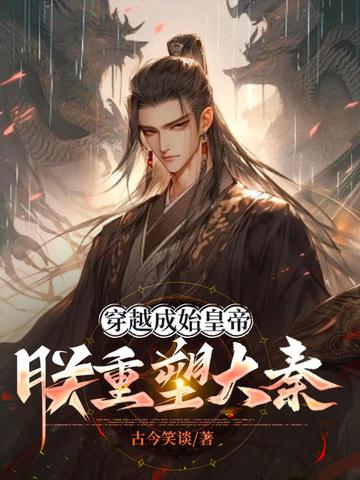
Traveling Through Time to Become the First Emperor, I Reshaped the Qin Dynasty
穿越成始皇帝,朕重塑大秦
- Status
- Ongoing
- Length
- 301k Words
- Genre
- Historical
- Subgenre
- Historical & Ancient
- Audience
- Male
- Updated
- 1y ago
- Source
- Fanqie
Stats
1Reads
5.8Score
137Chapters
7.8kReads · all time





The novel is not bad, the language expression is relatively fluent, but the lack of liveliness may be related to the character characteristics of the protagonist. However, historical figures are not necessarily serious and old-fashioned. The characters are also chosen carefully. Each person has their own characteristics, which are relatively distinct. The plot is gradual and will be coherent later. The plot can be more exciting. However, the number of words in the novel is still too few to satisfy the reader. I hope the author can work harder and add more. Don't stop updating. Come on, author! Come on, author, please update more
Very pretty. Very pretty. Bureaucratic monopoly capitalism is an economic form formed under specific historical conditions and social environment. The following is a more detailed explanation: Basic concepts Bureaucratic monopoly capitalism is a highly monopolistic form of capitalism formed by the bureaucratic class combining political power with economic power in semi-colonial, semi-feudal societies or other specific social forms. It relies on state power to obtain huge profits through monopoly control of economic resources and key industries, serving the private interests of the bureaucratic class. Main performance - High degree of collusion between politics and economics: Bureaucrats use their political power to directly intervene in economic activities and seek economic benefits for themselves or related interest groups by formulating policies, regulations and rules that are beneficial to themselves. - Monopoly on key industries: centralized control of key sectors and important industries of the national economy, such as energy, transportation, finance, etc., Excluding competition from other economic entities in order to obtain high monopoly profits. - Use administrative means to accumulate capital: rely on administrative orders, resource allocation and other means to obtain scarce resources, preferential policies and project approvals, and quickly accumulate large amounts of capital, rather than through normal market competition and technological innovation. - Unfairness and inefficiency of economic activities: Economic behaviors are often not based on the principle of fair competition in the market, but on power relations and nepotism, resulting in irrational resource allocation, low economic efficiency, and hindering the development of social productivity. In old China, the bureaucratic capital represented by the four major families of Chiang, Song, Kong, and Chen was a typical bureaucratic monopoly capitalism. They used political privileges and economic plunder to control the country's economic lifeline, which had a serious negative impact on the social economy and people's lives.
It's super nice to read. The book is logically logical and not brainless! Belongs to the slow-heating type!
The writing is good and optimistic, logical, not brainless, and the plot advances step by step.