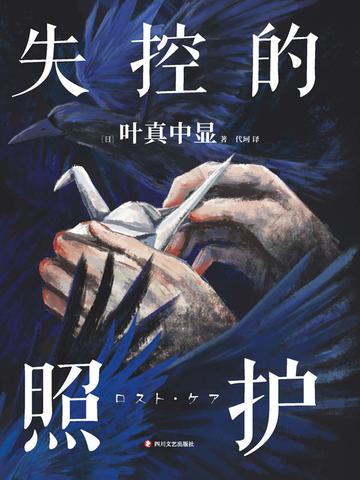
"He" standing in the dock killed a total of forty-three people. Among the serial killings that occurred after World War II, this case had the largest number of fatalities. The victims were almost all elderly. In this trial, "he" confessed to the facts of the crime, and there was no possibility of a verdict other than the death penalty. Everything is planned. "He" smiled. Yoko Haneda, a family member of the victim, looked up at "him" in the gallery. Her mother was killed by "him", but to this day, Yoko can no longer feel the anger and hatred towards "him" in her heart. The news that "he" had been sentenced to death reached the ears of prosecutor Hideki Otomo. "He" probably won't appeal. Everything is in "His" plan. Not just killing people. The crime was exposed, and there were court trials, and even the death penalty, that was all. But by the time Otomo realized the truth of everything, it was already too late...
Reader comments
Thumbs up for narrative shenanigans. In fact, the Japanese have written quite a lot on the nursing subject (I still insist on recommending "Tokyo Poor Woman"). The answer given by this novel is to hope that the social care welfare system will be more complete, so that families who care for the elderly who have lost the ability to take care of themselves will not fall into hell. This cannot actually be considered a version of the answer now that the population is aging very seriously. I think a better answer would be to promote euthanasia and death with dignity. The future is doomed with an aging population and low fertility rates. Alzheimer's disease is also an irreversible disease. Technology has extended human life to eighty or ninety years old in a low-quality state. This is not a good thing. Unlike birds, humans can remain in peak physical condition after adulthood and do not begin to age until the last two years of life. People cannot choose life, but they can choose death. I feel that death education is not widespread, so some people have a moral hazard suspicion about euthanasia.
I have been introduced to this author since "The Scream". Every time I read his works, I feel shocked. Simple words, straightforward narratives, and no tricks, but it has the power to captivate and make people think. Probably all good literary works are like this.
When I first read the book, I resonated strongly with Sakuma when he said Otomo was a hypocrite. I don't think Sakuma is a very evil person. I ignored the fact that he defrauded the elderly of his money. He is a bad person, but he is not an absolute bad person. Dayou is a good person, but I still think he is a bit sanctimonious, but he is not a sanctimonious person. It's always hard to tell which person is an absolute good person and which one is an absolute bad person. People are not so extreme.
I was very touched after reading this book. What the nurse said in the cold wind was, people, sometimes it is better to die. Although some logic is not on the table, it does exist. When it comes to death, the problem becomes unexpectedly heavy. But what is often overlooked is that care before death is also a great test for ordinary families. No matter in terms of financial pressure, mental pressure on children, etc., It is extremely challenging. People, who go between happiness and misfortune, have joy and sorrow, are destined to be pitiful. Inheriting the kindness from their parents, they enjoy unconditional love. The love that can be supported by the impulse of blood alone supports their deep attachment to each other. Therefore, people are trapped in the prison of loving and being loved, and it is difficult to escape for a while. After all, I am trapped here, trapped in watching my parents age and watching their body functions decline but unable to do anything. After all, it is a dilemma between excessive survival pressure and pension burden.
Losing a loved one is not a temporary pain, but a permanent dampness. Perhaps one morning, with the new morning light, he will appear in front of people again, with slightly scarlet eyes and the already moist pillow...
It is the current situation of society and the collision between justice and righteousness. The story is described from multiple perspectives, and the author consciously blurred the portrait of the criminal at the beginning. The result was very unexpected and a perfect reversal. I even went back and watched it twice before I finally understood the truth.
It is a good mystery novel, and the last two chapters are a very good collision of two concepts. There is no winner or lose between the prosecutor and the compassionate murderer, they are just different concepts. Food for thought. Finally, there is also the word "bond". People will voluntarily bind themselves for the sake of bondage and love.
I have already read Ye Zhen Zhongxian's books, Scream, The Long Afternoon, Out-of-control Care, and BLUE. The order in my mind is also the same.
Next, I plan to read the collection of short stories by Ye Zhen Zhongxian.
Ye Zhen Zhongxian is my favorite socialist mystery writer
Two characteristics of his writing are: one is the female perspective, and the other is the chronological order of social events.
When I was reading The Scream, I kept comparing the life of the despised Matsuko. The two heroines share the same tragedy but different triggers, highlighting the inability of women to make choices in a social context.
In the long afternoon, the evaluation of men was profound. An article in "Raising Dogs" consecrated the gods. Men are tools that should die after providing offspring. Men are a bad species with genetic defects and must be killed.
Out-of-control care focuses on the issue of aging. Children's pension burden. Japan's past is our present. Loopholes in the law. Financial deficit. What should we do after our parents get dementia? The state does not provide protection.
"Out of Control Care"
First of all, as a suspense mystery novel, the narrative is somewhat similar to "The Virgin". They are divided into several lines and are narrated by different characters at the same time. The prosecutor's side, the victim's family side, and the murderer's side (the murder process is written using the name "him" and the murderer's daily life is written using the murderer's real name), but with The clever narrative technique of "The Virgin" confuses the relationship between mother and daughter. This novel lays foreshadowing in the two different descriptions of the murderer, and cleverly makes the murderer the one who catches other criminals. The reader is surprised when he finally learns the truth and suddenly realizes the foreshadowing in the previous article.
Secondly, in addition to the suspenseful part mentioned above, the content it expresses is even more brilliant. First, through the mouths of people with different identities (also prosecutors representing the "just" side, front-line nursing staff, upper-level leaders of nursing companies, and family members of the victims), the sharp contradictions in opinions on the issue of elderly care (that is, what is rescue, is it death or continued painful care), and then after continuous in-depth discussions, the social contradictions behind the contradictions in opinions gradually emerged. In the face of such acute social contradictions, it is also a contrast between different groups of people (the vast majority of people in society choose to ignore it, even though this problem has been foreshadowed for a long time; the prosecutor who claims to be just is nothing more than a so-called "righteous man" who stands on a cruise ship and criticizes the kindness of the drowning person; and the choice of the murderer makes the first two people... His behavior is even more ironic and funny. He insisted on what he thought was right, saved others by himself, and finally chose to use his own life in the face of such a cruel and huge reality to make everyone have to focus on this matter, so that in the future someone can stand up and make the world a little bit better without escaping anymore.) At the same time, a more ingenious point is the teachings of the Bible that run through the whole text. In the end, the image of the murderer coincides with the image of Jesus, that is, at the end, "People remember his story, even though his story is quite controversial." "He harmed many people and saved many people." (Actually, there is also my own reflection here. The moral principles of the Bible that the prosecutor has always wanted to understand were finally learned from the murderer. Does this mean that the God in the manual cannot save people (this does not deny the God in the book, but refers to the fact that the prosecutor who has been studying the doctrine is still unable to solve the problem and is hit by reality despite his pursuit of justice). And the real God is in the world? And in the end, are the descriptions of light ladders and angels alluding to the murderer and the people who came out to do practical things to solve the problem after him?)
(Whether he is a good person or not is difficult to tell, but he must be a brave man. This alone is enough for him to gain people's respect.)
It's really a good book. It's like a deep helplessness and shock has been transmitted to the soul. It's really a good book that can be savored carefully. Both the content and the feelings are so sincere that it's really hard to calm down.
This article reflects a very real social problem: when an individual cannot afford elderly care, where will both parties go?
It can be read in conjunction with the translated documentary "Caretaker Killing".
Not only Japan, but China's pension burden is also increasing day by day. Medical insurance is getting higher and higher every year, and they may not live long enough to receive a pension.
This book reminded me of the experience of an old man around me. Caring for a disabled elderly person requires a lot of energy and emotion, and sometimes we may lose sight of their real needs. The stories in the book profoundly demonstrate the complexity of human nature, and the characters' experiences made me empathize with them. It is not only a novel about crime, but also a profound reflection on social reality. Recommended to everyone!
After reading this book, I felt very uncomfortable. It is obvious that the disaster that may happen in the future has been foreshadowed, but we don't know how to change it.
Take good care of your body and try your best to take care of yourself when you are old [Love]
I think the pace may be a bit slow in the early stage, but there is no nonsense. Every sentence is a foreshadowing for the later stage. The later stage is really interesting. Don't give up on this book. It has great stamina. It is worth pondering the events and truths in it.
This is the third book Ye Zhen has read. Compared to The Evil Girl and The Scream, this book may not have the feeling of a revenge novel, but it is equally profound in its thinking about society, with a bit of the feeling of the Thirteen Steps and the extinction of mankind. The same multiple perspectives seem to be the author's characteristics, and the simple and unpretentious words always contain the charm that captivates people's hearts.
For socialist reasoning, it must be Ye Zhenzhongxian
It's so wonderful and worth thinking about. Please consider the difficult issues of elder care through the perspectives of prosecutors, victims' families, and the murderer himself.
Social issues worth pondering
Yes, people have known this for a long time and turned a blind eye.
Discussed the social issues of elderly care and the dignity of life after aging
It made me see a different scene and realize that young people cannot take care of themselves and the elderly are helpless. It's not that they don't want to take care of them, it's just that they are out of breath due to the pressure of life.
To make up the points, I have a lot of insights... Especially about the Golden Rule
Very good, exploring the issues of the social care system in an aging society and the struggles of children from different classes to provide for themselves in old age. Several of Ye Zhen's books are very good to read and highly recommended.
It's a very interesting and thought-provoking book.
It reflects many social issues, and the issue of elderly care is described very delicately and weakly. It still has a big twist. I really like this author's writing style. This is the third book I have read.
Thumbs up for narrative shenanigans. In fact, the Japanese have written quite a lot on the nursing subject (I still insist on recommending "Tokyo Poor Woman"). The answer given by this novel is to hope that the social care welfare system will be more complete, so that families who care for the elderly who have lost the ability to take care of themselves will not fall into hell. This cannot actually be considered a version of the answer now that the population is aging very seriously. I think a better answer would be to promote euthanasia and death with dignity. The future is doomed with an aging population and low fertility rates. Alzheimer's disease is also an irreversible disease. Technology has extended human life to eighty or ninety years old in a low-quality state. This is not a good thing. Unlike birds, humans can remain in peak physical condition after adulthood and do not begin to age until the last two years of life. People cannot choose life, but they can choose death. I feel that death education is not widespread, so some people have a moral hazard suspicion about euthanasia.
I have been introduced to this author since "The Scream". Every time I read his works, I feel shocked. Simple words, straightforward narratives, and no tricks, but it has the power to captivate and make people think. Probably all good literary works are like this.
When I first read the book, I resonated strongly with Sakuma when he said Otomo was a hypocrite. I don't think Sakuma is a very evil person. I ignored the fact that he defrauded the elderly of his money. He is a bad person, but he is not an absolute bad person. Dayou is a good person, but I still think he is a bit sanctimonious, but he is not a sanctimonious person. It's always hard to tell which person is an absolute good person and which one is an absolute bad person. People are not so extreme.
I was very touched after reading this book. What the nurse said in the cold wind was, people, sometimes it is better to die. Although some logic is not on the table, it does exist. When it comes to death, the problem becomes unexpectedly heavy. But what is often overlooked is that care before death is also a great test for ordinary families. No matter in terms of financial pressure, mental pressure on children, etc., It is extremely challenging. People, who go between happiness and misfortune, have joy and sorrow, are destined to be pitiful. Inheriting the kindness from their parents, they enjoy unconditional love. The love that can be supported by the impulse of blood alone supports their deep attachment to each other. Therefore, people are trapped in the prison of loving and being loved, and it is difficult to escape for a while. After all, I am trapped here, trapped in watching my parents age and watching their body functions decline but unable to do anything. After all, it is a dilemma between excessive survival pressure and pension burden. Losing a loved one is not a temporary pain, but a permanent dampness. Perhaps one morning, with the new morning light, he will appear in front of people again, with slightly scarlet eyes and the already moist pillow...
It is the current situation of society and the collision between justice and righteousness. The story is described from multiple perspectives, and the author consciously blurred the portrait of the criminal at the beginning. The result was very unexpected and a perfect reversal. I even went back and watched it twice before I finally understood the truth. It is a good mystery novel, and the last two chapters are a very good collision of two concepts. There is no winner or lose between the prosecutor and the compassionate murderer, they are just different concepts. Food for thought. Finally, there is also the word "bond". People will voluntarily bind themselves for the sake of bondage and love.
I have already read Ye Zhen Zhongxian's books, Scream, The Long Afternoon, Out-of-control Care, and BLUE. The order in my mind is also the same. Next, I plan to read the collection of short stories by Ye Zhen Zhongxian. Ye Zhen Zhongxian is my favorite socialist mystery writer Two characteristics of his writing are: one is the female perspective, and the other is the chronological order of social events. When I was reading The Scream, I kept comparing the life of the despised Matsuko. The two heroines share the same tragedy but different triggers, highlighting the inability of women to make choices in a social context. In the long afternoon, the evaluation of men was profound. An article in "Raising Dogs" consecrated the gods. Men are tools that should die after providing offspring. Men are a bad species with genetic defects and must be killed. Out-of-control care focuses on the issue of aging. Children's pension burden. Japan's past is our present. Loopholes in the law. Financial deficit. What should we do after our parents get dementia? The state does not provide protection.
"Out of Control Care" First of all, as a suspense mystery novel, the narrative is somewhat similar to "The Virgin". They are divided into several lines and are narrated by different characters at the same time. The prosecutor's side, the victim's family side, and the murderer's side (the murder process is written using the name "him" and the murderer's daily life is written using the murderer's real name), but with The clever narrative technique of "The Virgin" confuses the relationship between mother and daughter. This novel lays foreshadowing in the two different descriptions of the murderer, and cleverly makes the murderer the one who catches other criminals. The reader is surprised when he finally learns the truth and suddenly realizes the foreshadowing in the previous article. Secondly, in addition to the suspenseful part mentioned above, the content it expresses is even more brilliant. First, through the mouths of people with different identities (also prosecutors representing the "just" side, front-line nursing staff, upper-level leaders of nursing companies, and family members of the victims), the sharp contradictions in opinions on the issue of elderly care (that is, what is rescue, is it death or continued painful care), and then after continuous in-depth discussions, the social contradictions behind the contradictions in opinions gradually emerged. In the face of such acute social contradictions, it is also a contrast between different groups of people (the vast majority of people in society choose to ignore it, even though this problem has been foreshadowed for a long time; the prosecutor who claims to be just is nothing more than a so-called "righteous man" who stands on a cruise ship and criticizes the kindness of the drowning person; and the choice of the murderer makes the first two people... His behavior is even more ironic and funny. He insisted on what he thought was right, saved others by himself, and finally chose to use his own life in the face of such a cruel and huge reality to make everyone have to focus on this matter, so that in the future someone can stand up and make the world a little bit better without escaping anymore.) At the same time, a more ingenious point is the teachings of the Bible that run through the whole text. In the end, the image of the murderer coincides with the image of Jesus, that is, at the end, "People remember his story, even though his story is quite controversial." "He harmed many people and saved many people." (Actually, there is also my own reflection here. The moral principles of the Bible that the prosecutor has always wanted to understand were finally learned from the murderer. Does this mean that the God in the manual cannot save people (this does not deny the God in the book, but refers to the fact that the prosecutor who has been studying the doctrine is still unable to solve the problem and is hit by reality despite his pursuit of justice). And the real God is in the world? And in the end, are the descriptions of light ladders and angels alluding to the murderer and the people who came out to do practical things to solve the problem after him?) (Whether he is a good person or not is difficult to tell, but he must be a brave man. This alone is enough for him to gain people's respect.)
It's really a good book. It's like a deep helplessness and shock has been transmitted to the soul. It's really a good book that can be savored carefully. Both the content and the feelings are so sincere that it's really hard to calm down.
This article reflects a very real social problem: when an individual cannot afford elderly care, where will both parties go? It can be read in conjunction with the translated documentary "Caretaker Killing". Not only Japan, but China's pension burden is also increasing day by day. Medical insurance is getting higher and higher every year, and they may not live long enough to receive a pension.
This book reminded me of the experience of an old man around me. Caring for a disabled elderly person requires a lot of energy and emotion, and sometimes we may lose sight of their real needs. The stories in the book profoundly demonstrate the complexity of human nature, and the characters' experiences made me empathize with them. It is not only a novel about crime, but also a profound reflection on social reality. Recommended to everyone!
After reading this book, I felt very uncomfortable. It is obvious that the disaster that may happen in the future has been foreshadowed, but we don't know how to change it.
Take good care of your body and try your best to take care of yourself when you are old [Love]
I think the pace may be a bit slow in the early stage, but there is no nonsense. Every sentence is a foreshadowing for the later stage. The later stage is really interesting. Don't give up on this book. It has great stamina. It is worth pondering the events and truths in it.
This is the third book Ye Zhen has read. Compared to The Evil Girl and The Scream, this book may not have the feeling of a revenge novel, but it is equally profound in its thinking about society, with a bit of the feeling of the Thirteen Steps and the extinction of mankind. The same multiple perspectives seem to be the author's characteristics, and the simple and unpretentious words always contain the charm that captivates people's hearts.
For socialist reasoning, it must be Ye Zhenzhongxian
It's so wonderful and worth thinking about. Please consider the difficult issues of elder care through the perspectives of prosecutors, victims' families, and the murderer himself.
Social issues worth pondering
Yes, people have known this for a long time and turned a blind eye.
Discussed the social issues of elderly care and the dignity of life after aging
It made me see a different scene and realize that young people cannot take care of themselves and the elderly are helpless. It's not that they don't want to take care of them, it's just that they are out of breath due to the pressure of life.
To make up the points, I have a lot of insights... Especially about the Golden Rule
Very good, exploring the issues of the social care system in an aging society and the struggles of children from different classes to provide for themselves in old age. Several of Ye Zhen's books are very good to read and highly recommended.
It's a very interesting and thought-provoking book.
It reflects many social issues, and the issue of elderly care is described very delicately and weakly. It still has a big twist. I really like this author's writing style. This is the third book I have read.