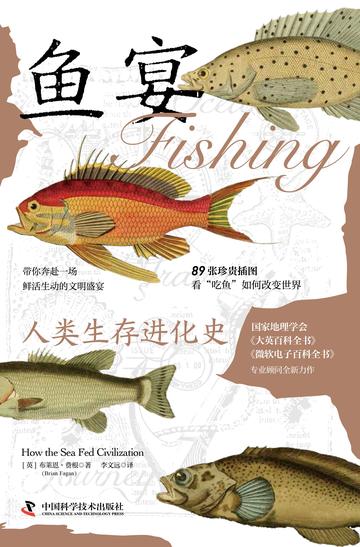
A complete history of fisheries covering all civilizations around the world. Every seafood dish on your table is a witness to human survival.
Nowadays, people can eat fish every day, but do you know where these fish come from and when did humans start eating fish?
Fish, shellfish, crustaceans and other seafood have unique taste and flavor and are an important part of the food culture of many countries and regions around the world. In daily life, seafood is not only a kind of food, but also has multiple cultural and social significances. In Chinese culture, fish is a symbol of wealth and prosperity, and often appears as delicacies in festivals and celebrations, implying "more than enough every year"; goldfish and other ornamental fish not only beautify the environment, but also enrich people's spiritual life; fishing is not only a leisure activity, but also an important social and cultural activity; the seafood industry occupies an important position in the global economy and is an important export commodity for many countries and regions.
This book tells the history of the long-term interaction between humans, the ocean and seafood. Archaeologist Brian Fagan begins with ancient humans catching the first catfish with bare hands 2 million years ago. Through major archaeological discoveries, he reveals how various civilized societies in China, Egypt, Rome, Japan and other countries, as well as the Mediterranean Sea, the Baltic Sea, Indochina, the Andes and other regions, survived by mastering the characteristics of the ocean and various fish species under different geographical and climatic conditions. At the same time, he also based on the present moment, completely sorted out the rise, crisis and decline of the Icelandic waters, the North Sea, Newfoundland Island and the New England fisheries, and looked directly at the unprecedented climate and ocean crises faced by mankind.
Reader comments
This book is really interesting! It tells the long history of humans and fish, from ancient times to modern society, like watching a grand epic. I especially like the stories in the book about how different civilizations eat fish, such as China's "more than enough every year" and the evolution of various fishing methods. I feel like my horizons have been opened. The author's writing style is concise and clear, and the writing style is smooth, making it very comfortable to read. All in all, this is a great book worth reading!





This book is really interesting! It tells the long history of humans and fish, from ancient times to modern society, like watching a grand epic. I especially like the stories in the book about how different civilizations eat fish, such as China's "more than enough every year" and the evolution of various fishing methods. I feel like my horizons have been opened. The author's writing style is concise and clear, and the writing style is smooth, making it very comfortable to read. All in all, this is a great book worth reading!