Stats
9.4Score
25Chapters
Tags
Synopsis
Reader comments
In booklists 9


Science Fiction, a Buried Masterpiece, Really Worth Watching!
20.7MViews276Books1dUpdated

The Protagonist Is Mechanical! No Body! No!
The protagonist is a machine or mecha armor, etc.! No body!
12.3MViews115Books1dUpdated




Original Works of Japanese Anime Movies or Dramas
I want to read a book similar to "Pancreas Story". I really like Japan's two-dimensional culture. The original works of both popular and unpopular shows are fine.
5.1MViews285Books2dUpdated



Cyberpunk High Score Novel, Please (*^Ω^*)
I want to read a book similar to "I'm planning a robbery to penetrate the city of night".
4.8MViews206Books2dUpdated
Is There Any Protagonist Who Is a Mechanical Life Form?
The protagonist becomes a robot and then develops power, or a mecha type
3.5MViews198Books16dUpdated
There Is No Longer Pure Science Fiction in Science Fiction, Right? If You Don't Accept It, Come and Use It
With time travel/rebirth/long Aotian/system all over the street, it's hard not to doubt that it was written by a computer. Is there any real hard science fiction literature?
2.8MViews170Books9dUpdated

The Protagonist Is a Mechanical Body with Autonomous Consciousness! ! or Mechas Too
Thank you——⦁֊⦁
2.6MViews240Books3moUpdated

Hard Science Fiction, the Kind with Strict Scientific Logic! Harder Than Trisolaris!
I want to read a book similar to "Quantum Fossils". Science fiction, not fantasy! Reality!
2MViews234Books1dUpdated
Looking for Science Fiction Novels Comparable to Three Body Problems
Hmm... Like the right eye
1.9MViews224Books1dUpdated
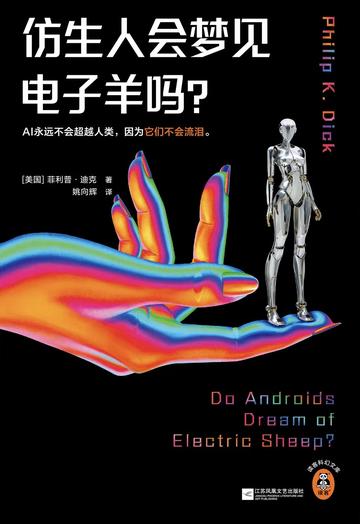
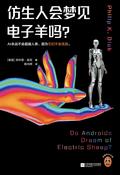
(Spoilers included) The original work of "Blade Runner" is a science fiction work that I have admired for a long time. However, it can be seen that the novel provided more inspiration for later generations. The purpose of the original work is completely different from the later derivative works. Judging from this novel, androids cannot dream of electronic sheep. In the story, androids are the incarnation of evil and are tools used by companies to promote human colonization. Androids have never been able to be compassionate and were born for functions. While they have extremely high IQs, they despise and hate unique natural creatures that cannot come back after death. Judging from the times, androids are people who were completely objectified by ideological propaganda in the context of the Cold War. They are elites on the surface, but in fact they have deeper flaws and are bound to be destroyed. This novel is a rare and very positive work by Philip Dick (I was completely shocked at the end). Under the trend of technological progress and changes in the times, human beings will encounter various pains, and old concepts and beliefs will be destroyed, but the future is always in the hands of human beings, and new beliefs will be reconstructed (at the end there is a speech by Philip Dick about human alienation, don't forget to read it, it is very exciting) Having said that, this is a novel written in the 1970s after all. In the final analysis, it is not about artificial intelligence, but about people in the context of the Cold War. In recent years, people have seen real AI, from the tool chatGPT to the anchor neuro, all kinds of AI have really appeared around us. Some of them have really reached the point where it is difficult to distinguish, but there is one thing that is definitely a must for any science fiction writer. What I didn't expect was that the thinking process of AI turned out to be a black box [face covering]. At this time, those works that used randomness and unreliability to demonstrate free will and the irreplaceability of human beings suddenly seemed so pale and weak. It can only be said that reality is always so magical and unpredictable.
I came to read the original work after watching "Blade Runner". There have been many movie adaptations. From double line to single line. Isidore's part was deleted. I feel that the description of the special person in the novel - his attitude towards life, his struggle to survive despite his low status, his spontaneous kindness and good spirit, his compassion for animals, are all the simple background of human beings after deleting the social and complex side of human beings, which is a natural sense of morality. The scene where the android cuts off the spider's legs, the contrast between Isidore's and the android's thoughts, his tears and his plea to "don't kill it", I think this is a small climax, which touched me very much. The second part of the movie, "Blade Runner 2049," was entirely the work of the screenwriter, and there is no such content in the novel. I just mentioned it once or twice, when Rachel said she was pregnant. The animatronics are not shown much in the movie, and the animatronics are changed into virtual humans. Use virtual humans to express the human need for intimacy. After reading it, I feel that the original work is not as good as I imagined. I still feel that the cuts in the movie are very moderate. There are also plots where the protagonist has a wife but is in love (or rather one-sided attachment) with the android, which was also deleted. The postscript is well worth reading. After so many years, it is quite interesting to see how people of that era thought about the future and the development of human science and technology. It's not outdated today either. Especially now that we have developed to the stage of artificial intelligence, it will be more enlightening and meaningful to look at the thinking of our predecessors on human nature, the definition of human beings, and machine free will.
A famous work in the history of science fiction, this book conducts detailed discussions on philosophical, social, religious and other issues. It uses the ability to empathize as a criterion for judging humans and bionic people, which fully triggers thinking about human nature and consciousness. At the same time, as the pioneering work of the cyberpunk science fiction genre, the plot arrangement is also quite exciting. There are very few works that can perfectly grasp the elements of science fiction and the core of consciousness. If you are a science fiction lover, don't miss it.
As an android, I have superhuman intelligence, but I am troubled day and night because of my lack of empathy, which often brings disaster to mankind. Maybe the company will develop an advanced type equipped with more neurons. Then I will be reborn. Now, I want to go home and touch my electric sheep. Her fur is softer than any melted margarine, and instead of looking at my rigid body with disdain, she resonates with me with her electronic blood. Here I come, electronic sheep((つ✧ω✧)つ
Androids don't dream about electric sheep. Androids cannot dream or imagine, let alone dream about electronic sheep. Even if the electronic sheep are the same kind of machine as them, they will not sympathize with them. They have no empathy. This may be the biggest difference between androids and humans. Humans can even empathize with androids and develop feelings for enemies and aliens. I think this is the greatest reward and the most severe punishment for mankind. So if a human loses the ability to empathize, can he still be considered a human? This may be an issue that should be considered in the "future" when machines and humans are similar enough.
It is not long, but it contains stories with profound thoughts and rich philosophical connotations. This story is good enough to provide endless inspiration and warning to generations of human beings. Looking at the current rapid development of AI, are humans going to create bionic people or are humans going to become bionic humans?
A masterpiece is a masterpiece, it makes people think a lot, and I will search for explanations for details that I can't figure out. After searching, I found that this book is better than I thought. Wuwu likes science fiction the most. In 24 hours, the male protagonist has gone through many transformations: a cold killer → a killer who empathizes with androids → doubting his ability to be a killer → only empathizes with some androids and can continue to be a killer → a killer with feelings. I like the title of the book very much, "Can I Dream?" You can also say "Can I Desire?" Yes, androids have lives and dreams. Androids must be punished for killing people.
I feel an inexplicable sense of familiarity... But I didn't expect it to be the original work of Blade Runner... It is completely different. It can be said that the connotations expressed by the androids who have no empathy and no concept of life and the "people" who are named the androids in the movie are exactly the opposite, which has also created two immortal works. Regarding the strength of the adaptation of Blade Runner, some people have expressed praise. I think that as a relatively independent work, the drastic reform is indeed not bad, but if the adaptation is worse than the original work... Then I disagree. Every paragraph in the book has its own era, which is almost irreplaceable... So I think it is better to call Blade Runner a tribute than an adaptation... To be honest, there are many parts that I didn't fully understand the first time I read it, so I will read it again.
I've always known about this novel, but never read it. I think it's still a very good novel. Although I didn't read it seriously, it was just for fun, but after reading it for a few days, I still completely caught up with the plot. The plot of the novel can leave a deep impression on people, which I like very much. Perhaps due to personal reasons or translation issues, I don't quite understand some of the terms in the novel and the scenes I want to express, but others are quite easy to understand and empathize with. For me personally, I hope I can read it a second time, or even read it a few more times, to have a better understanding.
I'm surprised that the author has such imagination. There are many twists and turns when reading. It's very interesting. Especially when I saw the conversation between Rick and Garland, it suddenly made me wonder if the protagonist was an android, and this was surprisingly consistent with the title of the book. It was so awesome. And when Rick went to the desert to climb mountains at the end, he turned into Mercer again. I can't put it into words but the writing is awesome. This book considers the relationship between humans and androids. While watching, I also felt that androids seemed to have their own emotions, and the boundaries between "them" and humans were becoming increasingly blurred. Quite profound. But maybe it's due to translation issues or something else, it's a bit confusing in some places, but overall it's a good, very attractive book.
Some of the descriptions in the book are also wonderful, such as "The owl died strangely... This plague fell from the sky." It makes people feel the decline of the world. I think this book is worth reading and will make you think about many issues about human nature and the future.
To be honest, I spent one day watching the protagonist's life. But other than the story, I didn't seem to get any more inspiration or anything. But all in all, this is a story that has been in the works for a long time and is very readable. I really read it unconsciously. So, four stars.
It is not an ordinary science fiction, but more focused on philosophy and human ethics, describing the future from different angles, and the Mercerism throughout the story is extremely clever.
Good looking. But I don't understand how the electronic spider that Mercer gave to Isidore came from? Can an empathy box still create things?
The time span is very small, and most of the content is about what happened in one day. Let alone Rick, I am tired [laughing and crying] [laughing and crying] [laughing and crying]
"But from now on you have to stop looking for me, because I will never stop looking for you." 😭😭😭 Recommendation index: ⭐⭐⭐⭐⭐
Still the same question, if an artificial person can possess human thinking and structure, and become closer and closer to a real person, then does scrapping him count as murder? Can these androids have human rights? Even if they can have human emotions, then have humans really broken through the bottom line of the human species? Can we natural people really still regard them as simply tools? As written in the book, Rick, who empathizes with androids, and Rachel, who kills the goat, both broke through the conventional code of conduct and lost their own definition. Compared with the gains brought by android technology, we will lose more. Perhaps by that time, human thinking will no longer be able to remain independent and unique, and we will only go to destruction in confusion and doubt about our own existence.
A good science fiction novel. Finished reading on March 8, 2026 Attracted by the name, I clicked in. So do androids dream about electric sheep? I think so. The future world, chicken brains, androids, bounty hunters. Where is the boundary between humans and androids? If bionic people are so bionic that people can't tell they are bionic people, then a real soul will be created inside the bionic machine. So are they still androids? What shocked me the most in the plot was when Lei confessed to Rick. She said that she was a tool and everything was a conspiracy of the company. In fact, I felt a little nauseous when they went to bed earlier, but when I saw this scene, I was only shocked, an unparalleled shock. I'm not surprised that Rick didn't kill Ray, and later Ray got revenge on Rick by killing his goat. Unexpected but reasonable. Revenge, a revenge from the androids. When I think about it, Lei can already dream about her electric sheep. The setting of empathy between androids of the same model is also very interesting. The difference between androids and humans is very profoundly portrayed in Puqie Spider. The chicken brain is a bit pathetic. Personally, I don't like Rick that much. (I feel a little disconnected) But I have to admit that he is a powerful bounty hunter and a powerful person (killing five androids in one day and remaining calm in such an impact) All in all, a very good book worth reading
The original intention of the design of androids is to be no different from humans. Their behavior will be updated and iterated again and again, but they cannot think, and their subconscious reactions are different from humans. Dreaming about electronic sheep is their missing emotion. They can only imitate rather than respond with emotion. Deckard realizes his empathy for the androids, and the last part of Mercer's life is fake but will always exist. Is the story of Deckard returning home at the end a sign of giving up his obsession with real animals? Finally, I think: androids don't dream about electric sheep.
Although it is a previous science fiction novel, it has certain limitations, but it is still very classic. The science fiction in the book is actually derived from the philosophical level, and is not directly described or focused on it. Compared with the sense of technology, there are more philosophical discussions, ethics, human nature, difference, alienation, future, etc. There is indeed a difference between humans and androids, which can be clearly seen in the book, but the author sometimes intentionally or unintentionally makes the androids more like humans. Is it necessary? Time, so there will be a sense of fragmentation. The protagonist Rick has changed a lot, which is a pity. After all, there are only a few "powerful" people like him. It is difficult for ordinary people to kill a living body. This may be the reason for his change. He has always had doubts in his heart?
There are not many elements to apply in this book. It mainly revolves around bounty hunters, chicken heads, animatronic animals and real animals, androids, and Mercerism. Let's describe these aspects. Throughout the novel, there are not many incidents and the story is very simple. The author connects various elements through the main line of bounty hunters arresting androids fleeing on earth. Specifically regarding the description of the psychology and personality of the androids, the characters are not very full. And the narrative about fighting and other aspects is relatively plain and concise. And the follow-up situations of people like Chicken Head and others in the book are not written in very detail. But as the story unfolds, the description of humans and androids allows people to see that when the definitions of humans and machines gradually blur, what are the essential differences between humans and androids? Is it just a matter of emotional empathy? People have emotions and the ability to empathize, which makes their lives very painful. He had to use the Mercer religion to create a myth to comfort his heart, use the empathy box, and forcefully tamper with the brain's metabolic system through various means to maintain his emotional stability. It makes people become ruthless and stable. The bionic people have emotions, but no empathy. The emotions they have are just data calculated by mechanical algorithms. The predictability is an instinctive reaction, not the complex emotions of humans. There are many aspects in the story, and there are many scenes where we gradually blur the feelings between the human bounty hunter and the androids he arrests and hunts. Through the pursuit in the story, it highlights the cold-blooded selfishness and ruthlessness of the human bounty hunter. But androids have the most primitive survival instinct like humans, with fear. As the plot progressed, I learned that the reason why people are human is that they have impulses and uncertainties in various aspects. Regardless of the emotions that bionic people show, it is just a layer of mechanical algorithms under their cold rational thinking. Emotions can bring some devastating blows to people, but they are also the essential difference between humans and robots. In the end, the completion of the bounty hunter's mission also heralds the collapse of his empathy ability and his emotional collapse. The end of the bounty mission also heralds the completion of his mission, leaving only nothingness. But an electronic toad later made me understand that a person who has been destroyed and then reborn does not need some sacred rituals, but only needs an ordinary incident to regain hope of life. At the end of the book, the author gives a speech about humans and machines. I think this is the most important thing. Unlike the previous paragraph, he conveys the truth to us through metaphors and stories one by one. This speech directly showed the development of human beings, the development of the times, the evolution of some of our individual thoughts, and the difference between the human spirit and the bionic man as a humanoid machine as he defined it. His words had certain limitations of the times. What it promotes includes the spirit of rebellion and egoism. Individualism seems not to be comprehensive, but this is exactly what we are as human beings, as individuals, as living beings. We are born in the world, and we will be a small part in a certain instrument. But we also understand that each of us is unique, that our body can be bound, that it can become a part that keeps a huge instrument running, over and over again, but our soul. We must always maintain a small rebellious spirit and find ourselves at all times, when the human spirit and body are at the same time. Bound by a value, a ritual, a container, our souls are completely charged by the body. So what is the essential difference between us and a machine? Personally, I believe that this kind of rebellious spirit does not represent behavioral rebellion and is in opposition to the value system and social system, but it is a pursuit of finding a peaceful and fulfilling life that allows you to be sure that you are alive, enjoying, and understanding the world at all times, accepting different new things every day, finding an unstable pursuit in stability, and a realm that proves that your heart is still beating and you are still alive. Instead of that instead of just leveling off. I just want to maintain a stable, heart-dead state.
I think it's not just the ethical issues of bionic technology, this book also discusses people's beliefs about the development of technology. The protagonist's change in his beliefs is particularly exciting.
The classics will be passed down forever, but they have been adapted into movies. Highly recommend this book! ! ! The appendix is also worth reading as a gentle speech. It is worthy of being a classic theme created by fans. Electronic pets are my poetry and distance. Bionic humans will not be electronic pets, nor are they my kind. No matter how alienated people are, they are still unique. Believe in yourself and tolerate yourself.
Androids don't dream about electric sheep - just like Mercer doesn't patronize chicken brains, it only patronizes people who need to know they're not androids. Or androids. I like the young man's take on the Vietnam War broadcasts in the final appendix—just unplugging the speakers and making new ones himself. Maybe it was stolen from a police car, maybe it was a phone signal obtained from somewhere. As a new generation, I will not and do not want to care about whether there will be giant robots. I hold the Bible and say with a piety comparable to St. Augustine: "Because we will eventually be rusty." The times are very chaotic, and my energy is limited. My central task is to find a sewing machine that I like. As for whether it will sue me, I will find it first.
A famous book is also of enlightening significance in the current era of artificial intelligence. At present, AI is iterating repeatedly and becoming more and more intelligent. It has surpassed most humans in intelligence. The worry about AI replacing humans does not stop in science fiction movies and novels. Artificial intelligence companies are blindly pursuing technical optimization for profit, but are becoming more and more relaxed about technology control, and top programmers are leaving their jobs. We often think about how we should face the career crisis and win in the game with AI now. What is the difference between humans and AI? The bionic people in the book can be understood as artificial intelligence with entities and a certain degree of self-awareness. The author regards empathy as an important criterion for judging people. Machines cannot truly empathize. At best, they can only understand based on logic, but they lack the kind of true love that does not require logic but arises from the encounter of two hearts. At the same time, this is a dehumanized world. The pressure of social competition and the talent training system highly emphasize the importance of logic, while the ability to empathize is underestimated. In an environment like the college entrance examination, even in liberal arts subjects such as Chinese, the genre of composition is mainly argumentative. How many people really empathize with the text when doing reading comprehension, rather than answering questions with formulas. Humanities and social sciences have also been gradually marginalized in an environment where science and engineering are prevalent. While reading, I kept thinking that if I lived in the world in the book, I might not be able to pass the test. The existing MBTI divides people into F and T types based on empathy and logic, and I belong to the latter. To some extent I also overlooked the importance of emotion. I still have some thoughts about the difference between humans and machines. In the appendix of the book, the author writes about his identification with mentally ill groups and young people with rebellious spirit, and opposes society's efforts to format and discipline them. Lin Qingxuan once said that the power of life lies in disobedience. Machines, even machines with a certain degree of self-awareness, are more passive and lack subjective initiative. For this reason they are also called tools, acting according to instructions. While humans are more capable of rebellion and innovation, machines can only learn based on existing materials and cannot go from zero to one. In addition, the author mentioned that people are also controlled by life components such as reflex arcs. Indeed, to a certain extent, we are like machines. Our organs, cells, and signal pathways are all like preset programs. What we think of as autonomous consciousness may actually be instructions given by the body's program. Philosophical discussions in this regard are not uncommon.
To be honest, I didn't have high expectations at the beginning. After all, science fiction novels are all limited by their time. But after reading it, I found it very exciting. It has nothing to do with the science fiction part but the plot is very cleverly designed. Now I am very curious about the ending.
It's wonderful, you have to watch it carefully The story is simple but the plot is rich in emotion
The development of AI this year, combined with this book, really makes me think about it with horror. Of course, I believe that technology companies in the future will not be so stupid. It is difficult to tell whether the bionic person is real or fake, and the difference must be determined by machine testing. After the major professional AI robots really come out. It will definitely free the hands of working people, so that everyone can really do what they like. The future of our generation should be able to witness this process.
The book introduces a test, the Voight-Campis Empathy Test, to differentiate between androids and humans. This setting reflects the author's concern for "empathy" as a human trait, and triggers readers' thinking about what "real" human beings are. [Notice]
Science fiction, about 7 bionic people smuggling from Mars to the earth. The protagonist goes to scrap these seven people as a bounty hunter. In the process, the protagonist thinks about the bionic people. In the past, he firmly believed that the bionic people are machines, but after that day, his ideas were changed invisibly, and the article ended abruptly. This book also explores an important theme - life. In the world view of this book, there are fewer and fewer lives on earth except humans, many animals have been extinct, and many pets are now electronic pets.