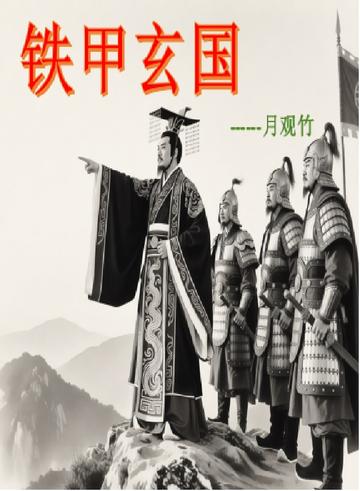
In the final years of the Dasheng Dynasty, a feeble-minded emperor rules while the eunuch Huo Zheng controls the court. Under the pretext of “suppressing demons,” he extorts the people without mercy. The realm is carved up among nine military governors, and the people live in misery. In Hanzhou, on the northern frontier, the powerful Li clan is wiped out overnight. Only a swaddled baby is left behind in a mass grave, marked by a red-moon birthmark between his brows. The blizzard stops the day he is born, and the Imperial Observatory submits a secret report: “A red radiance assails the imperial throne. A powerful minister is about to rise.”
Ten years later, the boy Li Xiao returns from the wilderness. He watches the world with a cool gaze and keeps a blazing fire in his heart. He is versed in poetry, strategy, and statecraft, and just as skilled with the blade and political maneuvering. From a low-ranking official in Hanzhou to the commander of a mighty army in black armor, from invoking the emperor’s name to command the feudal lords to pacifying the northern wastelands and subduing the southern Baiyue, he uses blood and iron to forge a new order and cunning to tear alliances apart. Yet on the banks of the Chilan River, he suffers the greatest defeat of his life. That night, flames reflected on the river consume not only the warships, but also his obsession with “Heaven’s will.”
He promotes men of humble birth, introduces farming settlements, and builds the foundations of the Xuan state, yet he also kills in his dreams and executes gifted men. He orders a simple burial and divides his incense among his concubines. He dies without ever taking the throne, but lays the foundation for a new dynasty. The world calls him a “masterful warlord,” honors him as “Wei Wu reborn,” and fears that he would “rather betray the world.” But only he knows the truth: his whole life was spent trying to seize a sliver of light that would not be swallowed by the abyss of a chaotic age.