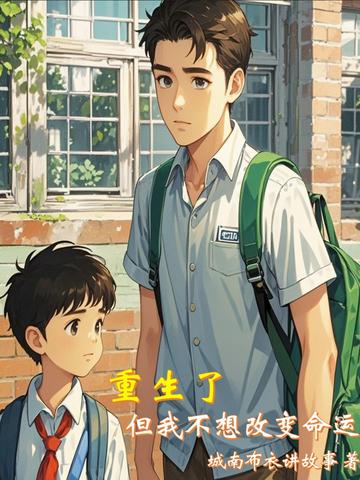
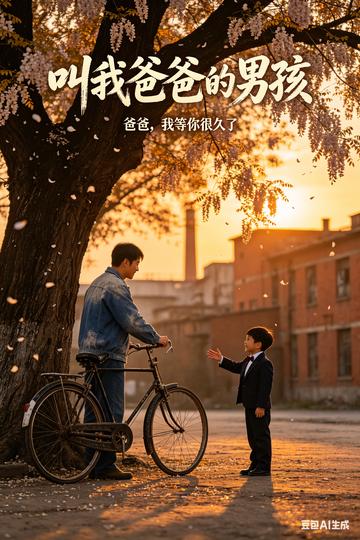
Eight-year-old Liu Zhi's life is thrown into disarray by fragments of memories from the future and the eerie ringing of a copper bell outside the mortuary. He "sees" a boy named Zhizhi playing the piano and calling him Dad. He understands that he must follow a particular path of destiny to reach the future where Zhizhi is waiting.
Yet the pull of reality is powerful. The old feuds in his family, the confusions and choices of growing up, and feelings quietly beginning to blossom all keep dragging him away from the "correct" path. Whenever he strays past a dangerous threshold, usually accompanied by a fatal accident, some of these accidents are fate's doing, while others are deliberate. But his "death" is not the end. It is a shocking transition.
His consciousness does not travel back in time, and he does not start over. His current life's path is forcibly switched, and he enters another world of "possibility," taking over the life of a Liu Zhi of the same age whose experiences have already diverged.
He does not carry his memories and "grow up again." Instead, carrying the memories and lessons of every world he has lived through, he "continues" another parallel life. Zhizhi's call remains his unwavering beacon.
This is a lonely search carried out in the cracks between parallel lives. Liu Zhi must contend not only with the specific hardships of life in each world, but also with the powerful inertia of fate itself. He travels through the familiar yet subtly different streets of Liushi, through old Western-style mansions that feel both known and strange, and among different versions of his family and friends, searching for the one road that leads to his son.
His goal has never changed: among the infinite parallel worlds, find and reach the "correct" version where Zhizhi exists, and fulfill a father's promise that spans time and space.

It's a rare and good article. Rebirth is not a complete rebirth, but memories slowly emerge. The historical writing and the sense of mystery are so attractive!