Our country has a very long history. Sima Qian wrote Records of the Grand Historian, a work with such a detailed format that he became the founding father of later historians. Ban Gu followed in his footsteps and wrote the Book of Han, and the names of Sima Qian and Ban Gu became famous together. Later generations bought these two books just because they'd heard the titles. Ask them if they've finished reading them, though, and they won't know what to say. Why? Because both books are long and difficult. You can't finish them in ten days or half a month, and their meaning is profound. Without some grounding in classical Chinese, you can't even make sense of the sentences. Readers get lost before finishing a single volume, so why would they keep going? By contrast, unofficial histories and odd bits of lore are easier to remember. Why? Because unofficial histories are entertaining and easier to take in than official ones.
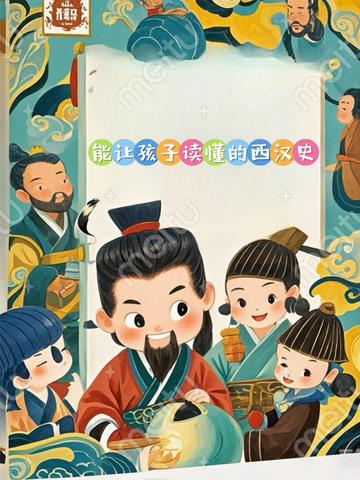
I'm no great scholar, but I'll tell historical stories in the form of a novel, working backward from the present to the Qin and Han dynasties. The Qin dynasty, from Qin Shi Huang to Ziying, lasted only fifteen years, so there isn't much to write about. It was a transition between the Zhou and Han dynasties, so I'll just mention it as part of the Han story. The Han dynasty had two capitals that took turns serving as the seat of government, and it lasted more than four hundred years. The Former Han lasted 210 years. There were imperial consorts and powerful maternal relatives, and all sorts of upheavals, so peaceful times were few and disorder was common. The worst problems came from the consorts and their relatives. Gaozu fought so many battles to establish the Han dynasty, only for the imperial harem to seize power from him. Emperors Wen and Jing learned from those troubles, and there were fewer disasters in their reigns. Then Emperor Wu doted on Tian Fen and Wei Qing, and the consorts and their relatives were powerful again. In short, the Former Han was more or less tossed around by imperial consorts and their powerful relatives. I drew on both official histories and unofficial accounts for this book, hoping to tell everyone the story of the Former Han as a way of making history accessible. I wrote it in a hurry, so there may be mistakes. Experts, please feel free to point them out!
It looks good, can it not look good?