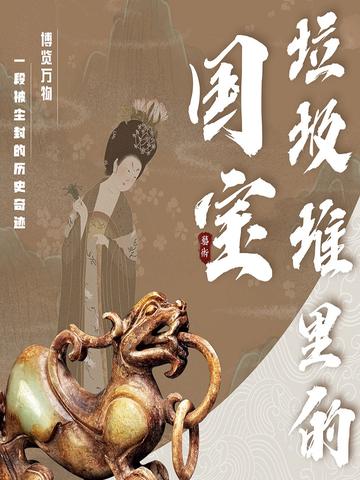
In the long course of history, some precious cultural relics have been forgotten in the dust for various reasons. They may have been abandoned in inconspicuous corners, or even waiting to be discovered in garbage dumps.
The reappearance of these national treasures is often accompanied by legendary stories. They not only bear witness to historical changes, but also among the many forgotten national treasures, Wang Xizhi's "Han Qie Tie" is undoubtedly a striking example. This calligraphy work was once abandoned until one day, it was discovered by a careful cultural relic worker in a waste paper pile, thus unveiling its mysterious veil.
The discovery of "Han Qie Tie" is not only a new understanding of Wang Xizhi's calligraphy art, but also an encouragement to the protection of cultural relics. It teaches us that priceless treasures can be hidden even in the most unlikely of places. The reappearance of this post allows us to have a glimpse of the calligraphy style of the Eastern Jin Dynasty and feel the cultural atmosphere of that era.
Another fascinating story is about an ancient Buddha statue. During a rural cleanup, a Buddha statue was discovered among the rubbish. The discovery of this Buddha statue is not only eye-catching because of its exquisite craftsmanship, but also because of the religious and cultural value behind it. After expert appraisal, this Buddha statue was confirmed to be a work from the Northern Qi Dynasty. Its existence provides us with valuable physical data for our study of Buddhist art of that period.
The discovery of these national treasures is often accompanied by chance and accident. Every accidental discovery is a kind of respect for history and an inheritance of culture.