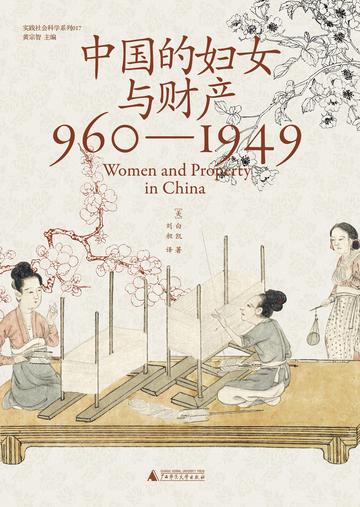
The manuscript is a research monograph on Chinese legal and social history. In the past, most studies on property inheritance in China focused on men, but men's property inheritance rights changed less in ancient times, so this kind of research mainly presents a static picture. This book turns the focus of research to women, analyzes the important changes that Chinese women's property rights have experienced from the Song Dynasty to the Republic of China, and presents a picture of diverse and dynamic changes in property rights. Only by studying changes in women's property rights in China will we have a more complete understanding of the significant changes in traditional Chinese property rights as a whole. This book was previously published by Shanghai Bookstore (2003, 2007), and has been revised and reprinted this time.
Reader comments
This book's writing style is rigorous and the information is detailed, which gave me a deeper understanding of the historical changes in women's property rights in China. The author Bai Kai presents a dynamic and true historical picture with his in-depth research and vivid writing style. This reminds me of the book "Women and Power". They both focus on women's status and rights in society. I think books like this are of great significance in promoting gender equality and social progress.
Teacher Bai Kai's historical masterpiece analyzes the changing context of Chinese women's property rights from multiple dimensions. Considering women's property inheritance rights in a dynamic process is quite enlightening for current issues such as property disposal of unmarried women, rural women's homesteads, inheritance of married women, family support and property distribution. The book contains detailed historical materials and is supported by massive data and documents, breaking through the previous research on women's property inheritance rights that was limited to one time and one place.




This book's writing style is rigorous and the information is detailed, which gave me a deeper understanding of the historical changes in women's property rights in China. The author Bai Kai presents a dynamic and true historical picture with his in-depth research and vivid writing style. This reminds me of the book "Women and Power". They both focus on women's status and rights in society. I think books like this are of great significance in promoting gender equality and social progress.
Teacher Bai Kai's historical masterpiece analyzes the changing context of Chinese women's property rights from multiple dimensions. Considering women's property inheritance rights in a dynamic process is quite enlightening for current issues such as property disposal of unmarried women, rural women's homesteads, inheritance of married women, family support and property distribution. The book contains detailed historical materials and is supported by massive data and documents, breaking through the previous research on women's property inheritance rights that was limited to one time and one place.