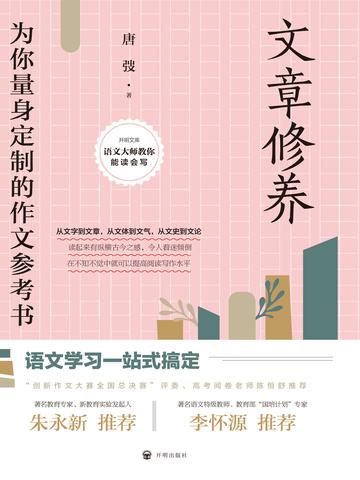
Mr. Tang Tao wrote A Guide to Good Writing when he was twenty-seven. At the time, it was intended as “supplementary reading for young people.” The first part, consisting of six chapters, explores language and its evolution, tracing the development from written characters to prose, from prose to literature, and from classical Chinese to the vernacular. It is largely a historical account. The second part, with eight chapters, focuses on composition and rhetoric. It discusses the practical use of characters, words, sentences, and various rhetorical devices, along with details such as how to write dialogue. It also addresses broader aspects of writing, including gathering material, establishing a theme, and creating a distinctive tone.
One of the book’s greatest strengths is its accessible, concise, and lively style. It is neither as dry and rigid as a textbook nor weighed down by “eight-legged essay” formalism. Rather than arguing abstractly, the author makes his case through history and an abundance of vivid literary examples, including poetry, songs, classical and contemporary fiction, and foreign literature. His arguments are well supported and persuasive, yet clear and easy to follow, with the ordinary reader’s perspective always in mind.