Using the Huai River as its framework and the Mingzhongdu City on its banks as its focal point, this book vividly recounts the region’s historical and cultural transformations, from the Huaiyi culture through the end of the Ming and the beginning of the Qing.
For years, the author conducted more than a dozen field trips to the middle and lower reaches of the Huai River and the Jiangnan region. Their travels took them to Nanjing, Huai’an, Xuyi, Fengyang, Dingyuan, Mengcheng, Lai’an, Mingguang, Bengbu, Chuzhou, Suzhou, Changzhou, Songjiang, Jiaxing, Zhuji, Qingtian, and other cities and counties. They uncovered, excavated, and studied historical sources, and visited rural historical sites in person, tracing the origins and development of Huai River culture and Jiangnan culture, as well as the distinct qualities that emerged from each.
Through the rise and fall of Mingzhongdu, the city Zhu Yuanzhang built beside the Huai River, the book explores the reasons for the decline of culture in the Huai River basin during the early Ming dynasty and the region’s influence on Jiangnan’s economy and culture. The Ming dynasty was an important period in China’s more than two thousand years of imperial autocracy. Zhu Yuanzhang’s emergence at a particular moment in Chinese history was inevitable. Yet the institutions he devised and the governing methods he vigorously imposed directly led to nearly three centuries of stagnation and even regression.
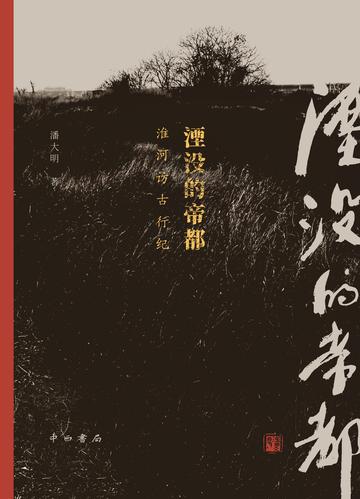



This book uses the Huaihe River as a clue to describe the historical and cultural changes in the Huaihe River Basin, and also discusses some important issues in the early Ming Dynasty. The author makes history vivid and interesting through on-the-spot investigation and study of historical materials. This reminds me of "Things of the Ming Dynasty", both of which tell history in an easy-to-understand way. Moreover, the discussion in the book about Zhu Yuanzhang's institutional design and governance methods also reminded me of the social conditions in the middle and late Ming Dynasty in "The Fifteenth Year of Wanli". All in all, this is a great book worth reading!