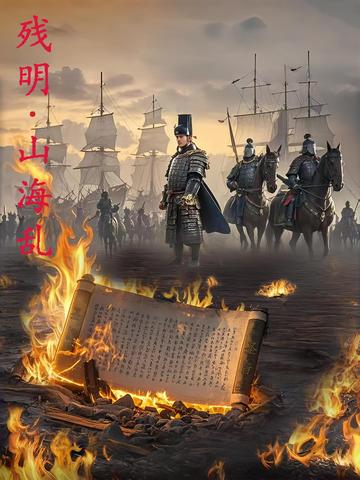
It is a time-travel novel, an imaginary history, no system, no golden fingers, not a stallion, relatively rigorous and close to historical facts.
From a unique perspective, it describes the swaying mountains and seas in the late Ming Dynasty for decades.
According to classic research, the heart-stirring troubled times are restructured from multiple dimensions such as society, humanities, human nature, war, emotion, art, technology, etc.
There is a lot of foreshadowing in the early stage, and the light and dark story lines are intricately mixed. The later stage is powerful and refreshing, perfectly solving various pain points in the hearts of Chinese people about history.
It is a brain-burning work with a plot that is exquisite in every detail. Fans of mindless novels can take a detour in advance.
Reader comments
The rating of this book should be between 8.5-9.0
As a bookworm of late Ming Dynasty who has read Old White Bull, Keshan Meng, Grizzly Panda, Braggadocio... I think readers who plan to devote themselves to writing should read this book and learn from its strengths and weaknesses.
It can be seen that the author has a grand writing framework. This book is pretty average. The setting of the time traveler's attachment is also very novel. The explanations of geography, allusions, and regulations are very detailed.
The author himself has several million words of manuscripts saved. Did the author refer to other late Ming Dynasty texts when writing? The author should know that readers who read historical texts, especially those from the Ming Dynasty, are of relatively high quality, similar to readers who read Western Fantasy, Cthulhu, and magic. Without a certain knowledge reserve, it is difficult to get recognition for your writing ability...
This kind of thing is explained in detail, and it is the longest article of this type...
The author has a detailed background explanation, there is a masterpiece "Lingao Qiming", but the detailed description of this book is to describe the progress of technology and system...
Has the author read "Sin City"? The author's description is short and full of visual sense. Many authors have imitated this writing style. However, in the late Ming Dynasty, Lao Bainiu's writing method was earlier and more skillful (unfortunately, the author was ill and was unable to update)
The author can use the basic settings of this book to write urban and fictional articles with historical backgrounds. It can exercise writing skills, and this kind of readers prefer explanations.
There is no reason to say, the author does have a good understanding of history, but why does the protagonist keep assisting others? Lin, an ancient man, is more like the protagonist. In fact, after careful analysis, Lin is definitely not the protagonist, but the previous writing makes people feel that he is. If the protagonist fully assists, he may eventually become the emperor, but the protagonist will definitely die. So the time traveler will definitely be the protagonist later.
The rating of this book should be between 8.5-9.0 As a bookworm of late Ming Dynasty who has read Old White Bull, Keshan Meng, Grizzly Panda, Braggadocio... I think readers who plan to devote themselves to writing should read this book and learn from its strengths and weaknesses. It can be seen that the author has a grand writing framework. This book is pretty average. The setting of the time traveler's attachment is also very novel. The explanations of geography, allusions, and regulations are very detailed. The author himself has several million words of manuscripts saved. Did the author refer to other late Ming Dynasty texts when writing? The author should know that readers who read historical texts, especially those from the Ming Dynasty, are of relatively high quality, similar to readers who read Western Fantasy, Cthulhu, and magic. Without a certain knowledge reserve, it is difficult to get recognition for your writing ability... This kind of thing is explained in detail, and it is the longest article of this type... The author has a detailed background explanation, there is a masterpiece "Lingao Qiming", but the detailed description of this book is to describe the progress of technology and system... Has the author read "Sin City"? The author's description is short and full of visual sense. Many authors have imitated this writing style. However, in the late Ming Dynasty, Lao Bainiu's writing method was earlier and more skillful (unfortunately, the author was ill and was unable to update) The author can use the basic settings of this book to write urban and fictional articles with historical backgrounds. It can exercise writing skills, and this kind of readers prefer explanations.
There is no reason to say, the author does have a good understanding of history, but why does the protagonist keep assisting others? Lin, an ancient man, is more like the protagonist. In fact, after careful analysis, Lin is definitely not the protagonist, but the previous writing makes people feel that he is. If the protagonist fully assists, he may eventually become the emperor, but the protagonist will definitely die. So the time traveler will definitely be the protagonist later.
The current plot is not a surprise
I've read 40 chapters, it's a good novel [Like]