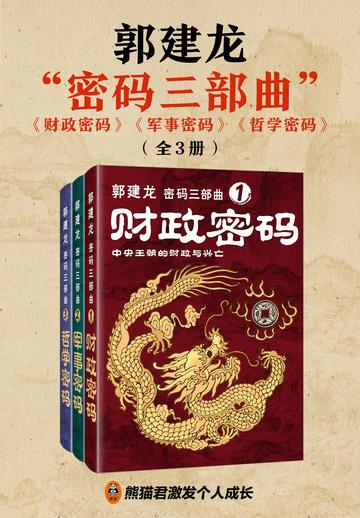
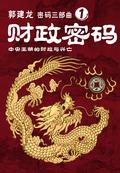
Historian Guo Jianlong's “Code Trilogy” examines the rise and fall of China's ancient dynasties through the lenses of finance, military affairs, and philosophy! The Financial Code explores the internal causes of dynastic change through the successes and failures of successive financial systems. The Military Code traces military strategy across geography and warfare, revealing why campaigns succeeded or failed. The Philosophical Code seeks the logic behind dynastic rule in the history of political philosophy. Strongly recommended by Yu Minhong, Liu Suli, Yu Shicun, Yang Bin, Shi Zhan, Luo Zhenyu, Li Shuo, and Zhang Mingyang!
The Financial Code
This book explains the relationship between the fortunes of China's ancient dynasties and their finances through three topics: land systems, currency monopolies, and state-run industries. It divides the history into three cycles based on the evolution of the central dynasties' financial systems. The first cycle covers the Qin, Han, Wei, Jin, and Southern Dynasties, following the state-run industries established by Emperor Wu of Han, Wang Mang's financial monopoly, and the land and household registration systems of the Wei and Jin periods. The second spans the Northern Wei, Northern Zhou, Sui, Tang, and Song, beginning with the Northern Wei's land reforms and discussing the equal-field system, before ending with the great collapse brought on by Song financial reforms. The third covers the Liao, Jin, Yuan, Ming, and Qing, beginning with the Yuan government's experimental financial policies, moving on to the conservative fiscal policies of the Ming and Qing, and concluding with the late Qing's efforts to modernize its finances and the inertia that held them back.
The Military Code
This book offers a detailed analysis of the military geography of ancient China, examining the most important geographical factors in the wars of each dynasty and how they shaped the conflicts. Drawing on field research and historical sources, it selects the most representative wars and military campaigns from different eras to explain how strategic centers shifted from the Guanzhong heartland to the Yangtze River basin and frontier regions, alongside the unification, division, and expansion of dynasties. It also analyzes the military logic behind major wars and their impact on the rise and fall of successive dynasties.
The Philosophical Code
Beginning with the Western Han, this book traces the evolution of ideas after the advent of the age of unification. By explaining how philosophy developed and why, it helps readers understand the evolution of Chinese philosophy and the subtle interplay between politics and philosophy.
The political philosophy of the central dynasties can be viewed as a history of ideological standardization and resistance to it. This book divides that history into two major cycles. The first begins with Confucianism in the Western Han, passes through the “rebellion” of metaphysics during the Wei, Jin, and Northern and Southern Dynasties and the birth of Buddhism, and ends with the coexistence and competition of the Three Teachings during the Sui and Tang. The second lasts from the Song Dynasty to the late Qing, covering the establishment of the Song school of Daoism, the ideological control of Neo-Confucianism, the emergence and reassessment of the Ming school's philosophy of the mind, and the rise and development of practical learning in the Qing.
 The Fiscal Code
 The Lost Three Hundred Years: China’s Opening and Closing After the Age of Discovery (1516–1840)
 Beneath the Clouds of Three Thousand Pagodas: A Cultural Journey Through Five Southeast Asian Countries
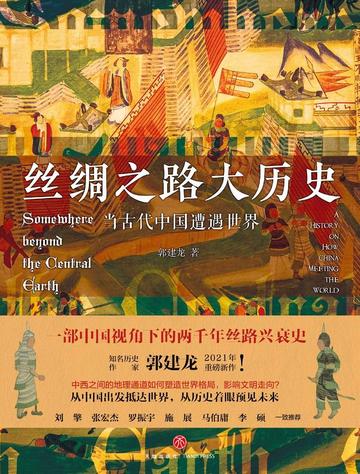 The Grand History of the Silk Road: When Ancient China Encountered the World
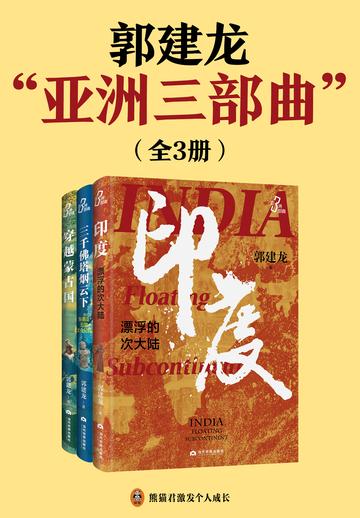 Guo Jianlong's Asia Trilogy
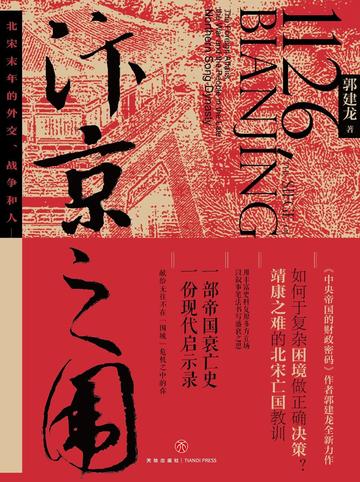 The Siege of Bianjing: Diplomacy, War, and People at the End of the Northern Song
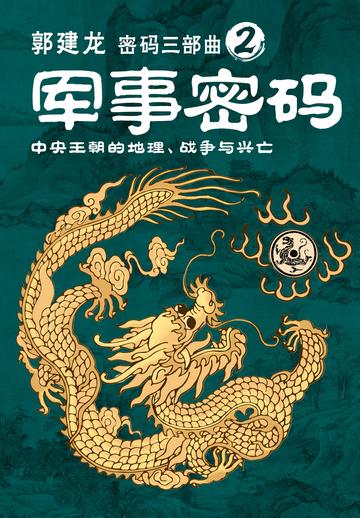 Military Codes
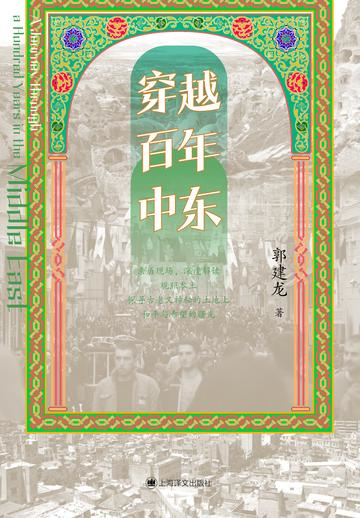 Transmigrating Across a Century of the Middle East
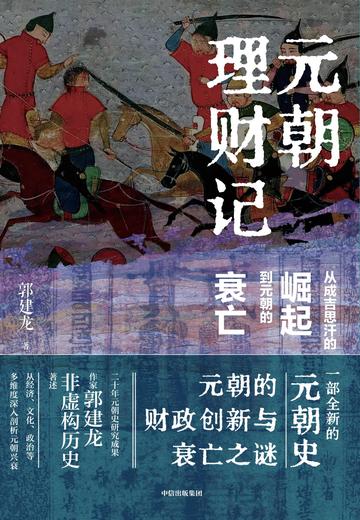 A Yuan Dynasty Guide to Getting Rich
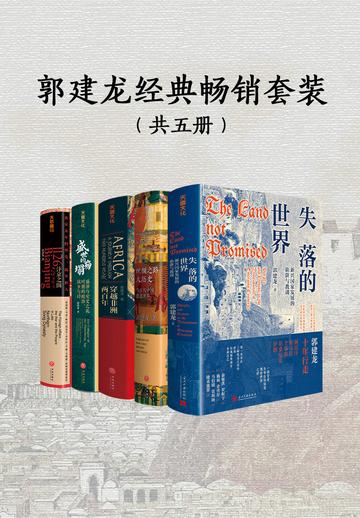 Guo Jianlong's Classic Bestselling Collection: Five-Volume Set





The financial code reveals the underlying logic of each dynasty accurately and in detail. However, I don't quite understand the military code that establishes a new order in chaos. How do they fight? If they fight, where does the money come from? But I know that a unified dynasty needs a stable, healthy and good finance to achieve peace and prosperity for the country and the people. So I am really grateful for this book written by Guo Jianrong. I feel that I have learned a lot of knowledge and skills, so it is difficult to understand the things in it, but it has broadened my horizons and helped my thinking.
Very practical
Unique perspective and very inspiring
Very beautiful, very beautiful
The perspective is very unique, subverting and making up for many past perceptions. There is no limit to learning and it is worth continuing.
The author has really done analysis and research.
Logic is clear and easy to understand
The three books are all very well written. Analyzing the rise and fall of history from one perspective allows people to see the overall situation and see the context clearly.
Knowing the subtleties of the work, from point to point, enlightening people
Clear thinking, unique perspective, profound analysis and thought-provoking