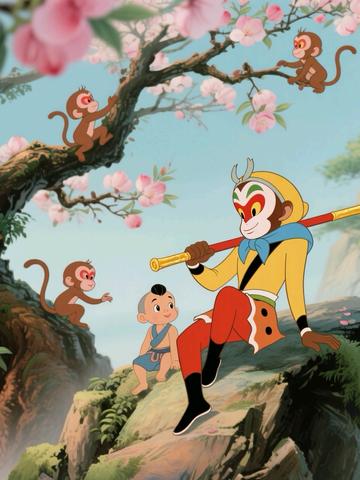
We are always racing along the road to “seek the scriptures”: staying up late to revise proposals for a promotion and a raise, cutting back on time with family for a “secure future,” and making “once I have time” our most frequent promise to the people we love, all for the “success” society defines. Just like Sun Wukong, who carried his obsession with becoming the Victorious Fighting Buddha through eighty-one tribulations, only to realize upon reaching fame and success that the people he had treated as “obstacles” and the time together he had put off until “later” were precisely the true scriptures in life, the things most worth protecting.
This is not to deny the value of hard work. Rather, through the Great Sage’s backward glance, it tears away the packaging of “success studies.” When we make “earning money” and “getting promoted” our only goals, when “home” becomes a spot on the map and “friends” are reduced to likes on social media, have we, too, become Wukong, trapped by the tightening headband?
In the novel, the moment Sun Wukong sheds his Buddha robes is also the moment every ordinary person stops in their tracks. It turns out that “winning” was never about charging ahead alone, but about moving forward slowly with love and the people we care about. The scriptures we most need to seek are not on distant Spirit Mountain, but in the sound of Mom calling us to dinner, in the half-bottle of liquor a friend hands us, and in those warm everyday moments we hurry past.
Writing about the Great Sage’s “return to dust” is ultimately about every ordinary person’s “return to the heart.” Don’t wait until Flower Fruit Mountain lies barren to turn back. Don’t wait until the people beside you have gone far away to think of asking them to stay. After all, what traps us is never some distant “true scripture,” but our obsession with refusing to look down at the path beneath our feet.