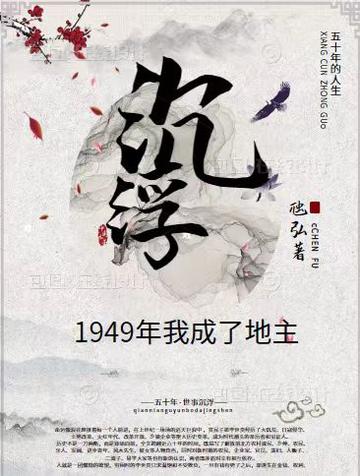
Like waves sweeping everyone forward, fate carried people onward. Amid the great surges of the last century, Li Shigui, a poor man's son, lived through the Great Famine, the Japanese invasion of China, land reform, the fiery revolutionary years, reform and opening-up, and the rise of township enterprises. He became both a participant in and a witness to the great changes of his age.
History does not break cleanly in two; it moves forward gradually. Spanning nearly sixty years, the novel portrays northern China's rural vagrants, gentry, farmers, brokers, warlords, progressive youths, feng shui masters, and prostitutes before Liberation. It also offers a new perspective on farmers, entrepreneurs, officials, promiscuous women, human traffickers, ne'er-do-wells, and masters of the I Ching in the new era. The two worlds stand in contradiction, yet depend on each other.
People are bundles of burning desire. When he was poor, Li Shigui wanted only enough to eat and to be free from bullying. But once he gained wealth and power, he lost himself in money, power, fame, lust, and superstition.

It's a really nice piece of historical writing. It's a life that is a bit familiar to Fugui in "To Live", but being rich is too bitter. I hope it won't be the same as Fugui.
Nice! Real and touching