Stats
9.3Score
17Chapters
Tags
Synopsis
Reader comments
In booklists 4


The Protagonist Is God's Favorite, the Protagonist Is Favored by God
I want to read a book similar to "The Foolish Plays of the Gods". The protagonist is particularly favored by God. Hey, I am really interested in this kind of thing. Just like this, please recommend books to the little poor guy.
14MViews139Books19hUpdated

Looking for a Study List for OC People
I would like to read a book similar to "Jungian Psychology". Are there any OC references or books to study? I prefer Jungian psychology/personality typology. Others can also be recommended. Religion, writing skills, mysticism, psychology, and design can all be recommended.
11.6MViews543Books4hUpdated



Qiu West Fantasy Novels
Recently I like western fantasy novels, elves, beast girls, gods, magic, an interesting fantasy world. Do you have any good western fantasy novels to share?
7.8MViews306Books4hUpdated



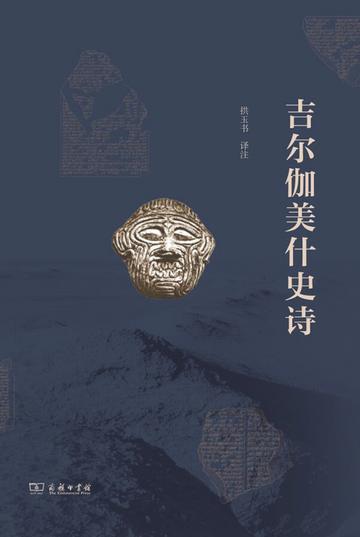
Have You Acted? or Template Gilgamesh
6.6MViews146Books27dUpdated
I'm happy for your arrival
I am happy for your reading
I am happy that I can appreciate this masterpiece The most important thing is that the whole book has a strong sense of opera when reading it, and the characters singing the lines will automatically appear in the mind, which is sacred and solemn. The author also popularizes a lot of cultural knowledge about the Mesopotamia and Mesopotamia, making it easy to read. I hope to find more clay tablets in the future to complete this grand epic and satisfy my curiosity [sending my heart]
I am happy that I can read such a great work [full][full] I am also delighted by the long and lengthy writing style of this epic poem.
How dare you need a membership for this thing?
Enkidu's initial life seems to be similar to ignorance being bliss, just like countless fairy tales, a carefree and worry-free life every day. He entered society through the relationship between a man and a woman. Compared with the happy life that he had lived for countless years before, his short life with Gilgamesh seemed to occupy his remaining thoughts before his death. He thought that he was a man created by the gods. He and Gilgamesh had never known each other before, killing Humbaba, killing the long-horned beetle... He became a victim, blaming Sham who directly prompted him to go to Uruk, blaming the hunter, and still vaguely complaining about the gods, but he did not feel that there was any unfairness between him and Gilgamesh. After he died, Gilgamesh was really afraid. He embarked on the road to find eternal life, but in the end he went and returned empty. Only his people and his Uruk were real. A king was born. Before reading this book, I had never thought that an epic written so long ago had such superb writing skills and I benefited a lot from it ଘ(੭ˊᵕˋ)੭*
Come on! Come on! Let's have a fight to see who is more famous, your reputation, or my strength. Come on! Come on! The gods are watching us! See which one is more famous, your reputation, or my help.
After buying the physical version, come here to support it... What moved me the most was what Enkidu said to the prostitute before he died. How can I not curse you for the endless fear of death, and how can I not bless you for the endless joy of life? This episode really made me cry. And after Enkidu died, Gilgamesh held his body and refused to bury it... The joys and sorrows of human beings are actually always connected in a certain sense.
The Epic of Gilgamesh is about 1,000 years older than the Iliad and is one of the oldest literary works known to mankind. It has had a profound impact on subsequent myths (including the story of the Great Flood in the Bible). Gilgamesh himself: Around 2700 BC, he may have actually ruled Uruk Sumerian poetry: Around 2100 BC, an independent legend about him appeared Standard epic version: Around 1200 BC to 1000 BC, the "Epic of Gilgamesh" was compiled Core story—— 1-Tyrant and Transformation: Gilgamesh was initially a tyrannical ruler, but God later created the wild man Enkidu to balance him. The two became close friends after fighting. 2-Heroic Adventure: Together they defeat the monster Humbaba and kill the Bull of Heaven. 3-Loss and Awakening: The death of Enkidu made Gilgamesh face "death" for the first time, and he began to pursue the secret of eternal life. 4-A futile pursuit: He finds Utnapishtim, a survivor of the Great Flood, and learns that humans cannot escape death. Finally accepting the limitations of life. Topics discussed—— 1-Death and Immortality: Human beings cannot live forever, but they can leave a reputation through their merits 2-Friendship and growth: Enkidu changes Gilgamesh 3-Civilization and wildness: Enkidu symbolizes nature and the transformation process of human society. Therefore, when you read The Epic of Gilgamesh, you are actually reading a work that dates from the dawn of human civilization more than 4,000 years ago. Surprisingly, its most central issues—time, death, friendship, meaning—still remain relevant today. Very interesting, I am amazed by Mesopotamia civilization and human civilization! With emotion, those who have always left their names in history are princes, generals, ministers, and wise men. It is probably because they lived their lives to the extreme, while most ordinary people are destined to be dust in chaos.
Thus, mankind's oldest heroic epic ended. It ends with a heroic king who, after the complete failure of his most arduous undertaking, returns to his hometown and introduces his country to others. It ends with a demigod finally becoming the king of men. More than three thousand years have passed, and most of everything in Uruk has been wiped out, but the remaining walls and foundations are still in the embrace of Euphrates and Tigris. "O Urshanabi, climb up the wall of Uruk and walk around the wall. Take a good look at the platform, take a good look at the bricks, See if the bricks have been refined in the fire, See if its cornerstone was laid by the seven wise men. The city is huge, the garden is vast, the pit is vast, and the temple of Ishda is half of it. These combined make up the size of Uruk. "
I am happy to appreciate the deeds of the King of Heroes
Ancient epics, the oldest known civilization, and the mythical literature of Sumerian civilization, need to travel through thousands of years of history, need to be re-translated from hundreds of generations of languages, and need to reproduce many civilizations before they can be converted into modern Chinese in a popular, elegant and accurate way. It requires not only academic training, but more importantly, the hard work of the translator. Hats off to the translator!
It is a very good book. Whether it is the original text or the translation and interpretation by Teacher Gong Yushu, the story itself is very profound and the various images are very thought-provoking. After the interpretation by modern writers, it is even more fascinating and inspiring.
The writing style of this book is very unique, the writing is concise and powerful, making people feel like they are in the world of ancient Mesopotamia. It reminds me of Homer's epics, which are epic works with heroes as the protagonists. The friendship between Gilgamesh and Enkidu in the book also reminded me of the brotherhood between Liu Guan and Zhang in "The Romance of the Three Kingdoms". Recommended to friends who like history and literature, it is definitely worth reading.
It's a pity that the story is incomplete. I hope someone can complete it in the future.
Awesome Klass doesn't explain
Well, the lack of records is sad, and the content of Man on the Moon is not good for the audience (for a person who really comes to see the epic) (emphasis added, I am just saying that the impression is not good, that is, repay it seven times, and don't use bad words) (The second half of the last bracket is purely the power of the Thunder language system. I don't know how to write it, so I just use the usual note-taking style)
It broadened my understanding of the Mesopotamian civilization, and I pay tribute to the author.