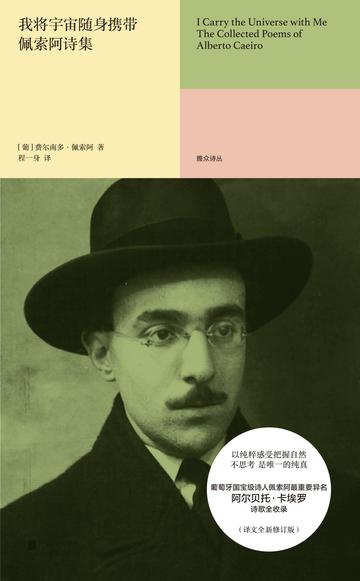
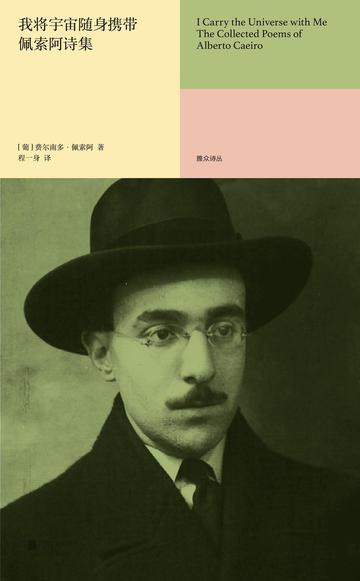
As a Portuguese national treasure poet and "the core figure of European modernism", Pessoa created a rich and mysterious universe with his charming "heteronym writing". He created many synonyms in his life, each with different professions and personalities, among which Alberto Caeiro was the most important. Caeiro is a "nature poet" and "objective poet", respected as a master by other people with different names. He spent most of his life on the farm. He has blond hair and blue eyes. He is an orphan and only completed primary school education.
This book contains all the poems written by Caeiro, including three parts: "The Shepherd", "The Shepherd in Love" and "The Shepherd's Continuation". Caeiro hopes to write poetry without any philosophical thoughts, as long as he looks at all things truly, emphasizing grasping nature with feelings, and opposing ideological understanding: "I look, things exist. I think, only I exist."
Reader comments
Pessoa's "Poetics of Things" emphasizes that existence is existence itself, meaning is given by people, and essence is a pure objectivity. Although pure and complete objectivity is actually impossible to achieve, the poet is indeed pursuing this process, which is also inspiring for us today - an objective and detached perspective, experiencing the world just because the world is the world, not a matter of meaning construction.
Tips: (Speaking of my evaluation of the meaning of Pessoa's poetry, it actually does not match his description: "Poetry is poetry, without any meaning." Perhaps the best reading review is not to comment, but to just feel.
But here are just some thoughts, please understand)
Especially for the character Caeiro, his poems are simple and true, without too much ideological baggage, allowing people to experience the world more purely. His experience also touched me a lot. Although he only completed primary school education, his observations and insights about life were very profound. This book made me understand that no matter what our education and experience are, we can understand and experience the world in our own way.
Quite like Lao Tzu's philosophy [Like][Like][Like]
To me, it is a breath of fresh air in modern thinking.
Pessoa's "Poetics of Things" emphasizes that existence is existence itself, meaning is given by people, and essence is a pure objectivity. Although pure and complete objectivity is actually impossible to achieve, the poet is indeed pursuing this process, which is also inspiring for us today - an objective and detached perspective, experiencing the world just because the world is the world, not a matter of meaning construction. Tips: (Speaking of my evaluation of the meaning of Pessoa's poetry, it actually does not match his description: "Poetry is poetry, without any meaning." Perhaps the best reading review is not to comment, but to just feel. But here are just some thoughts, please understand)
Especially for the character Caeiro, his poems are simple and true, without too much ideological baggage, allowing people to experience the world more purely. His experience also touched me a lot. Although he only completed primary school education, his observations and insights about life were very profound. This book made me understand that no matter what our education and experience are, we can understand and experience the world in our own way.
Quite like Lao Tzu's philosophy [Like][Like][Like]
To me, it is a breath of fresh air in modern thinking.