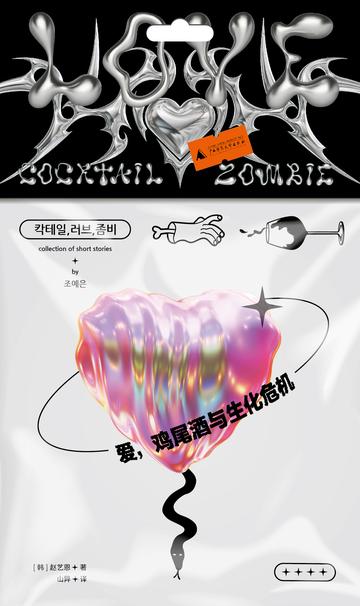
This book is the first collection of short stories and short stories by Cho Ye-eun, a representative writer of the post-90s generation in South Korea. It includes four strange urban revenge stories: "The Invitation", "Love, Cocktails and the Walking Dead", "Love in the Wetland" and "Knife, Overlapping Knives". The mysterious demon in charge of time retrieval, the new type of zombie created by the ancient god virus, the innocent wandering soul in the forest, the fierce ghost in the water, and the "Fujiang" who was resurrected with the birth of the evil girl, all appeared in the post-apocalyptic city and the modern mountain forest, launching a gratifying and violent aesthetic revenge against oppression in the name of love, violence disguised as daily life, mutated family and intimate relationships.
Reader comments
It is a book worth reading many times. The metaphor of the "fishbone" image makes me feel the same way. Parents and relatives treat you well, ignore them and insert the fishbone into your throat without any care, but pretend to care: We said that we didn't mean it and everything was your fault. Why didn't you say it? No one knows, no one sees, no one can understand the choking pain. The author has magnified such a small feeling until we can see it, which is really good!
The overlapping knives at the back also gave me a lot of inspiration. Many injuries are caused by love. No matter how the cycle is repeated, death is the final result, and love is fully demonstrated in death. Everything follows logic and pieces together into a complete story.
The love in the wetland makes me feel the full attachment and unique encounter. Although it is imaginary, it makes people feel full of reality and pain.
I didn't really understand it the first time, so I'll watch it again. Recommended recommended.
It is a wonderful book. The author has a delicate writing style. He is especially good at describing the suffocating, sticky and complicated family love in East Asian families. Mother and father are not like lovers, but like mother and adopted son. Daughters are not like daughters, but like mother's mother. I once again lamented that childbirth is not a trivial matter. Risk management should be done well, especially for women who cooperate with men to raise children.
"Oppression in the name of love in East Asia"
After reading it, I always felt a touch of sadness... Some scenes and the protagonist's thinking patterns, words and deeds were so close to life that they gave me goosebumps all over my body.
Especially the last story. To borrow a comment from a reader in the story: "The wrong name makes the wrong child." After reading the whole story, I will only feel sad when I read this sentence... They all live in their own obsessions, but in vain.
All in all, it's a well-written article.
Korean women are really good at writing Lao Deng, and their logic is also very good
The fishbone chapter is a process of self-explanation and self-relief. According to my mother's evaluation, the boyfriend's pua are all fishbones stuck in the protagonist's throat. It makes people sick and uncomfortable, but they are ignored and asked to continue to endure it. In the end, they dig out the fishbones themselves, kill the boyfriend in their hearts with their own hands and gain a new life. Love yourself and listen to yourself. Others cannot see the fishbones in your throat. People think they are moaning for no reason and they are aware of the pain. As for the Resident Evil chapter, I was a little hesitant. It was obvious that the father would exploit and harm the family even if he turned into a zombie. But before, the harm was resolved because of moments of tenderness, and it couldn't be separated. Fortunately, the background setting gave these women the opportunity to shoot. Many times, it's not that they don't know, but that there is a lack of an opportunity. I think this is good, at least the gun is stable. The swamp chapter made me feel a bit yandere. The emotional line is gradual and logical, but the price of pure love is so high. It requires great loneliness and great despair. It requires two people to forget and lose themselves, and leave the remaining fuzzy part of themselves to each other to keep and shape. Only then can there be such a strong bond and never betrayal. The overlapping knife in the last chapter is wonderful. The two-line narrative, a child who saves his mother and a woman who saves her lover, both push themselves into the abyss to save their loved ones. The tragedy is that no matter how many times you go back and how many links you change, the ending is always bad. This is called tragedy and grief. The despair and despair are amplified because of the setbacks again and again, and the viewers sigh with regret. I think the main idea should be to let go and look forward. At least, you should not trap yourself in the regrets and despair over and over again. After all, the results are now at the bottom, and moving forward may be a little better. Neither of them are bad people, but they bleed because of being loved by some strange combination of circumstances.
I really like it. My favorite is the knife, the overlapping knife.
Because of the narrative technique, it was a little confusing at first, but after reading it, you will find that everything is like this, a feeling of sudden enlightenment.
You remind me of Shi Tiesheng's words: If you look at the future from the position of childhood, you will say that your future is uncertain, you will say that your future is boundless; but if you stand at the end and look at the trajectory of your life, you can only see one road, you can only see a destined road. If you don't know what fate is, then you know what fate is.
My God, no matter how much the protagonist tries to change his fate, his fate remains the same.
It's beautiful. I like the first and last chapters the best. The fish bones are those subtle violence that cannot be expressed but are stuck in the throat. The details are very well drawn.
It's a very subtle feeling, a bit fantasy, a bit depressive, and a bit violent aesthetics.
Especially the last one, the closed loop of time, two story lines, and several different choices constitute a tragedy that is destined to happen. It is quite good.
A very shocking short story... Rather than focusing on reflecting the social problem of "domestic violence", I think it is a suspense novel wrapped in the shell of "domestic violence".
The plot of the story is very compact, and the different transformations between the two perspectives and the novel narrative method will make people unable to stop reading it. As the story line is revealed bit by bit, you will be shocked again and again by the foreshadowing and settings. I really like a sentence in the book: "Happiness is so sweet precisely because it is fleeting; tragedy is like a boomerang, no matter how hard you throw it, it will fly back."
Yes, happiness and pain always go hand in hand. "I thought it was all sentient beings who saved the Buddha." Maybe only with the existence of pain can happiness appear so dazzling.
In short, the biggest feeling this book gives me is to cherish the beauty of the present and accept the powerlessness of reality. If you violate the laws of nature, it may lead to more tragic consequences... Within the scope of change, do your best to accept yourself and reality; this may be the best relief for yourself.
I like the love story about ghosts and "Knives, Overlapping Knives". The sadness and fatalism in the article are depressing. It can be seen that the author thinks and pays attention to social issues. The story of Knife is reminiscent of the setting of The Terminator, but the ending is more pessimistic.
All four short stories are very interesting. The following is just my humble opinion:
I don't quite understand the logic behind "The Invitation", but the East Asian family it writes about is particularly "tasteful", and the various metaphors are endless and wonderful.
"Love in Wetland" gives people a kind of bright sadness, and the story and characters sink lightly.
"Knife, Overlapping Knife" has the highest degree of completion
"Love, Cocktails and the Walking Dead" has the same name as this collection of short stories. It is also the most worthy of reflection, the cutest, the most realistic and the most painful one in my opinion.
The plot of this book is very novel, with a mysterious demon in charge of going back in time, a new type of zombie, and revenge full of violent aesthetics. It is very enjoyable to read! The author's imagination is so rich that he combines various strange elements to create a unique world. My favorite is "Love in the Wetland". The story of the innocent wandering soul in the forest and the fierce ghost in the water is so creative. And the author's description of the details is very good, such as the scene where my aunt cuts sashimi, which made me feel like I was there. Highly recommended!
I don't quite remember when it was added to the bookshelf, but I still remember the reason. It was confused because the name was very similar to "Love, Death, and Robots". It turns out that maybe they are both short story collections, but the core of the story is different.
I can't say anything good, and I'm not reading for anything else. I just want to try to fill my brain with stories, trying to let the words get into my mind and shape myself. These stories are wonderful.
But unfortunately, I didn't write a few thousand words of book reviews and impressive fragments to give back, to whom? Maybe it's for your future self, tell her this book is very interesting and don't hesitate when you want to read it.
It's a pity that I couldn't say anything good after all, so I can only attach a five-star rating.
The last article was so wonderfully written. Fate plays tricks on people, giving people hope that what is destined to happen will happen after all... After three opportunities, nothing has changed, and we are back to the beginning. My mother was killed, I committed suicide, and everything formed a closed loop.
So pretty! ! The last article "Knife, Overlapping Knives" gave me goosebumps! I was still confused at first, but after seeing the male protagonist return to where he was before he was born, everything suddenly became clear... I loved it! !
Happiness is so sweet precisely because it is fleeting.
Tragedy is like a boomerang, no matter how hard you throw it,
It will all fly back.
I like the first and fourth stories. In the first story, maybe it's because I saw the same fish bone stuck in my throat in the story, and I felt that we were all forced to suffer the same subtle violence. Those of us who had been hurt by these violence were called hysterical lunatics by indifferent passers-by. The protagonist gains a new lease of life by ending the life of the person who caused her violence. But in reality, I have been trapped in the past, recalling the harm caused to me by others again and again, and I also committed violence against myself in the memories. The days are still long, and maybe one day I can regain my life. The fourth story is the vicious circle of tragedy. In this story, I also saw the shadow of reality. There are too many cases to count. I feel sad for such a social phenomenon. I hate that tragedies only single out the miserable people, and then I hallucinate myself. I have experienced the same thing three times. Each time I suffered more serious injuries than the last time, it even made me unable to continue. I am studying and unable to communicate with others. At this moment, I am still paying the price for my wrong decisions and cowardice of escaping. But at the same time, I am working hard to start a new life, and I am also restraining the constant violence against myself. I believe that tragedy will not always patronize my life. If it wants to destroy me again, I will be strong and brave to face it.
In the first chapter "Invitation", the fishbone may have never existed. What exists is the oppression that the environment has exerted on Caiyuan. The intersection of reality and illusion. But, can resistance only be through violence?
The last piece, "Knives, Overlapping Knives," is shocking. I originally thought they were two parallel stories, but after reading the second half, I discovered that they were intertwined causes and effects. Shihao and his mother traveled back in time three times. One is to kill his father, and the other is to save his boyfriend. The two fates met again in an alley. But you can always move forward according to the established route and cannot change it. The starting point for tragedy is the father, but is it really fate that causes tragedy? Is it the environment? Is it the thought? Or is it the true thoughts deep in one's soul?
My favorite is "Knife, Overlapping Knives"
Stunning
It was the first time I read a classic novel in one go, and the last chapter suddenly made me realize it. I don't know why I feel powerless and helpless. The more I go to the end, the more I want to cry. It is unfortunate to save an unfortunate family. It is like a mirror shining on reality. After all, the seed has been planted and sprouted. It has experienced so many vicissitudes and has produced thousands of fruits. How can it be eliminated so easily? You resist with all your strength and tear it apart, but our power is also limited and will be swallowed up by its darkness.
The writing is very good, feminist, and the writing is delicate. The stories are touching, with a sense of absurdity and reality coexisting, especially the last one, which is quite shocking.
In summary, 1 kill all the rules that bind you and retain yourself.
2 Explanation of the relationship between father, mother and daughter in East Asia, concerning the contradictory themes of hate and love. No matter what, love brings hope.
3 The love story of two ghosts is pure love.
4 A child's love for his mother is truly a proposition that is forever profound, eternal, and great enough. This story is the best among the four, exciting enough and good enough to read.
It should be considered a satirical realistic novel. This is the first time I read a book written by a Korean female writer. I checked that this book was published in Korean for the first time in 2020. The time is very close, so I can also see some of the current social mentality. The author's language is sharp, pointed and straightforward, and his writing is very personal. It is worth recommending.
I read it all at once, and all four articles were very interesting.
The descriptions and hints about family and even social and natural aspects are just right. On the one hand, it is thought-provoking, but more importantly, it is smooth enough to continue reading.
It is a very smooth reading experience. The writing is like a trickle, with very delicate emotions and descriptions, but it is written very cleverly. It may also be because of the short story. More often, the feeling brought by reading short stories is shocking.
It was the first time I read a novel by a Korean writer, and I thought, the world, the world needs such works. Even just watching it once will leave a lasting impression.
In the four short stories in this book, the author has very good control over the description of delicate emotions and dark thoughts.
After reading "The Knife, the Heavy-handed Knife", I realized the profound meaning of the title. The author is very logical and has no wasted words throughout the text. The character's thinking logic and behavioral intentions are both unexpected and reasonable. It gave me goosebumps.
I thought of the last time the child looked at the mother's face and the last time the mother listened to the child's footsteps. It hurts, it hurts too much. I imagined how they felt when they realized the truth. It was like a perfect closed loop, which made me feel deeply sad and shocked.
A kid who wants to save his mother and a girlfriend who wants to save her boyfriend.
The overlapping knives shocked me a little, and I felt like I suddenly realized something when I saw a certain line. The trajectory of life cannot be changed by us personally, even if we stand from a perspective that we have missed several times. Like this very much. I also like the wetland chapter, the love between water and forest.
It's a very nice book. The author's writing style is very good, the words are delicate and high-level, and there is no stiffness at all.
I like the two stories "The Invitation" and "The Knife, Overlapping Knives." "Invitation" uses a grotesque style to write about a girl's self-rescue, spitting out the fishbone stuck in her throat for many years.
The two stories of "Knife, Overlapping Knife" unfolded at the same time, and finally overlapped, only to discover that it was a closed-loop story. The man in the story wanted to change the ending of his mother's murder, so he traveled back and forth again and again, but he did not expect that he was the source of the tragedy. I actually think that the father in the story is the source of the tragedy. It was his violence that caused the death of the mother, and the man traveled back in time to prevent them from meeting each other.
Tragedy will always be a tragedy, no matter how many times it happens again
"Only when some emotions are dug out alive can we recognize their existence." What I think is really great about Zhao Ye-en's writing is that she can analyze the emotions between people very clearly, and she can express the subtle malice, unspeakable discomfort and happiness that are easily ignored in life. It is really amazing. I really like the last novel "Knife, Overlapping Knives". The rhythm is very well controlled, and I didn't think it would be my first novel at all. Before that, I heard that there was a reversal at the end of this article, but when I saw the reversal in the middle and later stages, I found that the reversal was completely beyond imagination, not cliché at all, it was really amazing.
The story is more important than the connotation. It is a few short stories that can be used to relax. There is no need to consider any profound connotation. It is not overwhelming but has a stinging and thick aftertaste. It is a small snack, and you can taste it from the first bite.
The story is like the shining gem heart on the cover. It is very eye-catching. It does not have a heavy flavor of reality, but has a heavier sense of fantasy. The setting that is divorced from some reality makes the story lighter. I think this is an adult fairy tale, which is very interesting.
Happiness is so sweet precisely because it is fleeting.
Tragedy is like a boomerang, no matter how hard you throw it,
It will all fly back.
I like the last story the most. Next is the first story.
Then spoiler warning ⚠️
The last story constitutes an exquisite closed loop of logic and time and space. Three chances to come back were thought to be more than enough, but the tragedy became even more complete. Where does domestic violence come from? Is it the fruit knife used by the son to save his mother, or the fruit knife used by the father to chop his mother? Or the fruit knife that the mother slashed at her son? Or is it the reality that his father is bankrupt? Well, I still think the main reason is this father. My father was unable to support the company he inherited, and even if the company went bankrupt, he was unable to give the family a good life. He was unable to bear the pressure placed on him by the outside world and could not resist, so he vented his dissatisfaction from the outside world at home.
I sent it to DeepSeek, and one of the sentences it gave me was that the source of violence was the same fruit knife. The knife is violence itself. It is intergenerational and metamorphoses between generations, between husband and wife, between father and son.
I like the last story the most. It is very shocking at the beginning. After "I" killed my father, I felt a sense of calm absurdity. "I don't want to be stained with his blood even after I die." So I changed my knife and committed suicide.
It seems that he was so calm because he had a premonition. "Somewhere, I thought that something like this would happen: my father would eventually kill my mother. And I would eventually kill him." In fact, this passage has already explained the ending.
The last time I died, it was my mother who was holding the knife she took out from home. I did not die with the knife with my father's blood on it. The last time my mother died, it was still the same knife.
Chapter 1 "It's just that I can't bear to do that every time" and the chapter where this "I" really dies (maybe I can never really die and will only be killed by my mother over and over again in the alley) "My father's kindness shook my determination, and I failed to stab him in the vital part with a single knife."
When I died, I said "I'm sorry..." My mother didn't have time. When I got home, she thought in her heart, "Son, I'm sorry, I can't enjoy sushi with you."
"If I get home earlier, will anything change? If I don't buy sushi, will anything change? If I eat all the apples yesterday, will anything change? If I throw away all the fruit knives in the house, will the ending be different? My mother will not die, and I don't need to kill my father."
"If I had gone back to my hometown; if he had not seen me who was scared; if he had not helped me; if we had not arranged to meet at the coffee shop; if I had not confessed to him; if he had not made any proposal after hearing the confession; if he had not accompanied me through the dark alleys every night; then... He would not have died under the stalker's knife." If if... Both people went to tragedy because of "what if"
If "I" told my mother the truth when I discovered the truth, would "we" sit together and eat sushi? After reading the entire article, "I" found that the two of them rarely communicated. My mother did not want to ask me why I killed my father who had never been to other worlds. I was unwilling to approach my mother as a normal person, observe my mother's life, and interfere with my mother's feelings.
There is still a long time before my mother meets my father in January, which is long enough for my mother to be followed every day and fall into panic, so that she can fall in love with the father who appears that day, and for my mother and "me" to become familiar, and even get as close as going to a sushi restaurant to eat sushi together.
The part where "I" started stalking my mother really made me feel numb.
It is a book worth reading many times. The metaphor of the "fishbone" image makes me feel the same way. Parents and relatives treat you well, ignore them and insert the fishbone into your throat without any care, but pretend to care: We said that we didn't mean it and everything was your fault. Why didn't you say it? No one knows, no one sees, no one can understand the choking pain. The author has magnified such a small feeling until we can see it, which is really good! The overlapping knives at the back also gave me a lot of inspiration. Many injuries are caused by love. No matter how the cycle is repeated, death is the final result, and love is fully demonstrated in death. Everything follows logic and pieces together into a complete story. The love in the wetland makes me feel the full attachment and unique encounter. Although it is imaginary, it makes people feel full of reality and pain. I didn't really understand it the first time, so I'll watch it again. Recommended recommended.
It is a wonderful book. The author has a delicate writing style. He is especially good at describing the suffocating, sticky and complicated family love in East Asian families. Mother and father are not like lovers, but like mother and adopted son. Daughters are not like daughters, but like mother's mother. I once again lamented that childbirth is not a trivial matter. Risk management should be done well, especially for women who cooperate with men to raise children.
"Oppression in the name of love in East Asia" After reading it, I always felt a touch of sadness... Some scenes and the protagonist's thinking patterns, words and deeds were so close to life that they gave me goosebumps all over my body. Especially the last story. To borrow a comment from a reader in the story: "The wrong name makes the wrong child." After reading the whole story, I will only feel sad when I read this sentence... They all live in their own obsessions, but in vain. All in all, it's a well-written article.
Korean women are really good at writing Lao Deng, and their logic is also very good
The fishbone chapter is a process of self-explanation and self-relief. According to my mother's evaluation, the boyfriend's pua are all fishbones stuck in the protagonist's throat. It makes people sick and uncomfortable, but they are ignored and asked to continue to endure it. In the end, they dig out the fishbones themselves, kill the boyfriend in their hearts with their own hands and gain a new life. Love yourself and listen to yourself. Others cannot see the fishbones in your throat. People think they are moaning for no reason and they are aware of the pain. As for the Resident Evil chapter, I was a little hesitant. It was obvious that the father would exploit and harm the family even if he turned into a zombie. But before, the harm was resolved because of moments of tenderness, and it couldn't be separated. Fortunately, the background setting gave these women the opportunity to shoot. Many times, it's not that they don't know, but that there is a lack of an opportunity. I think this is good, at least the gun is stable. The swamp chapter made me feel a bit yandere. The emotional line is gradual and logical, but the price of pure love is so high. It requires great loneliness and great despair. It requires two people to forget and lose themselves, and leave the remaining fuzzy part of themselves to each other to keep and shape. Only then can there be such a strong bond and never betrayal. The overlapping knife in the last chapter is wonderful. The two-line narrative, a child who saves his mother and a woman who saves her lover, both push themselves into the abyss to save their loved ones. The tragedy is that no matter how many times you go back and how many links you change, the ending is always bad. This is called tragedy and grief. The despair and despair are amplified because of the setbacks again and again, and the viewers sigh with regret. I think the main idea should be to let go and look forward. At least, you should not trap yourself in the regrets and despair over and over again. After all, the results are now at the bottom, and moving forward may be a little better. Neither of them are bad people, but they bleed because of being loved by some strange combination of circumstances.
I really like it. My favorite is the knife, the overlapping knife. Because of the narrative technique, it was a little confusing at first, but after reading it, you will find that everything is like this, a feeling of sudden enlightenment. You remind me of Shi Tiesheng's words: If you look at the future from the position of childhood, you will say that your future is uncertain, you will say that your future is boundless; but if you stand at the end and look at the trajectory of your life, you can only see one road, you can only see a destined road. If you don't know what fate is, then you know what fate is. My God, no matter how much the protagonist tries to change his fate, his fate remains the same.
It's beautiful. I like the first and last chapters the best. The fish bones are those subtle violence that cannot be expressed but are stuck in the throat. The details are very well drawn.
It's a very subtle feeling, a bit fantasy, a bit depressive, and a bit violent aesthetics. Especially the last one, the closed loop of time, two story lines, and several different choices constitute a tragedy that is destined to happen. It is quite good.
A very shocking short story... Rather than focusing on reflecting the social problem of "domestic violence", I think it is a suspense novel wrapped in the shell of "domestic violence". The plot of the story is very compact, and the different transformations between the two perspectives and the novel narrative method will make people unable to stop reading it. As the story line is revealed bit by bit, you will be shocked again and again by the foreshadowing and settings. I really like a sentence in the book: "Happiness is so sweet precisely because it is fleeting; tragedy is like a boomerang, no matter how hard you throw it, it will fly back." Yes, happiness and pain always go hand in hand. "I thought it was all sentient beings who saved the Buddha." Maybe only with the existence of pain can happiness appear so dazzling. In short, the biggest feeling this book gives me is to cherish the beauty of the present and accept the powerlessness of reality. If you violate the laws of nature, it may lead to more tragic consequences... Within the scope of change, do your best to accept yourself and reality; this may be the best relief for yourself.
I like the love story about ghosts and "Knives, Overlapping Knives". The sadness and fatalism in the article are depressing. It can be seen that the author thinks and pays attention to social issues. The story of Knife is reminiscent of the setting of The Terminator, but the ending is more pessimistic.
All four short stories are very interesting. The following is just my humble opinion: I don't quite understand the logic behind "The Invitation", but the East Asian family it writes about is particularly "tasteful", and the various metaphors are endless and wonderful. "Love in Wetland" gives people a kind of bright sadness, and the story and characters sink lightly. "Knife, Overlapping Knife" has the highest degree of completion "Love, Cocktails and the Walking Dead" has the same name as this collection of short stories. It is also the most worthy of reflection, the cutest, the most realistic and the most painful one in my opinion.
The plot of this book is very novel, with a mysterious demon in charge of going back in time, a new type of zombie, and revenge full of violent aesthetics. It is very enjoyable to read! The author's imagination is so rich that he combines various strange elements to create a unique world. My favorite is "Love in the Wetland". The story of the innocent wandering soul in the forest and the fierce ghost in the water is so creative. And the author's description of the details is very good, such as the scene where my aunt cuts sashimi, which made me feel like I was there. Highly recommended!
I don't quite remember when it was added to the bookshelf, but I still remember the reason. It was confused because the name was very similar to "Love, Death, and Robots". It turns out that maybe they are both short story collections, but the core of the story is different. I can't say anything good, and I'm not reading for anything else. I just want to try to fill my brain with stories, trying to let the words get into my mind and shape myself. These stories are wonderful. But unfortunately, I didn't write a few thousand words of book reviews and impressive fragments to give back, to whom? Maybe it's for your future self, tell her this book is very interesting and don't hesitate when you want to read it. It's a pity that I couldn't say anything good after all, so I can only attach a five-star rating.
The last article was so wonderfully written. Fate plays tricks on people, giving people hope that what is destined to happen will happen after all... After three opportunities, nothing has changed, and we are back to the beginning. My mother was killed, I committed suicide, and everything formed a closed loop.
So pretty! ! The last article "Knife, Overlapping Knives" gave me goosebumps! I was still confused at first, but after seeing the male protagonist return to where he was before he was born, everything suddenly became clear... I loved it! !
Happiness is so sweet precisely because it is fleeting. Tragedy is like a boomerang, no matter how hard you throw it, It will all fly back. I like the first and fourth stories. In the first story, maybe it's because I saw the same fish bone stuck in my throat in the story, and I felt that we were all forced to suffer the same subtle violence. Those of us who had been hurt by these violence were called hysterical lunatics by indifferent passers-by. The protagonist gains a new lease of life by ending the life of the person who caused her violence. But in reality, I have been trapped in the past, recalling the harm caused to me by others again and again, and I also committed violence against myself in the memories. The days are still long, and maybe one day I can regain my life. The fourth story is the vicious circle of tragedy. In this story, I also saw the shadow of reality. There are too many cases to count. I feel sad for such a social phenomenon. I hate that tragedies only single out the miserable people, and then I hallucinate myself. I have experienced the same thing three times. Each time I suffered more serious injuries than the last time, it even made me unable to continue. I am studying and unable to communicate with others. At this moment, I am still paying the price for my wrong decisions and cowardice of escaping. But at the same time, I am working hard to start a new life, and I am also restraining the constant violence against myself. I believe that tragedy will not always patronize my life. If it wants to destroy me again, I will be strong and brave to face it.
In the first chapter "Invitation", the fishbone may have never existed. What exists is the oppression that the environment has exerted on Caiyuan. The intersection of reality and illusion. But, can resistance only be through violence? The last piece, "Knives, Overlapping Knives," is shocking. I originally thought they were two parallel stories, but after reading the second half, I discovered that they were intertwined causes and effects. Shihao and his mother traveled back in time three times. One is to kill his father, and the other is to save his boyfriend. The two fates met again in an alley. But you can always move forward according to the established route and cannot change it. The starting point for tragedy is the father, but is it really fate that causes tragedy? Is it the environment? Is it the thought? Or is it the true thoughts deep in one's soul? My favorite is "Knife, Overlapping Knives" Stunning
It was the first time I read a classic novel in one go, and the last chapter suddenly made me realize it. I don't know why I feel powerless and helpless. The more I go to the end, the more I want to cry. It is unfortunate to save an unfortunate family. It is like a mirror shining on reality. After all, the seed has been planted and sprouted. It has experienced so many vicissitudes and has produced thousands of fruits. How can it be eliminated so easily? You resist with all your strength and tear it apart, but our power is also limited and will be swallowed up by its darkness.
The writing is very good, feminist, and the writing is delicate. The stories are touching, with a sense of absurdity and reality coexisting, especially the last one, which is quite shocking.
In summary, 1 kill all the rules that bind you and retain yourself. 2 Explanation of the relationship between father, mother and daughter in East Asia, concerning the contradictory themes of hate and love. No matter what, love brings hope. 3 The love story of two ghosts is pure love. 4 A child's love for his mother is truly a proposition that is forever profound, eternal, and great enough. This story is the best among the four, exciting enough and good enough to read. It should be considered a satirical realistic novel. This is the first time I read a book written by a Korean female writer. I checked that this book was published in Korean for the first time in 2020. The time is very close, so I can also see some of the current social mentality. The author's language is sharp, pointed and straightforward, and his writing is very personal. It is worth recommending.
I read it all at once, and all four articles were very interesting. The descriptions and hints about family and even social and natural aspects are just right. On the one hand, it is thought-provoking, but more importantly, it is smooth enough to continue reading. It is a very smooth reading experience. The writing is like a trickle, with very delicate emotions and descriptions, but it is written very cleverly. It may also be because of the short story. More often, the feeling brought by reading short stories is shocking. It was the first time I read a novel by a Korean writer, and I thought, the world, the world needs such works. Even just watching it once will leave a lasting impression.
In the four short stories in this book, the author has very good control over the description of delicate emotions and dark thoughts. After reading "The Knife, the Heavy-handed Knife", I realized the profound meaning of the title. The author is very logical and has no wasted words throughout the text. The character's thinking logic and behavioral intentions are both unexpected and reasonable. It gave me goosebumps. I thought of the last time the child looked at the mother's face and the last time the mother listened to the child's footsteps. It hurts, it hurts too much. I imagined how they felt when they realized the truth. It was like a perfect closed loop, which made me feel deeply sad and shocked. A kid who wants to save his mother and a girlfriend who wants to save her boyfriend.
The overlapping knives shocked me a little, and I felt like I suddenly realized something when I saw a certain line. The trajectory of life cannot be changed by us personally, even if we stand from a perspective that we have missed several times. Like this very much. I also like the wetland chapter, the love between water and forest.
It's a very nice book. The author's writing style is very good, the words are delicate and high-level, and there is no stiffness at all. I like the two stories "The Invitation" and "The Knife, Overlapping Knives." "Invitation" uses a grotesque style to write about a girl's self-rescue, spitting out the fishbone stuck in her throat for many years. The two stories of "Knife, Overlapping Knife" unfolded at the same time, and finally overlapped, only to discover that it was a closed-loop story. The man in the story wanted to change the ending of his mother's murder, so he traveled back and forth again and again, but he did not expect that he was the source of the tragedy. I actually think that the father in the story is the source of the tragedy. It was his violence that caused the death of the mother, and the man traveled back in time to prevent them from meeting each other.
Tragedy will always be a tragedy, no matter how many times it happens again
"Only when some emotions are dug out alive can we recognize their existence." What I think is really great about Zhao Ye-en's writing is that she can analyze the emotions between people very clearly, and she can express the subtle malice, unspeakable discomfort and happiness that are easily ignored in life. It is really amazing. I really like the last novel "Knife, Overlapping Knives". The rhythm is very well controlled, and I didn't think it would be my first novel at all. Before that, I heard that there was a reversal at the end of this article, but when I saw the reversal in the middle and later stages, I found that the reversal was completely beyond imagination, not cliché at all, it was really amazing.
The story is more important than the connotation. It is a few short stories that can be used to relax. There is no need to consider any profound connotation. It is not overwhelming but has a stinging and thick aftertaste. It is a small snack, and you can taste it from the first bite. The story is like the shining gem heart on the cover. It is very eye-catching. It does not have a heavy flavor of reality, but has a heavier sense of fantasy. The setting that is divorced from some reality makes the story lighter. I think this is an adult fairy tale, which is very interesting.
Happiness is so sweet precisely because it is fleeting. Tragedy is like a boomerang, no matter how hard you throw it, It will all fly back.
I like the last story the most. Next is the first story. Then spoiler warning ⚠️ The last story constitutes an exquisite closed loop of logic and time and space. Three chances to come back were thought to be more than enough, but the tragedy became even more complete. Where does domestic violence come from? Is it the fruit knife used by the son to save his mother, or the fruit knife used by the father to chop his mother? Or the fruit knife that the mother slashed at her son? Or is it the reality that his father is bankrupt? Well, I still think the main reason is this father. My father was unable to support the company he inherited, and even if the company went bankrupt, he was unable to give the family a good life. He was unable to bear the pressure placed on him by the outside world and could not resist, so he vented his dissatisfaction from the outside world at home. I sent it to DeepSeek, and one of the sentences it gave me was that the source of violence was the same fruit knife. The knife is violence itself. It is intergenerational and metamorphoses between generations, between husband and wife, between father and son.
I like the last story the most. It is very shocking at the beginning. After "I" killed my father, I felt a sense of calm absurdity. "I don't want to be stained with his blood even after I die." So I changed my knife and committed suicide. It seems that he was so calm because he had a premonition. "Somewhere, I thought that something like this would happen: my father would eventually kill my mother. And I would eventually kill him." In fact, this passage has already explained the ending. The last time I died, it was my mother who was holding the knife she took out from home. I did not die with the knife with my father's blood on it. The last time my mother died, it was still the same knife. Chapter 1 "It's just that I can't bear to do that every time" and the chapter where this "I" really dies (maybe I can never really die and will only be killed by my mother over and over again in the alley) "My father's kindness shook my determination, and I failed to stab him in the vital part with a single knife." When I died, I said "I'm sorry..." My mother didn't have time. When I got home, she thought in her heart, "Son, I'm sorry, I can't enjoy sushi with you." "If I get home earlier, will anything change? If I don't buy sushi, will anything change? If I eat all the apples yesterday, will anything change? If I throw away all the fruit knives in the house, will the ending be different? My mother will not die, and I don't need to kill my father." "If I had gone back to my hometown; if he had not seen me who was scared; if he had not helped me; if we had not arranged to meet at the coffee shop; if I had not confessed to him; if he had not made any proposal after hearing the confession; if he had not accompanied me through the dark alleys every night; then... He would not have died under the stalker's knife." If if... Both people went to tragedy because of "what if" If "I" told my mother the truth when I discovered the truth, would "we" sit together and eat sushi? After reading the entire article, "I" found that the two of them rarely communicated. My mother did not want to ask me why I killed my father who had never been to other worlds. I was unwilling to approach my mother as a normal person, observe my mother's life, and interfere with my mother's feelings. There is still a long time before my mother meets my father in January, which is long enough for my mother to be followed every day and fall into panic, so that she can fall in love with the father who appears that day, and for my mother and "me" to become familiar, and even get as close as going to a sushi restaurant to eat sushi together. The part where "I" started stalking my mother really made me feel numb.