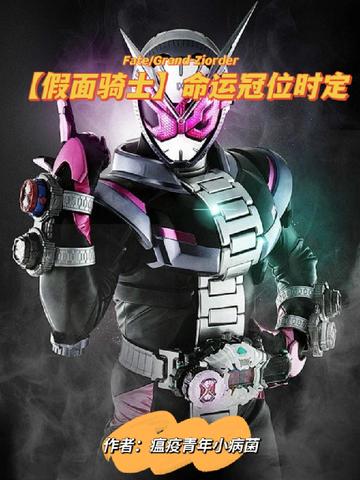
An ordinary high school student named Sougo dreams that the world is about to end. The day after he wakes up, he steps outside and hits the jackpot.
A glowing orb that seeks him out calls itself the “Demon King Training System.” It forces a belt and a tutorial guide who looks like he was in one of Jay Chou’s MVs on him, then orders him to save history from the brink of collapse and investigate the truth behind it all.
Sougo says, “No way!”
Reader’s note:
Sougo is Tokiwa Sougo, the Demon King himself. The reason for this is a plot point that will be revealed later, though it should be fairly easy to figure out. Woz is also the real deal, but his life story will be changed and made up in places.
Kamen Rider Zi-O is full of plot holes, but I like it. If you criticize Zi-O, you’re not allowed to criticize me!
The history of each Rider will draw on the TV series, movies, spin-offs, official novels, SIC novels, and some manga. I’ll note in the story or the author’s notes which sources I’m using for particular details.
For now, I’ll mostly be writing about the Showa era, the three unofficial Riders, the The series, and the Heisei era. Starting with Heisei, I’ll decide later whether to include the Zangetsu and Reiwa eras. I won’t write about Shin Kamen Rider because he’s too strong. Spirit is still up in the air: its own battles are too powerful, and it has too many world-ending crises. It feels like there’d be nothing left to write afterward.
The protagonist is basically invincible, but the focus isn’t on fighting monsters and leveling up. Kamen Rider was never about fighting monsters and leveling up, right?
Sougo has no romantic pairing or heroine. In the other shows, I’ll only write couples whose relationships are already confirmed.
According to this book, the King of Monsters or Daguaba is actually the pioneer and bearer of history chosen by this world. But because of the desire in his heart, the king was corrupted and failed to complete the development of the world and carry the history of the world. The knight came to correct this mistake, so in the end the knight defeated the king and replaced the king. The knight became the final tragedy.