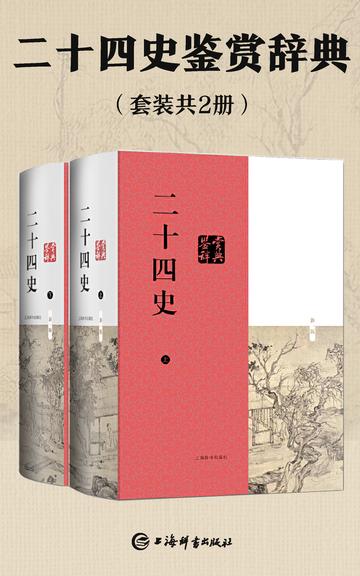
"Twenty-Four Histories Appreciation Dictionary" selects 326 articles from "Twenty-Four Histories". According to the chronological order of the "Twenty-Four Histories", it is divided into 6 major categories, and the beginning of each category is led by an "introduction"; 150 groups are formed according to the relevance of characters and events, and the beginning of each group is led by an "introduction"; each group contains one to four chapters, and each chapter consists of three parts: text selection, annotation, and appreciation.
According to chronological order, many classic cases of historical figures from ancient times to the Ming Dynasty are selected and interpreted from the perspective of national destiny and personal wisdom; from the aspects of literature, art, thought, religion, etc., Comparable figures are placed in one group, which is a representative case of "national wisdom". Through this arrangement, readers can not only use clear time clues of historical development as a reference, but also compare the wisdom of historical figures who collided in the same period in the game.
The three appendices at the end of the book are "Learning to be a 'Historian': The Words of a Family - How We Appreciate the Twenty-Four Histories Today", "A Tentative Sample of Appreciating and Interpreting Historical Stories in the Twenty-Four Histories", and "Comments on the Twenty-Four Histories", which are distillations of wisdom on how to appreciate the "Twenty-Four Histories".
Reader comments
This dictionary is great! It selects classic cases from ancient times to the Ming Dynasty in chronological order, allowing us to clearly understand historical development. By grouping characters and comparing them, the wisdom of different characters in the game is demonstrated. Moreover, the appreciation part of the book explains it in simple terms and the writing is fluent, which benefited me a lot. For example, "Using copper as a mirror, you can straighten your clothes; using ancient times as a mirror, you can know the ups and downs; using people as a mirror, you can understand gains and losses." This sentence is simple but profound, making people think deeply. All in all, this is a great book for high school students to read!
To understand history, the Twenty-Four Histories must be read
A good book.
Learn about Chinese civilization through ancient Chinese history
This dictionary is great! It selects classic cases from ancient times to the Ming Dynasty in chronological order, allowing us to clearly understand historical development. By grouping characters and comparing them, the wisdom of different characters in the game is demonstrated. Moreover, the appreciation part of the book explains it in simple terms and the writing is fluent, which benefited me a lot. For example, "Using copper as a mirror, you can straighten your clothes; using ancient times as a mirror, you can know the ups and downs; using people as a mirror, you can understand gains and losses." This sentence is simple but profound, making people think deeply. All in all, this is a great book for high school students to read!
To understand history, the Twenty-Four Histories must be read
A good book.
Learn about Chinese civilization through ancient Chinese history
An overview of national history shows