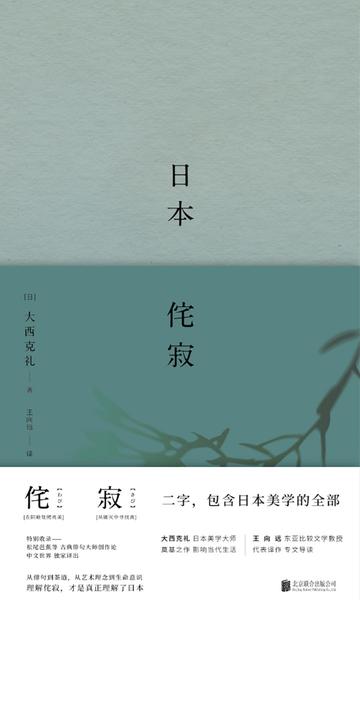
"Wabisabi" is a key word for understanding Japanese culture and daily life. "Wabi" originates from the wabi tea method of Sen no Rikyu, the originator of Japanese tea ceremony: it is gloomy and silent, quaint, simple, restrained and rough after years of refinement; "Sabi" can be seen in the interesting works of Japanese haiku saint Matsuo Basho: chanting the ancient times, walking freely in daily life with an attitude of "more than enough". Wabi-sabi is the unique Japanese aesthetics from haiku to tea ceremony, from artistic concept to life consciousness.
This book contains the aesthetic pioneering work of Kerry Onishi's study of "Wabi-Sabi". It uses Western philosophical thinking methods to innovatively interpret the core of Japanese culture and endow it with modernity. It is an art classic that re-understands and feels beauty. It also specifically includes the creative experience and aesthetic concepts of Matsuo Basho and classical haiku artists to restore the historical context and facilitate comparative reading.
Reader comments
I especially like Oshikiri's view of using Western philosophy to explain wabi-sabi, which is very novel. However, I kind of hate people who are too obsessed with form and may not truly understand the connotation of wabi-sabi. Just like when I'm looking for true love, I can't just look at the surface, but also pay attention to the inner qualities. This book made me understand that real beauty is refined over time and is simple and rough. I think this applies not only to art, but also to life. Have you read this book? We can discuss it together.
I especially like Oshikiri's view of using Western philosophy to explain wabi-sabi, which is very novel. However, I kind of hate people who are too obsessed with form and may not truly understand the connotation of wabi-sabi. Just like when I'm looking for true love, I can't just look at the surface, but also pay attention to the inner qualities. This book made me understand that real beauty is refined over time and is simple and rough. I think this applies not only to art, but also to life. Have you read this book? We can discuss it together.