★A classic among classics of World War II novels, a masterpiece that removes the last fig leaf of war, the Iron Curtain, and human nature.
★The American literary giant wrote about the depravity and pathology of human nature in one novel.
★The spiritual struggle between animal nature and ideals, the iron curtain of war and the battle on the battlefield are all revealed in detail.
★The book of war is also the book of human nature.
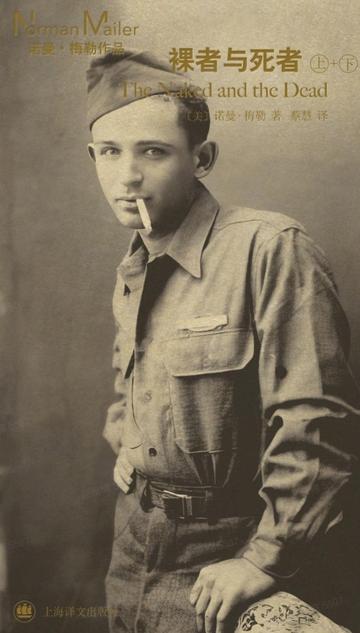
Norman Mailer (1923-2007), one of the greatest postwar American writers. At the age of 16, he entered Harvard to study aeronautical engineering. He served in the Pacific from 1944 to 1946. At the age of 25, he made a sensation in the literary world with "The Naked and the Dead". He has created more than 30 fictional and non-fiction works in his life, and has won the Pulitzer Prize and the National Book Award twice. He is an all-rounder and fighter-like figure in literature, journalism, film, politics and other fields. With his unique and varied work style and bold exploration of style, he analyzes the pathological phenomena in American society. There are many tough guy characters in his works with strong self-awareness, and he is known as "The Second Hemingway". When he died in 2007, it was regarded as "the fall of an American literary giant."
The Naked and the Dead is considered to be the greatest of all novels about World War II (and some even think of all novels about war). Mailer was only 25 years old when he wrote this work, making him one of the most classic American writers of the 20th century.
The novel is set on Annopope Island, a fictional tropical island in the South Pacific during World War II. It tells a panoramic story of how the U. S. Military, under the strategic planning of General Cummings, broke through the Japanese defense lines and completely captured the island. The novel focuses on describing how a group of soldiers from the reconnaissance platoon, who came from grass-roots backgrounds and were almost social outcasts, succumbed to the iron curtain of the army. When they were ordered to complete a reconnaissance mission behind enemy lines that was difficult and dangerous, with little hope, the most instinctive and naked side of human nature was exposed. The novel also creates an opposing camp represented by two middle-class officers, Major General Cummings and Second Lieutenant Horn, and explains the laws and nature of war and the development of human society. The work also uses a special narrative technique to give a biographical appearance to each character in the book, thus forming a wonderful and real microcosm of American society, making this work beyond the scope of ordinary war novels. The work uses a Tolstoyan style of serious sympathy, through this group of losers on the battlefield of life who won the battle to attack the island, thinking about whether the pathological and degenerate society has reached the point of despair? Can power theorists manipulate the course of historical development at will?
Reader comments
The writing is very trivial, very life-like, and daily. It is not a heroic narrative, but the ordinary things of countless ordinary people during the war. It is these descriptions that allow us to more truly feel the trauma that war brings to ordinary people and families.
This book truly shows the human nature in war. I especially like Second Lieutenant Horn in it. His struggle in facing the Iron Curtain of the army moved me very much. The author Norman Mailer is like a social observer, vividly describing the depravity and pathology of human nature. His thoughts on war and society are also very profound, making this book more than just a war novel. All in all, this is a great book worth reading!


The writing is very trivial, very life-like, and daily. It is not a heroic narrative, but the ordinary things of countless ordinary people during the war. It is these descriptions that allow us to more truly feel the trauma that war brings to ordinary people and families.
This book truly shows the human nature in war. I especially like Second Lieutenant Horn in it. His struggle in facing the Iron Curtain of the army moved me very much. The author Norman Mailer is like a social observer, vividly describing the depravity and pathology of human nature. His thoughts on war and society are also very profound, making this book more than just a war novel. All in all, this is a great book worth reading!
Slang, good translation