Stats
9.4Score
15Chapters
Tags
Synopsis
Reader comments
In booklists 4
Why Not Read Classics?
Recommend some good books that are meaningful, influential and well-written.
54.6MViews881Books9hUpdated


Nobel Prize in Literature Works with a Score of 9.0 or Above
6.9MViews323Books9dUpdated





Ah Ah, Is There Any Book About the Moon Plan? It's Best to Travel to Other Worlds.
I want to read a book like "Lobotomy: Increasingly Outrageous Employees".
3.2MViews236Books13dUpdated




Please Write About the Monthly Plan, It Should Be Purely Based on the Monthly Plan, Don't Link It with Other Articles!
2.2MViews134Books2dUpdated
Some small feelings after reading this. The first topic I want to talk about is Meursault's silent resistance at his mother's funeral. When I read about his performance at the funeral and the subsequent court judge's judgment that he had a dirty soul because he did not cry for his mother, the first thing that came to my mind was the sudden crying scene at my grandma's funeral, which then ended abruptly. The absurdity of this cultural difference I think reveals a pervasive ritual hypocrisy. When crying becomes a duty, silence becomes the most honest condolences. Meursault refused to cooperate with this script - drinking coffee, smoking and dozing during the wake. He seemed indifferent, but in fact he exposed "sadness must be expressed in tears and solemnity". I personally think this kind of passive resistance is more subversive than deliberate resistance. The second feeling is about reality. I think Mary is probably a type of person who has been disciplined by society but has not been completely alienated, and the presiding judge probably represents the type of person who is completely alienated, judging people's souls based on emotional orientation, and killing people based on morality. During lunch, I inevitably think about how I should behave in society. As a person like Mary who has been disciplined by society but has not been completely alienated, there may be another possibility for me to be completely alienated but I don't know it. In the past, thinking was just living in the present. But people are always trapped by society. Whether it is the pressure of survival or the responsibility of raising parents, I cannot be alone. Maybe it's because I have never thought about getting married, so I won't raise the next generation. I just want to find a job, visit natural scenery in my spare time, and die with dignity at the end of my life (actually, this may be a luxury). After finishing the meal, I walked out of the noodle shop. The cold wind blew and the sun was dazzling. I went back to my room and wrote this reflection. Perhaps, I don't need grand meaning to defend my life. I should "dance with shackles" and use my career as a survival tool instead of a value label. I should avoid falling into the trap of consumerism and set up good guardianship. When facing family and relatives urging marriage, they would say: "It doesn't matter whether you get married or not. The weather is perfect for hiking today." But at the same time, I must avoid falling into a vicious circle of rebellion and let rebellion become an obsession. Perhaps it should be called "flexible rebellion", which may be the best "rebellion" for this era.
Simple, laid out and plain, "To Live" is just reality, entanglement, sexual desire, love, fear, loneliness. A real person just sees through the essence of "no importance" in life. Peace, joy, and relief are also the transcendences described by Malos
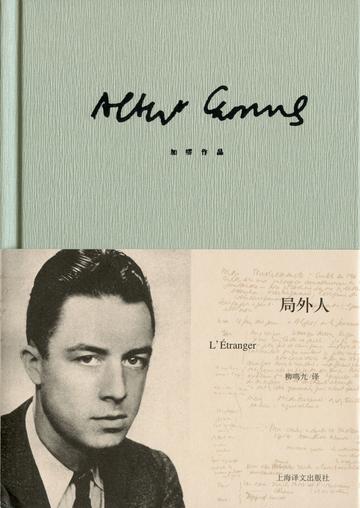
"The Stranger" is Albert Camus' famous and representative work. It is an epoch-making classic of 20th century Western literature. It uses a cold and restrained first-person narrative to push the absurdity of existence and the core of individual authenticity to the extreme. The protagonist Meursault does not conform to secular emotional disciplines, refuses to perform grief at his mother's funeral, refuses to confess in court, and refuses the priest's religious salvation. He is judged by society for being "unsociable" and finally completes his spiritual awakening when he faces death. The novel begins with the minimalist line "Today, my mother died. Maybe it was yesterday, I don't know." It uses sensory narrative to tear apart social hypocrisy and reveal the alienated and absurd nature of modern people's existence. It does not teach people to be passive, but uses extremely real resistance to question individual freedom and the meaning of life. "The Outsider" has become a spiritual symbol of authenticity in literature and philosophy. It still illuminates the dilemma of modern people between discipline and self. It is an eternal fable that spans the ages.
I have to be gregarious, but what does what others think and do have to do with me? The death of my mother, the support of my lover, the help of my brothers, and the conflicts of my neighbors bound me. Compared with these, I am more concerned about today's weather and the noisy market on the street. People who don't understand me scold me for being too cold, but I don't understand myself either. If the judge declares me guilty, do I really feel guilty? I have no way of knowing. When death did come to me, I thought, I would at least feel relieved.
Meursault may not be a hero, but he must be a warrior, a warrior who dares to resist absurdity and has the courage to persist in himself.
It is rare to encounter such an empathetic description. The protagonist always subconsciously explains for himself because society always misunderstands him. And he was really too tired, so tired that he didn't want to deal with the messy stupid stuff in this world. He didn't even bother to say a rebuttal, because he knew it was pointless and they wouldn't care. In the end, he also let go of this world.
This book is very special. Many of the actions of the protagonist Meursault surprised me. He was indifferent to his mother's death and smoked at the funeral. But he's not a bad person, just a different person than most people. His words "I can do anything" really impressed me. Perhaps each of us is an outsider in life, looking for our own way of life. This book made me think about the meaning of life.
This person's mental state is too detached, as if he came to this world with memories of his previous life. What's the difference? Death at the age of twenty and death at seventy are all deaths. Rich or poor, men and women, happy and sad will all die. People are floating in an illusory world. Everyone thinks they hold the most important thing in their hands, but they are blinded by this thing. In the end, death destroys everything, because in fact nothing is important.
Needless to say, this book is famous. I became interested in this book half a year ago. I recently took the time to finish reading it. The narrative is slow and detailed, like an old friend confiding in me, and I still have more to say. The court process gave me a feeling of urgency and depression all the time, and my nerves were released and relaxed along with the emotional outburst that Wenmer later showed to the priest. Looking at the night sky, I remembered a lot and understood a lot. I have some similar characteristics to outsiders. The Myth of Sisyphus
A very short story, exciting enough
What first attracted me was the author's way of depiction. I just read the simplified translation of "Crime and Punishment" some time ago. Camus's way of depiction in "The Stranger" is very different from Dostoevsky's way of depiction. After reading it, it reminded me of Sartre's "Nausea" that I watched before.
This is the most perfect version so far. When I read it, I felt like a bystander watching all this. The language is also minimalist and beautiful.
The ultimate absurdity, I can't understand the characters and plot, because I'm not Meursault. Just an outsider
This is a very cold book. It is precisely because of the cold that you can feel the heat.
God is dead and my heart is the world.
I like the second part better, the Qing Festival is compact and continuous
I think the outsider-style content is quite interesting, and I will explore more interesting things from it.
Very well written
Who is not an outsider?
Nothing has anything to do with me anymore
The law sentences me to death, philosophy acquits me
Unknowingly, I was doing everything like Meursault It doesn't matter if it's X or not.
There must be a reason for it to become a classic
Maybe Meursault was not an outsider at the beginning, but life had smoothed his edges. The priest used tenderness to awaken the original him in the end, so he wanted to do it all over again.
I saw it in 22 years and will revisit it in 25 years
Camus's philosophical novels, a model of concise novels in the world
After watching it, I felt a certain improvement in my knowledge.
It's real and down-to-earth, the characters are clearly described, and the story is interesting. His personality is very similar to mine.
Very in-depth and a good book worth reading