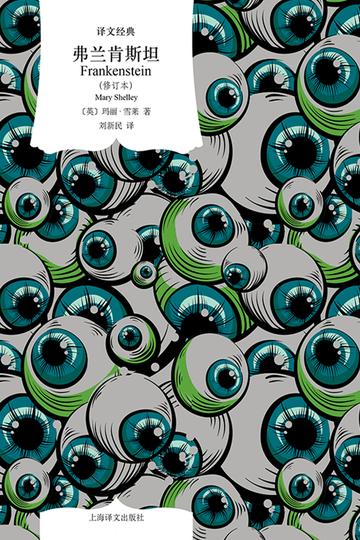
Mary Shelley (1797-1851), a famous British novelist, is known as the mother of science fiction for her "Frankenstein" written in 1818.
This story, known as the jumping zombie, has been adapted into plays and movies many times, and has many obsessed readers and viewers. The protagonist of the novel, Frankenstein, is a biologist who is passionate about the origin of life. He frequently haunts charnel houses with a criminal mentality, trying to piece together a huge human body from the parts of different corpses. When the monster finally regains life and opens his eyes, Frankenstein is so frightened by his ferocious appearance that he abandons him and runs away. However, he pursues Frankenstein to ask for a female companion, warmth and friendship; what follows is a series of bizarre suspense and murder cases...
Reader comments
To be honest, after reading the prologue, the ideas contained in it are those analyzed by later generations. They say that this book is about the contradiction between the newly born revolutionism and the exploiting classes in the past, and expresses the author's support for the revolution. But during the reading process, if you haven't read the prologue first, you will feel that the positive image the author describes is Frankstein, and the title of the book is also Frankstein. She didn't give the monster a name.
Moreover, most of the first paragraph is narrated from Frankenstein's perspective, so what he does seems very reasonable, allowing readers to understand these things from Frankenstein's perspective. It seems that he is the positive character, and then the monster is the negative character.
But when I saw the monster's self-narration, I felt that my writing changed. He was actually quite pitiful. Well, although it can't be the reason for him to do evil, from a psychological point of view, it is completely reasonable for him to become like this.
We can feel the author's yearning for truth, goodness and beauty, which is probably the mental state of their time. In terms of writing style, it may still depend on the translator's expression. Some sentences I feel are too packed.
In the middle, they visited the famous mountains and scenic spots in England and the corners of Switzerland. I think some of the descriptions of the scenery are actually unnecessary. They were inserted by the author during the trip, and her own feelings were applied to the characters. Some sentences about formation are not necessary. It has absolutely no effect on the plot. Nor is it a description of scenery. But maybe just adding these details would make the story richer. Seems more like a true narrative. I saw some comments were talking about the word count, which is indeed true...
To be honest, I think the novel itself is not very attractive, probably because of the sentences and descriptions, but the story she tells is quite fresh and innovative, and as the first science fiction novel, the concept of Frankenstein was also her original creation. This had a great influence on various subsequent works.
Moreover, this type of epistolary writing is always written from the perspective of a third party. To narrate and tell others can give you a third-party perspective of the author. It is equivalent to a narration to supplement and judge. I also really want to learn this writing technique.
Is there something wrong with this Frankenstein? My face was full of questions, why is this happening? He has loving parents, a well-to-do family, a beautiful and gentle childhood sweetheart, and good friends who are very good to him. He is determined to do unethical scientific experiments, does all kinds of things that he had not planned before, and is irresponsible after doing it. He dislikes and abandons his experimental product, leaving him to fend for himself and wait for the consequences of his own creation. When it comes to the important people around him, he struggles psychologically and suffers, but does not take action, does not remedy or make amends, and is immersed in the emotions of causing pain to others, describing himself as miserable. The comfort of others does not help him, and nothing around him can alleviate his pain, oh! The spectacular scenery of nature brought him a sense of comfort, and his sleeping dreams made him temporarily forget the despair of reality. Are you okay? Living and bringing misfortune to others seems to be the most pitiful person in the world. After describing and condemning yourself, it seems that you are not so sinful. How did the dead Justine, William, Clerval, and Elizabeth speak out about their innocence and misfortune? How did the elderly father who was alone face such a tragic situation? Are you really a smart, gentle, courteous, and knowledgeable gentleman? In reality, he is a murderer who is selfish, arrogant, reckless and lacks moral and ethical knowledge, shouting that he wants to live! For the sake of loved ones! When almost all of my relatives are gone, I finally think of eradicating the scourge, dying together with the scourge, running to the North Pole alone, being rescued by others, and telling my painful experience under careful care. I see that you are still the same as when you were a child, a withdrawn person. Even if you can talk to Walton, you are closed in your heart and regard yourself as the highest. All of this Encounter, I have to say that you are the bane of your family. The monster you created is exactly the same as you. It is smart and studious. It is full of psychological activities to explain your own misfortunes. It is puzzled and painful while bringing disaster to others. You are eloquent and eloquent. You talk a lot about the struggle and pain when you commit crimes, and rarely skip the tragic death of innocent people. Lock it up! The author may have deliberately arranged such a character plot to warn against the horrors of anti-ethical scientific experiments. It does make people feel scary and angry when watching it!
I learned this story because of the game.
Because the first perspective of the game is this artificial "monster", I followed its perspective and acted as it.
Watch it learn to understand the world and long for family and love, but it is discriminated against time and time again because of its appearance, even though it has not done anything wrong at first, and has even done a lot of good things.
Its "God" created it, Adam, but did not create Eve, which is doomed to be lonely...
The game doesn't elaborate much on Frankenstein's story. It wasn't until we saw Frankenstein's perspective that we discovered that everything started with his ambition and obsession. He was a pioneer in exploring science and an irresponsible creator.
It said: "If someone is willing to show kindness to me, I will repay him a thousand times. Even if it is just for him, I will live in friendship with all mankind!"
It said: "I used to be kind and kind, but it was only because of my unfortunate experiences that I became cruel and vicious. Give me happiness, and I will become kind-hearted again."
…
Maybe if someone, even anyone, accepts it at the beginning, the tragedy will not be so tragic...
It said: "Let me embark on the road to return to heaven and travel to heaven, and no one will be sad for my passing."
Perhaps no one will be grateful for its birth, but at this moment, I feel sad for its passing.
As soon as I started reading this book, I was overwhelmed by the translator's surging poetry. The translation is so beautiful, not only the description of the characters' personalities, but also the description of the scenery along the way. I felt like I was immersed in the scene and entered the Swiss Alps.
I first read this book because it was the first science fiction novel in history. I had seen people say that this book was good on the Internet, so I took a look when I had time.
It is indeed written at a high level, and in this book I not only see elements of science fiction, but also humanism and sympathy for lower-class people. I think this book satirizes the society at that time to a certain extent.
The character creation in this book is also very good, and the author's emotional description of the characters is very delicate, which is not found in ordinary science fiction novels. For that weirdo, Frankenstein was not even willing to give him a name. In fact, he was very impulsive in doing things. He had not yet thought about the consequences of creating humans, and had not yet taken on the responsibility of creating humans. He just made the weirdo just to be able to show off his ambitions. The weirdo's three views were all shaped by himself and his hatred of Frankenstein. The weirdo himself said that he was a kind and compassionate person, but Frankenstein filled his heart with hatred. So in the end Frankenstein has to hunt down the weirdo in an almost martyrdom posture, because this is his bitter fruit and the price he has to bear.
PS: Tell us something? Don't have a baby without being prepared.
This book is great! Frankenstein in the story is so cool, just like when I was a child and was naughty and putting things together. And the author Mary Shelley is so amazing, her imagination opened my eyes! I also want to be a writer like her and create my own fantasy world.
Frankenstein wants to create Adam instead of God. If Adam is not as perfect as he imagined, where will he and Adam go?
It's so sad. The tragedy originated from the creator's irresponsibility.

To be honest, after reading the prologue, the ideas contained in it are those analyzed by later generations. They say that this book is about the contradiction between the newly born revolutionism and the exploiting classes in the past, and expresses the author's support for the revolution. But during the reading process, if you haven't read the prologue first, you will feel that the positive image the author describes is Frankstein, and the title of the book is also Frankstein. She didn't give the monster a name. Moreover, most of the first paragraph is narrated from Frankenstein's perspective, so what he does seems very reasonable, allowing readers to understand these things from Frankenstein's perspective. It seems that he is the positive character, and then the monster is the negative character. But when I saw the monster's self-narration, I felt that my writing changed. He was actually quite pitiful. Well, although it can't be the reason for him to do evil, from a psychological point of view, it is completely reasonable for him to become like this. We can feel the author's yearning for truth, goodness and beauty, which is probably the mental state of their time. In terms of writing style, it may still depend on the translator's expression. Some sentences I feel are too packed. In the middle, they visited the famous mountains and scenic spots in England and the corners of Switzerland. I think some of the descriptions of the scenery are actually unnecessary. They were inserted by the author during the trip, and her own feelings were applied to the characters. Some sentences about formation are not necessary. It has absolutely no effect on the plot. Nor is it a description of scenery. But maybe just adding these details would make the story richer. Seems more like a true narrative. I saw some comments were talking about the word count, which is indeed true... To be honest, I think the novel itself is not very attractive, probably because of the sentences and descriptions, but the story she tells is quite fresh and innovative, and as the first science fiction novel, the concept of Frankenstein was also her original creation. This had a great influence on various subsequent works. Moreover, this type of epistolary writing is always written from the perspective of a third party. To narrate and tell others can give you a third-party perspective of the author. It is equivalent to a narration to supplement and judge. I also really want to learn this writing technique.
Is there something wrong with this Frankenstein? My face was full of questions, why is this happening? He has loving parents, a well-to-do family, a beautiful and gentle childhood sweetheart, and good friends who are very good to him. He is determined to do unethical scientific experiments, does all kinds of things that he had not planned before, and is irresponsible after doing it. He dislikes and abandons his experimental product, leaving him to fend for himself and wait for the consequences of his own creation. When it comes to the important people around him, he struggles psychologically and suffers, but does not take action, does not remedy or make amends, and is immersed in the emotions of causing pain to others, describing himself as miserable. The comfort of others does not help him, and nothing around him can alleviate his pain, oh! The spectacular scenery of nature brought him a sense of comfort, and his sleeping dreams made him temporarily forget the despair of reality. Are you okay? Living and bringing misfortune to others seems to be the most pitiful person in the world. After describing and condemning yourself, it seems that you are not so sinful. How did the dead Justine, William, Clerval, and Elizabeth speak out about their innocence and misfortune? How did the elderly father who was alone face such a tragic situation? Are you really a smart, gentle, courteous, and knowledgeable gentleman? In reality, he is a murderer who is selfish, arrogant, reckless and lacks moral and ethical knowledge, shouting that he wants to live! For the sake of loved ones! When almost all of my relatives are gone, I finally think of eradicating the scourge, dying together with the scourge, running to the North Pole alone, being rescued by others, and telling my painful experience under careful care. I see that you are still the same as when you were a child, a withdrawn person. Even if you can talk to Walton, you are closed in your heart and regard yourself as the highest. All of this Encounter, I have to say that you are the bane of your family. The monster you created is exactly the same as you. It is smart and studious. It is full of psychological activities to explain your own misfortunes. It is puzzled and painful while bringing disaster to others. You are eloquent and eloquent. You talk a lot about the struggle and pain when you commit crimes, and rarely skip the tragic death of innocent people. Lock it up! The author may have deliberately arranged such a character plot to warn against the horrors of anti-ethical scientific experiments. It does make people feel scary and angry when watching it!
I learned this story because of the game. Because the first perspective of the game is this artificial "monster", I followed its perspective and acted as it. Watch it learn to understand the world and long for family and love, but it is discriminated against time and time again because of its appearance, even though it has not done anything wrong at first, and has even done a lot of good things. Its "God" created it, Adam, but did not create Eve, which is doomed to be lonely... The game doesn't elaborate much on Frankenstein's story. It wasn't until we saw Frankenstein's perspective that we discovered that everything started with his ambition and obsession. He was a pioneer in exploring science and an irresponsible creator. It said: "If someone is willing to show kindness to me, I will repay him a thousand times. Even if it is just for him, I will live in friendship with all mankind!" It said: "I used to be kind and kind, but it was only because of my unfortunate experiences that I became cruel and vicious. Give me happiness, and I will become kind-hearted again." … Maybe if someone, even anyone, accepts it at the beginning, the tragedy will not be so tragic... It said: "Let me embark on the road to return to heaven and travel to heaven, and no one will be sad for my passing." Perhaps no one will be grateful for its birth, but at this moment, I feel sad for its passing.
As soon as I started reading this book, I was overwhelmed by the translator's surging poetry. The translation is so beautiful, not only the description of the characters' personalities, but also the description of the scenery along the way. I felt like I was immersed in the scene and entered the Swiss Alps. I first read this book because it was the first science fiction novel in history. I had seen people say that this book was good on the Internet, so I took a look when I had time. It is indeed written at a high level, and in this book I not only see elements of science fiction, but also humanism and sympathy for lower-class people. I think this book satirizes the society at that time to a certain extent. The character creation in this book is also very good, and the author's emotional description of the characters is very delicate, which is not found in ordinary science fiction novels. For that weirdo, Frankenstein was not even willing to give him a name. In fact, he was very impulsive in doing things. He had not yet thought about the consequences of creating humans, and had not yet taken on the responsibility of creating humans. He just made the weirdo just to be able to show off his ambitions. The weirdo's three views were all shaped by himself and his hatred of Frankenstein. The weirdo himself said that he was a kind and compassionate person, but Frankenstein filled his heart with hatred. So in the end Frankenstein has to hunt down the weirdo in an almost martyrdom posture, because this is his bitter fruit and the price he has to bear. PS: Tell us something? Don't have a baby without being prepared.
This book is great! Frankenstein in the story is so cool, just like when I was a child and was naughty and putting things together. And the author Mary Shelley is so amazing, her imagination opened my eyes! I also want to be a writer like her and create my own fantasy world.
Frankenstein wants to create Adam instead of God. If Adam is not as perfect as he imagined, where will he and Adam go?
It's so sad. The tragedy originated from the creator's irresponsibility.
Good, good, good, good, good-looking, good-looking
Although there are not many science fiction elements, the plot is very exciting