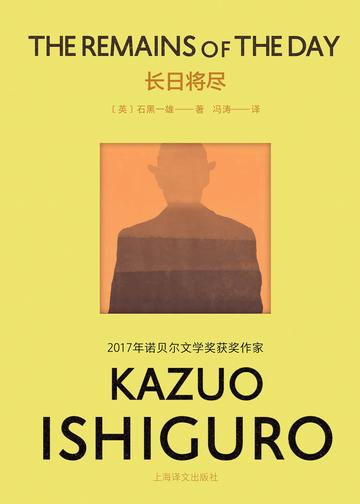
"The End of the Day" is a work by Nobel Prize winner Kazuo Ishiguro that won the Booker Prize in 1989. It is also Ishiguro's most important masterpiece. The novel unfolds with the memories of the butler Stevens, telling the various experiences he had during his more than thirty years of service to Lord Darlington. Although he reached the peak of his career, Stevens suppressed his emotions too coldly and pursued perfect performance of his duties. He missed the last time his father was on his deathbed, and then missed love. Through the protagonist's memories, the novel unravels a person's life journey in front of the readers' eyes. It also reflects the international political landscape during the extraordinary period between World War I and World War II.
The 1993 film of the same name (also known as "Goodbye"), a remake of the novel, starred the famous British actors Anthony Hopkins and Emma Thompson. It was nominated for eight Academy Awards and six British Academy Film Awards, and became a classic in film history.
Reader comments
When I opened this book, I found that there were too many long and difficult sentences. In order to understand the meaning of a sentence or a paragraph, I had to go back and re-read it, so that in order to understand the details, I ignored the overall clues laid by the author to give the work profound connotation. Fortunately, the translator analyzed and summarized the core ideas of the whole book at the end, which made me realize that my reading was not in vain.
Maybe life is like this too. You have walked a journey in ignorance and numbness. It takes a wise man to click on it, stop and look at the road you have traveled and the road you will take before you can realize what you have gained and what you have lost in this journey...
I have heard about this book for a long time, but perhaps because the title gave me a particularly solemn and solemn feeling, I always preconceived that it belonged to the category of books that I "can't read", so I never read it. And because there were so many people recommending it and there were almost "zero bad reviews", I finally opened this book with anticipation.
Needless to say, this book is not difficult to read. Although I did not understand some parts of the content thoroughly due to differences in culture and background, the whole story was still very smooth to read. (While reading, I occasionally thought of the image of the butler in "Downton Abbey")
At first, I thought that the purpose of this book was to praise the steward "I", his understanding of the profession of stewardship, or some of the values he expressed in the book. But after reading the later articles and annotations, I gradually discovered that while adhering to his professional philosophy, he lost a lot, and in order to escape these losses, he had to deceive himself and others. This may make the story no longer a "praise", or not just a "praise", but add many different and profound connotations.
All in all, worth reading.
January 2026.
An emotional iceberg.
The destruction of personal goals, the rejection of happiness, regrets in old age, and extremely depressed expressions.
All I can say is that it is worthy of being a Nobel Prize winner. It brings readers a rich and long emotional experience, and at the same time brings in-depth thinking about life ambitions and the vicissitudes of the times. This is one of the best books.
The unique narrative perspective and cold narrative mode captured my heart. Highly recommended.
Is it a translation problem? The narrative is a bit complicated.
If you understand the past, don't criticize it, but if you know what's coming, you can pursue it
The scene of your father wandering back and forth in front of the pavilion, looking down at the ground, as if he wanted to find some lost treasure.
This book has a kind of mysterious magic, maybe this is the charm of unreliable narrative
When I opened this book, I found that there were too many long and difficult sentences. In order to understand the meaning of a sentence or a paragraph, I had to go back and re-read it, so that in order to understand the details, I ignored the overall clues laid by the author to give the work profound connotation. Fortunately, the translator analyzed and summarized the core ideas of the whole book at the end, which made me realize that my reading was not in vain. Maybe life is like this too. You have walked a journey in ignorance and numbness. It takes a wise man to click on it, stop and look at the road you have traveled and the road you will take before you can realize what you have gained and what you have lost in this journey...
I have heard about this book for a long time, but perhaps because the title gave me a particularly solemn and solemn feeling, I always preconceived that it belonged to the category of books that I "can't read", so I never read it. And because there were so many people recommending it and there were almost "zero bad reviews", I finally opened this book with anticipation. Needless to say, this book is not difficult to read. Although I did not understand some parts of the content thoroughly due to differences in culture and background, the whole story was still very smooth to read. (While reading, I occasionally thought of the image of the butler in "Downton Abbey") At first, I thought that the purpose of this book was to praise the steward "I", his understanding of the profession of stewardship, or some of the values he expressed in the book. But after reading the later articles and annotations, I gradually discovered that while adhering to his professional philosophy, he lost a lot, and in order to escape these losses, he had to deceive himself and others. This may make the story no longer a "praise", or not just a "praise", but add many different and profound connotations. All in all, worth reading. January 2026.
An emotional iceberg. The destruction of personal goals, the rejection of happiness, regrets in old age, and extremely depressed expressions. All I can say is that it is worthy of being a Nobel Prize winner. It brings readers a rich and long emotional experience, and at the same time brings in-depth thinking about life ambitions and the vicissitudes of the times. This is one of the best books. The unique narrative perspective and cold narrative mode captured my heart. Highly recommended.
Is it a translation problem? The narrative is a bit complicated.
If you understand the past, don't criticize it, but if you know what's coming, you can pursue it
The scene of your father wandering back and forth in front of the pavilion, looking down at the ground, as if he wanted to find some lost treasure.
This book has a kind of mysterious magic, maybe this is the charm of unreliable narrative