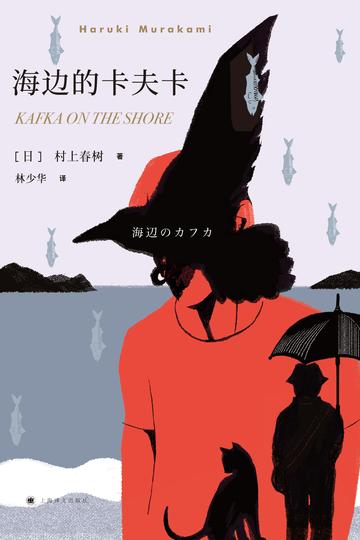
Stats
Tags
Synopsis
Reader comments
In booklists 12
Literary Masterpiece, (ㆁωㆁ)
Why Not Read Classics?
Recommend some good books that are meaningful, influential and well-written.


Japanese Light Novels, Campus Romance Novels Are in Urgent Need
If you want to watch something like "My Youthful Campus Life, I Don't Want Shura Field!" Book. Nowadays, I love light novels. Is there anything about the beautiful campus life of high school students? ‧⁺◟( ᵒ̴̶̥́ ·̫ ᵒ̴̶̣̥̀ )
Literary Masterpieces, Good-Looking Literary Novels
Does Anyone Like Literary Classics as Much as I Do?
I recommend twenty-three literary masterpieces to you
Nice Masterpiece
It's not just foreign or Chinese, it doesn't matter, as long as it's beautiful and meaningful
Literature Books, I Want Literature Books! ! !
Family members, I want to read literature books, books that can improve my writing skills or increase my knowledge. Beg on your knees!
Advanced Literary Works
Are there any novels that can be included in compositions or novels about famous people?
Are There Any... Foreign Masterpieces... Chinese Masterpieces?

Foreign Masterpieces, Preferably Classical and Romantic Ones!
I want to read a book similar to "A Tale of Two Cities (Classic World Masterpiece)".


It's Terrible. I've Been Reading for Almost Half a Month. Someone Can Help Me.


I Am an Old Bookworm and Have No Books to Read. Please Read.
I want to read a book like "Lord: Turning the World of Pain into Butter (Lord of the Mist)". Is there any good book? I'm going to read it. I can't find any books to read. I want a male video, not something like Baomeng.
Murakami's novels always float between reality and absurdity. In the chattering dialogue, it seems that along with the characters, he listened to some music, ate some food, went to some places, met some people, and finally found that the story was over, but he still failed to understand the theme. Maybe this kind of novel has no theme at all, but the interesting part lies in some of its inadvertent characterizations, and some fragments will touch you inexplicably. . . . . .
After seeing the third third of the novel getting better, I have to say that the author admires reading. As the most tenacious fifteen-year-old boy, Young Crow still works out and reads books during his break from school. The dialogue between Hoshino and Oshima is also very classic. When you see something, your own realm will sublimate. Most of the whole novel is very hazy. I originally guessed that the boy is the shadow of Nakata's youth. , I didn't expect that the two have nothing to do with each other. The existence of the boy himself was more of a concept before the ending. He is a crow cursed by his father, the son of Sada, the lover of 50-year-old Sada, and the lover of 15-year-old Sada. Only after he returns in the end does he truly become a complete person. Thank you for the translation. I feel great reading the whole article.
Everyone in the book is lonely: Oshima is lonely, he suffers from hemophilia and gender disorder, so he is looked down upon by others; the protagonist is lonely, his mother and sister left him when he was young, and his father ignored him and gave him an Oedipal curse at the beginning; Nakata is lonely, an accident in his childhood caused him to lose his memory and learning ability. A very good student became illiterate and became a disabled person in need of help. However, Nakata did not seem to be affected and had low self-esteem or aversion to the world. Instead, he lived in his own world, just like what was said at the end of the novel: We all live in our own libraries, can talk to cats, and become cat hunters. No one can understand how he finds cats. Only he knows. This book made me feel that there is a strong sense of boundaries and individuality between everyone. No one really understands you. There will be no "boy named Crow" outside our hearts. This "boy" exists in our hearts and is our conscience and the person we hope to be. Everyone has had the idea of escape from the real world, and may have actually done so, but no matter how we escape, the Oedipus-like curse will eventually find us. At the end of the novel, Oshima says "you have grown up" because Tamura-kun no longer escapes. He comes out of the door and turns to face the police, the school, the death of his parents, and being alone. The world inside the door is beautiful and paradise-like, but it only exists in our imagination. It is the moon in the water, the flowers in the mirror, and illusory. We still have to accept everything quietly and face the reality. The book says that memory is very important. Memory can prove the existence of a person or a thing. When no one remembers a person or something, the person or thing has truly disappeared. This book is not bad. Although I read it in a fog, I still saw some things and I have some thoughts. I will leave this comment to commemorate that I have finished reading this excellent book.
This book is very much in the style of Haruki Murakami, and the development of the two parallel lines in the story is very exciting. I especially like "Kafka Tamura", the young boy who aspires to be the toughest boy in the world. His courage and determination are admirable. This reminds me of my confusion and exploration when I first graduated, and it also makes me more convinced that in the process of growing up, we need to maintain a soft soul state and constantly explore freedom and direction. Haruki Murakami's reflections on Japanese cultural traditions are also very profound. This book made me think more about life.
Haruki Murakami's works always give people a sense of "let nature take its course". No matter how magical the appearance of objects and the occurrence of things are, they are still so natural, just as they should exist. There is no complicated supply and demand in these things, objects, and plots. As long as you go to a certain place, anything can happen naturally. No matter how incredible it is, it is reasonable for the development of the plot. For example, in "Kafka on the Shore", Nakata was able to talk to the cat and guide him step by step on the journey to find the entrance stone. Finally, he gave the protagonist a choice between a perfect inner world and a lonely real world. After the cat master completed the guidance task, Nakata suddenly found that he could not understand the cat's language. There was no sign, but it was not unexpected, because it had accomplished its mission and it naturally faded away. Later, the cat appeared again, but the communication partner was changed to Hoshino boy. After Nakata died inexplicably, how to close the entrance stone became a problem. Cat Lord jumped out to play its role again and taught him how to close the entrance stone. Everything seems so natural and natural, without any redundancy or artificiality. To achieve the goal, you don't need to elaborate on long paragraphs or use too much pen and ink. It is enough to achieve the effect in any strange and artistic way. It is also foreseeable if the world suddenly turns upside down. Simple, natural and metaphorical language is what I like most about Haruki Murakami.
Reading Haruki Murakami is like watching a male college student across from you deliberately show off your charm. But who would say no to the smiling faces of a rebellious, delicate and artistic young man? Rather than saying that she likes older men, it is better to say that she is envious of youth. Haruki Murakami has returned from half his life and is still a male. This kind of soul embalming technique may itself be an excellent endorsement of charm.
The popularity of "Heat" is really different from "Norwegian Wood", but both the plot and writing are more interesting and smoother than the latter (mostly because it really has "things" to do and think about); and its thoughts are more positive, which I like very much.
Read as prose, some parts resonate deeply, but as a novel, it is indeed a bit inexplicable. This is completely Murakami's own world, but isn't it a bad feeling to have a stream of consciousness? All in all, for me, it's pretty good.
I have read the book "Kafka on the Shore" twice and I am still a little confused and don't know what to express because the plot is too bizarre. I have read many other people's feelings. Now that I think about it, this book cannot be read from a normal perspective. My feeling is: this book is written to break the tragic ending of the Oedipus plot myth. You must read the preface. The preface talks about It is very real. It was written to give thousands of lost teenagers a hope to continue on. It breaks the myth of the destructive ending. The plot of "killing father and marrying mother" seems difficult to accept, but there will be many devastating bad things in life, but there will always be people like Oshima and Hoshino in life, who can heal and redeem you, so that we can keep going. The magic touch in the book is the wonderful interweaving of two lines. Kafka's line is that he has been cursed since he was a child, foreseeing pain and can only move towards the abyss of pain step by step in confusion. Nakata's line is that he suffered from the sequelae of war trauma and his life has become unknown and empty. Nakata intervened from the unknown to Kafka's line where everything is destined, and it also affected Hoshino. The life of Nakata allowed him to regain his expectations for life. The book also contains a satire of the Japanese war at that time. In the Nakata line, a man in a suit has killed a cat to threaten Nakata to kill himself. In my opinion, some soldiers are actually unwilling to kill, but if they don't kill, they will be killed, but after killing, they hope that someone can end their lives. The two soldiers in Kafka's line, Moritari, pointed out that those soldiers who were unwilling to kill eventually chose to commit suicide to escape. Although Kafka's line is indeed obscure and difficult to understand, the sentence at the end of the article - You are the strongest boy has redeemed the gloomy hearts of countless teenagers and made them believe that as long as they persist, a new world will open up.
1/3 Of the plot in the book is about metaphors. It can be said that it is one of the most difficult novels I have ever read to understand. 2/3 Is about philosophy, but more accurately it is a private and refined philosophical speculation about one's own existence between a 15-year-old girl and the 15-year-old protagonist. Does memory matter? Who else in the world cares about me? How do I understand someone who loves me deeply but abandons me? How to understand hypothesis? Is the answer an answer because of its inexpressibility? The metaphorical nature of the world? Is the fateful curse to follow it or to resist it? What does it take to become the strongest 15-year-old boy? Should we choose to indulge in a dreamlike world, or return to the unloved real world where a bayonet is inserted into other people's intestines and stirs? Do you need to take responsibility for what you do in your dream?
Encountering the written world of Haruki Murakami for the first time is like opening a sandalwood door leading to a metaphorical realm. Flowing jazz, deep forest imagery, and independent bookstores carrying memories, these elements are transformed into philosophical symbols in his writing, showing profound insights into the living conditions of modern people, and narrating the essence of existence at the interface between reality and magic. "When the sandstorm subsides, you may not fully understand how you escaped through it, and you may not even be able to tell whether it has gone away. But one thing is clear: the person you escape from is no longer the same person you were when you entered the sandstorm. Yes, this is the meaning of the so-called sandstorm." ——Haruki Murakami
This book is very abstract. Maybe it's because I don't have enough literary skills to understand it. My general understanding is that the whole book emphasizes the relationship between people and society as a whole, and at the same time it has a sense of struggle against fate. There is also the last library, which is a person's inner world. In society, people are often subject to various external pressures. At this time, we dress it as a library of the inner world. We should always examine our own hearts, so as to constantly improve ourselves and reconcile with ourselves. If there is any problem with my understanding, I hope you can point it out. I will read this book several times again.
I read the physical book and got some inspiration from the protagonist. I want a happy ending, but reality won't be that way. Sometimes I feel like some scenes in the book happened in reality.
I feel deeply, but if I really want to elaborate, I can't explain why.
There are many psychological descriptions, which make people better understand what loneliness is, and also make people think about what freedom is. I remember that when I was 18, I told my parents that I would pack a bag and go wandering. I said it was wandering, but I did not treat myself badly in terms of spending money. I wanted to meet all kinds of people and escape from many things, but the same goal was not achieved. Maybe it was because my starting point was not free enough.
It's so good. I finished watching it in 2 days. Tamura, Saeki, and Nakata. It's hearty and comfortable.
It's very interesting, one of the books you should read after learning Japanese well. Mr. Lin once mentioned that this book belongs to the development of "Yu Xuan" in Japanese culture. But a lot of what I read in it was from Western writers—both in terms of prose and themes. It should be said that I think it is not good to simply define the theme of this book as anti-war or personal growth. Its writing has the feel of an ancient Greek drama - fate is the only thing that can defeat the strongest, but it can also turn everything in the world upside down.
"But I haven't figured out the meaning of living yet." I said. "Look at the paintings," he said, "and listen to the sound of the wind." I nodded. "You can do this." I nodded. "It's best to sleep first." The boy named Crow said, "When you wake up, you will become part of the new world."
The real answer cannot be put into words, two journeys, one feeling - loneliness
This book is very profound, using many allusions and reflections on life, worldly affairs, and time. At the same time, it is written in a micro-science fiction style, which is quite interesting. Its main theme can also clearly taste the thinking about war. For me, this book will be very interesting and thought-provoking if you read it carefully as a serious piece of literature; it will also be very interesting as a micro-science fiction anti-war story book. Worth a second brush.
I wanted to give it a three-and-a-half star rating when I was halfway through it, but the amazing thing is that I finished it. Compared to the heavier main line, I prefer Nakata's dark line, but the content of the main line is profound, from escaping fate to accepting fate, and finally resisting fate.
Sometimes some content feels a bit abstract and difficult to understand, maybe because of some Japanese culture. Sometimes the quotations are a bit profound and abstract, which is not easy to understand, but I personally feel that overall they are very fantastic but very attractive. In particular, the two story lines are carried out simultaneously. On one side, it is the experience, psychological description and change of mentality of the runaway boy, which is the growth path of a 15-year-old boy. On the other side, it is the bizarre experience of Uncle Nakata, talking to cats, causing fish and leeches to fall from the sky, and the incident of the entrance stone, which is the road to redemption for the uncle, a man with only half a shadow.
Rather than specific insights, this book gave me more of a vague feeling, which, perhaps, as I said, cannot be described in words.
After reading it, I felt emptied and heavy for no reason. After a day, I slowly came back to my senses. I think the moving and brilliant thing about Haruki Murakami's works is that he interweaves the desolation and unspeakable shame of life with the way out for self-help. When readers try to find answers, they often experience the desolation more deeply; conversely, if they dare to face the desolation, they can also find comfort in it. Many times, desolation and the antidote are inseparable. It is extremely difficult to clearly distinguish between the two, but this kind of chaos is precisely indispensable. Although the ending of a book has already been written, the inspiration it brings to me will stay with me for the rest of my life. I like a saying very much: "A library is unreserved generosity." Books are a luxury for me as a high school student: firstly, I may not be able to fully understand the meaning behind the words, and secondly, heavy academic work often squeezes out reading time. But I always believe that whenever I calm down and turn the pages of a book, the enlightenment brought by words is irreplaceable. I am always grateful for the generosity of this text.
I've watched it many times, and I've learned something every time!
There are still some shortcomings. After many experiences, Kafka Tamura's pain remained. We only hope that this period of "growth" and the fate he has forged can lead to a better tomorrow for this young man. (Contains the Oedipal narrative, metaphor, and how anything can happen under metaphor) The toughest fifteen-year-old boy in the world.
Nakata became part of Hoshino. I hope I can think of him from time to time when I am irritable or depressed.
The content in this book is very interesting. The author's imagination was really rich when writing this novel. It made me, a person who doesn't like reading literary novels, interested in reading it all the time. I recommend it! From my experience, this book is about a boy who was abandoned by his parents and constantly searches for the meaning of his existence and the answer to the curse his father placed on the boy. On the road, the boy met many people who were connected to his soul. In the process of communication and mutual help, he found To get the answer, another line is Nakata, an old man who encountered a car accident in his life and acquired a special life carrier. He can communicate with cats and dogs. He realized that he seemed to have lost something and went to Shikoku to find the entrance stone to make up for his incomplete soul. In my opinion, Nakata is the soul of the boy, and the boy is the body of Nakata. Although they have never met, their fates are intertwined under certain circumstances. I have limited reading ability. After reading this book, I didn't understand what it was really about. However, my realization after reading this book is: always be full of hope in life, and everyone is looking for the meaning of their lives.
Really good-looking! It is indeed Haruki Murakami's masterpiece. The first 20 chapters seem to be two completely unrelated stories written alternately. Now that I read chapter 21, they suddenly connect. It's so shocking! In fact, my mind is still a bit messy right now, and this is a book that is very suitable for a second reading. I still don't understand some of the plots, so I need to search online again to give it a chance to read it a second time. Some of the plots are still a bit explicit, but it's really good to watch.
Although I can't understand it, I still thank the teacher for allowing me to see such an interesting story.