Stats
Tags
Synopsis
Reader comments
In booklists 69
Explore more →
Top 10 Tomato Books
No matter old or new books, take them out, such as Tokagi, The God of Drama, etc. The ideas must be clear and the logic smooth, don't be stupid and cool. Take them out quickly!
Tomato's Six Great Books, a Must-Read Novel
If You Don't Read These Books, Why Don't You Play Hammer Tomato?
Recommend the number one tomato in your heart
A Completed Novel That Is so Shocking That You Will Have Endless Aftertaste.
A completed novel that is so shocking that it will leave you with endless aftertaste.
Tomato's Four Masterpieces, I Bet You Must Have Read One
I don't believe you haven't swiped it two or three times
Increase Knowledge and Improve Your Own Books
Books about architecture, computers, etc., Don't be emotional.
The Three Divine Books Have Been Completed, and There Are No Updates on the Strange Beasts. Is There Really No Masterpiece?
I want to read a book like "I Learned to Kill Gods in a Mental Hospital".
Books That Students Should Read, In-Volume Essentials
Mathematics, Chinese, English, chemistry, physics, biology, geography, history, ancient poetry...
Nobel Prize for Literature, Mao Dun Literature Prize, Lu Xun Literature Prize and Other Literary Works
I want to read a book similar to "One Sentence is Worth Ten Thousand Sentences: Collector's Edition".
Masterpiece! ! ! a Chinese and Foreign Classic Book! ! !
Literary Masterpiece, (ㆁωㆁ)
I Beg You to Read Secretly During the Summer Vacation, and Book That Will Kill Your Classmates at the Beginning of the School Year.
I Read Secretly During the Holidays and Became Obsessed with My Classmates' Books.
I would like to read a book similar to "How to Read a Book".
I'm in a Bad Mood and Want to Read Some Funny Books
Tomato Masterpiece, 2 to 7 in No Particular Order
Why Not Read Classics?
Recommend some good books that are meaningful, influential and well-written.
Worth Reading Literary Works
Keep it for the record and look at it again when you have time.
Full of Useful Information: All-Round Learning Book
I Want a Book with Frequent Golden Sentences
The author writes very well in this book, every sentence is full of copywriting
Are There Any... Math Books, English Books, Chinese Books...🌚🌝
My parents always say that all my books are novels, and there are no novels about learning🌚🌝
Books for Women to Enhance Their Awareness
I would like to read a book similar to "The Choice of Being a Woman". Books that women should read to improve their awareness, change their thinking, and redeem themselves
9.9 or Above, I Read It Five Times in a Row, and It Made Me Burst into Tears.
I want to watch content similar to "The Destiny of an Orphan". It's beautiful, sad, and made me cry. I read it over and over again. I highly recommend it to everyone.
9.9 High Score! 2026 God-Conferring Work!
I want to watch content similar to "70 Space: A Girl Who Traveled Through Time and Was Reborn as a Mom". Various types
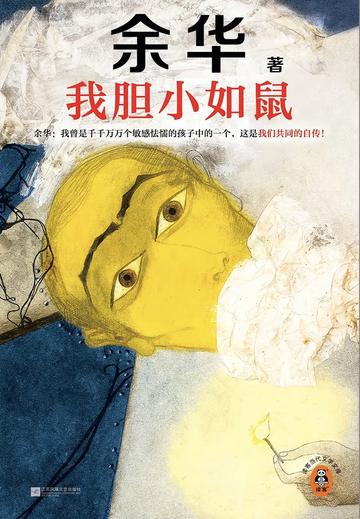
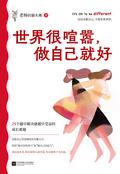
The writing is so delicate and the story is so real. Some of my experiences reminded me of myself when I was a child. I was timid, had low self-esteem, was sensitive, and cared too much about other people's opinions. I was stuck in self-doubt and self-denial all day long. Sometimes I was glad that I was able to grow up safely. Haha, looking back now, I feel that everything is in the past. Time will really heal everything and heal the scars of the past. From the time I started reading Teacher Yu Hua's books in 23 until now, I feel like I have been reborn and slowly reconciled with the past. When I saw the death of a landowner in the last chapter, I also watched "Wen Cheng" together and felt a little confused for a moment, connecting the two stories together. I recommend everyone to read this book "I'm as Cowardly as a Mouse", which can give you a new understanding of life when you are at a low point, and give you the courage to move forward again.
Characterization - The protagonist Yang Gao is timid and afraid of getting into trouble. Due to his father's education and his own personality, he has been repeatedly bullied and unfairly treated at school and in the workplace. For example, he does not dare to go into the river or climb trees, and he commutes to get off work on time but his salary does not increase. Lu Qianjin, on the other hand, is strong and cunning, in sharp contrast to Yang Gao, highlighting the relationship between the good and evil of human nature and the strength and weakness of society. - Yu Hua delicately depicts Yang Gao's inner world, showing his inferiority, helplessness and struggle, making it easy for readers to resonate with him and enhancing the appeal of the story. Topic mining - In-depth exploration of the weaknesses of human nature, such as timidity, cowardice, selfishness, etc., Through Yang Gao's experience, triggers readers' thinking about human nature, and also shows his gradual growth in difficult situations, embodying the theme of growth and courage. - Reflects social real problems, such as unfairness at work, labeling in education, etc., Reveals the helplessness of people at the bottom of society, has practical significance, and also prompts readers to think about how society should treat individuals. Narrative technique - Some works use stream-of-consciousness techniques. For example, "Summer Typhoon" takes disaster as the main line and displays all living beings in a jumping manner, making the story more layered and mysterious, but also increasing the difficulty of understanding. - The plot is cleverly arranged, such as Yang Gao's revenge plot in "I'm as Cowardly as a Mouse", which adopts a "snowball" narrative. The conflicts continue to escalate but are resolved at the end, leaving a deep impression and space for readers to think. Language style - The language is concise and straightforward, without too many modifications, but it can vividly describe the characters and scenes, allowing readers to quickly enter the story and feel the emotions and atmosphere. For example, the description of the scene where Yang Gao's father was humiliated is very expressive.
Teacher Yu Hua played steadily, leaving happiness to himself and sadness to the readers as always. The novel truly shows the sensitivity, inferiority and cowardice of adolescence. Yang Gao was ridiculed by his classmates for being timid at school, and was bullied by his colleagues for being honest in the factory. All these situations very truly reflect the psychological dilemma and social pressure in adolescence. Through the story of Yang Gao, the multi-faceted nature of human nature such as fragility and tenacity, fear and courage is explored. Although Yang Gao is as timid as a mouse, deep down in his heart he also longs to be brave and to be respected and recognized by others. He gradually accumulated the courage to resist during long-term depression and pain, showing the complexity of human nature. Reflecting certain social reality problems, the book is a profound reflection on the current situation of education. The teacher who is good at using idioms and metaphors uses words such as "cowardly as a mouse" as a sharp edge to ruthlessly cut off the students' self-esteem and self-confidence. This puts Yang Gao and other characters on the back of a heavy label. It also reveals the prejudice and oppression that society has against individual characters. I didn't like the other two stream-of-consciousness articles very much, so I read them through quickly and won't comment on them.
It is a very resonant book. The fear and joy, confusion and incomprehension that Yu Hua experienced as a teenager seems to have been experienced by me. Perhaps, this is the meaning of writing, to let another person understand his past self through the author's works, so as to better face the next life.
I am as timid as a mouse, and Yang Gao is a timid person, but timid people can sometimes explode. Of course, Yang Gao learned the principle of "resistance" the moment his father died. The middle two stories, the summer typhoon and the April 13th Incident, were confusing to read. Maybe it was because the teacher's writing was so good that I didn't understand them very clearly, but I probably knew what he was writing. The last story is really well written. Wang Xianghuo is an admirable person, not a stupid son of a landlord. Then, there is a part written by Teacher Yu Hua that almost made me think I was reading a pornographic book and I laughed to death. In short, you have to read these stories carefully to understand what they are about, otherwise it will be really difficult to understand them. There are a lot of environmental descriptions in it, and the angles are also very strange. I will read it again when I have time.
"I'm as Cowardly as a Mouse" consists of four novellas. The opening chapter "As Cowardly as a Mouse" echoes the title. The protagonist is first teased, and then ignored to the point of being ignored. As readers, you and I are still experiencing all this whether we were teenagers or still today, and this novel shows us that cowardice is the undertone of our character that is difficult to erase.
Teacher Yu Hua's book is really in-depth. "I am as timid as a mouse" reflects the psychology of many people. Those "geese" in life are always self-righteous, while real realistic people are labeled as "cowardly". The writing about "summer typhoon" is very cryptic and not very understandable. The protagonist of the "April 3rd Incident" doubted everything around him, even his parents. After several battles, he finally jumped onto the coal pile of "freedom" and gained spiritual relief. In the last section, "The Death of the Landlord", the landowner's son endured the pain of being stabbed in the palm of his hand, witnessed the inhumane behavior of the Japanese soldiers, endured the humiliation and dealt with them, and finally died heroically. After his father found out, the word "evil son" no longer meant the original disdain, but was replaced by a father's grief for losing his son. This book is really worth reading! ! ! It's "Death of a Landlord"
Each short story is particularly exciting, and the characters are vividly drawn. My favorite is the last story, the death of a landowner. The image of the Chinese martyrs is particularly realistic. The Japanese's crimes are so heinous that we are not qualified to forgive our ancestors. Don't forget the national humiliation! ! !
I have finished reading Yu Hua's series of stories "As Cowardly as a Mouse", and I have three insights: First, the environment in which one grew up in childhood affects a person's life. A restrained and nervous environment will turn into cowardice, timidity, fear, and failure... Second, the external environment described in the text of rain, darkness, and night highlights the grief and failure of the event, allowing readers to bring their emotions into the story, and experience the grief, helplessness, and loss that goes against their wishes. Third, "Death of the Landlord" does not contain many vigorous anti-Japanese scenes. From the beginning to the end, the heroes of the little people are described lightly, highlighting the greatness of the heroic sacrifice in the end. The contrasting descriptions of the small characters in the story reflect the sharp contrast between the ideological awakening of some people who were willing to give and the selfishness of the ugly souls at that time. At that time, the national crisis was a mess, but there was still humanity shining brightly and hope, just like the leaves of the river slowly unfolding so resilient and so warm...
It writes about people's sensitivity, inferiority and cowardice [I almost cried], it's a good book [Like]
"I'm as Timid as a Mouse" is very detailed, but "Summer Typhoon" was not very understandable. At first, I thought "The Incident of April 3" was similar to the setting of "The Truman Show". Only after reading the last paragraph did I realize that it was about the mental disorder of a mental patient. "Death of a Landlord" is a novel that I think is very "Yu Hua" (because I have only read three of Yu Hua's works👉👈, I'm ashamed to say it). It's a bit melancholy and I don't know why. The writing is light but it has a strong sense of sadness.
Teacher Yu Hua's writing is so elegant. The elegance lies in the description of the scenery and the characterization of the characters. It is really of the highest quality.
The two stories in the middle are vaguely understandable, but there is no boring feeling that I can't finish reading. I can't say what's particularly amazing about the first and fourth stories, but they are told in a straightforward manner and I want to read them in one sitting. They are warm.
This book truly shows the inner world of adolescent boys and made me feel the same way. Yu Hua's writing style is concise and powerful, and he can depict profound emotions with simple words. The characters in the book are all very vivid, and their actions and thoughts made me see my own reflection. I particularly like the character Bai Shu. His timidity and growth process really resonate with me. This is a good book that makes people think and grow.
Yu Hua's novels are still so good, and the stories are quite good. You can also see the change in his writing style from the time of writing. The only shortcoming is the chapter "Summer Typhoon". There are too many characters and too complicated names. It is difficult to understand the first time I read it. It is quite good to read it a few times.
Teacher Yu Hua's writing style is full of humor, and it takes a lot of courage to laugh at oneself before being "daring". Only those suffering and painful things can make you grow up. After overcoming difficulties and conquering your own fears, you will have a great sense of happiness. I really like the taste of black coffee, which is bitter at first and then sweet. But there is one article about the earthquake that I really didn't understand, so I beg you all to discuss and exchange it [sending my heart]
The literary talent is so good, the words are deeply ironic and cruel, as long as the humor is just right, it will be really good!
Read the first and last chapter It would be nice if it could be longer. I want to see more about the growth experiences of timid people and how they eventually resolve difficulties and adapt to the world. Master Wang is very bloody and will lead the enemy to death in times of crisis. When the master heard that the young master had died, he still cursed his son, and his heart finally died. His son heroically went to justice and fought against the raging demon alone.
Timidity is a virtue, sensitivity leads to discovery. I resonated deeply with the author from this book. Teacher Yu Hua's writing style and characterization of the characters have a unique and charming way of clearing away the fog, which is mysterious and profound.
'- ̗̀ ෆ(˶'ᵕ'˶)ෆ ̖́- Not bad, the one that impressed me the most was "April 3rd Incident". It is really a confusing but thought-provoking work. It uses unique narrative techniques and delicate psychological descriptions to lead us into the inner world of an eighteen-year-old young man and experience his doubts, fears and escapes from the world. Every time you read it, you can feel Yu Hua's profound insight into human nature and unique insights into social reality, which makes people ponder over and over again the complexity of human nature and the reality of the world.
I read the physical book, and then re-read the plot and the author's narrative later, using my own kindness to change the world. Even if there is very little kindness in this world, kindness is more precious. The author's writing style is as good as ever. Sometimes it can be clear and clear, and sometimes it is confusing. As for why I don't give five stars, it is because there are still some parts that I don't quite understand. When I understand it, I will come back to comment! Thank you, the author, for presenting me with a new style of article that can arouse deep thoughts and understand the ways of the world.
Yu Hua's books are still so good to read. The ones that impressed me the most were "I'm as Cowardly as a Mouse" and "The Death of a Landlord". The first one actually understood his father's last choice a little bit after he saw that he had been laughed at for so long and lost his life despite being brave. Will the protagonist resist in the end? It also gives us room for imagination. Although I hope he will resist, I think realistically he won't. I didn't understand the middle two, but the last one felt very suitable for the name Wang Xianghuo. The incense continued, and the landlord's love could not be expressed. In fact, when I first watched it, I thought the landlord might not love his son that much, but in the end I felt that I was wrong. They were all great and glorious. In that era, they stood up and had the happiness they have today. And every time the ending is unexpected, it is worthy of Yu Hua (I changed my number so the time will be a bit short)
After reading the first article "I'm as Timid as a Mouse", I felt a little sad, and maybe I felt the same way. For honest people, they are more likely to be bullied by the people around them, and they often have a sense of inferiority in their hearts. They are not as comfortable as others in life, and their honest daily life is often regarded as dull. "Summer Typhoon" may be the first time I read a stream of consciousness novel. The complex psychological descriptions are like a hodgepodge, a bit confusing, and a kind of despair spreads out of the text. "April 3rd Incident" is a self-narration of a person suffering from persecution and paranoia. I didn't understand what I wanted to express. In "The Death of a Landlord", I saw the tragic story of a man who sacrificed his life for his country. Wang Xianghuo is the son of a landlord. Viewed through conventional filters, such people tend to be pampered, greedy for life and afraid of death. But here, Wang Xianghuo would rather break than bend, and bury a pair of invaders with his own life. He was afraid of pain, but he had a kind of stupid persistence.
Hi! Dear, good afternoon, author. This book is so wonderfully written. It's very good. It's a really good-looking and enjoyable novel. Thank you, author, for writing this novel, eh!
To our timid youth: watching in hesitation This book describes four different stories, describing four young people, and describes the confusion, unforgettable hesitation and quiet self-alienation that occur when youth faces the huge world. Although the four stories in the book have different protagonists, different personalities, and different environments, their stories together play an elegy for youth called "Sensitivity and Persistence." Sensitivity refers to their reaction to the world, which is a kind of self-protection under cowardice. They can clearly sense the slightest malice and pressure from the outside world. They are as cowardly as frightened mice. They choose to retreat and remain silent, and can only hide their worries in their hearts. It feels a bit like our youth, wondering if the world is targeting us? But he can only endure loneliness in the dark night. As Teacher Yu Hua said, this is written for one of the thousands of sensitive and timid children. This is our common autobiography. However, the most moving thing about this book is precisely that it does not stop at exaggerating sadness. When the author describes all these "cowardly" embarrassments, his writing style is full of deep empathy and tenderness. The "light sadness" that permeates the words is not despair, but a kind of relief after understanding, a kind of comfort that "it's not just me", and even more, a kind of hope. It is in this gray tone that those tiny "persistences" appear so bright. The protagonists may be ordinary, unremarkable, and their lives are gloomy, but this also makes their perseverance more meaningful. Among the four protagonists, my favorite is Bai Shu. He has light in his eyes and persists in his dreams. Although he is sensitive and timid, he exudes the light of youth. The most empathetic thing is the protagonist of "The April 3rd Incident". I wonder if you have this kind of fantasy about your own behavior? Just want to do something but still dare not. The most sympathetic one is Yang Gao in "I'm As Cowardly as a Mouse". He is like a lamb waiting to be slaughtered and allowed to be bullied, but she still sticks to her bottom line and her own principles. The most admirable one is Wang Xianghuo in "Death of a Landlord". As his name suggests, the Xianghuo of this line died, but this young man, whom his father said was a wicked son, insisted on the integrity of China. This kind of perseverance makes their "cowardice" no longer a tragic shortcoming, but a strategy for surviving under heavy pressure, a silent resilience belonging to the weak. After reading and closing the book, the faint sadness lingered, but what rose in my heart was not depression, but a strange feeling of being healed. It allows us to calmly accept the self that was once "timid as a mouse" and reach reconciliation with him. It turns out that sensitivity is our talent for perceiving the depth of the world, cowardice is our body's instinctive self-preservation mechanism, and loneliness in the dark is precisely so that we can hear our inner voices more clearly. This book is a love letter to all young people who feel that they are "timid as a mouse". It whispers to us: It doesn't matter, you see, we are all the same. But don't be afraid, you see, we haven't given up. That little bit of light shining in the dark night will eventually guide us through the fog and toward growth.
2024.8.18.15.00 This is the third book I have read by Yu Hua, and it is still so interesting, especially the first story. Extremely funny. The next few stories are also pretty good. Well worth watching.
From the perspective of a teenager, experience, transformation and growth. Timidity is a virtue, sensitivity is good at discovery. It is precisely because of awe and discovery that we gain more beauty in this world. After reading the whole article, I saved myself in the midst of suffering and confusion. Even though I am as timid as a mouse, I am still willing to live passionately.
It's a bit confusing to read, but the author writes very delicately.
Explore the true knowledge in the confusion, wake up and become yourself. The storm of growth will not stop, and the road of life will not stop. Go forward, ignorant and fearless young people!
The first story still has a very "remaining" flavor, it portrays the protagonist in a very real way, and the ending has the usual absurd irony (probably) The second story has gorgeous and cumbersome words, and the expression is vague, but I really like this narrative method. I feel like I am reading and thinking about the paragraphs over and over again, and finally understand it. I haven't seen the others yet, but I think it's an interesting book