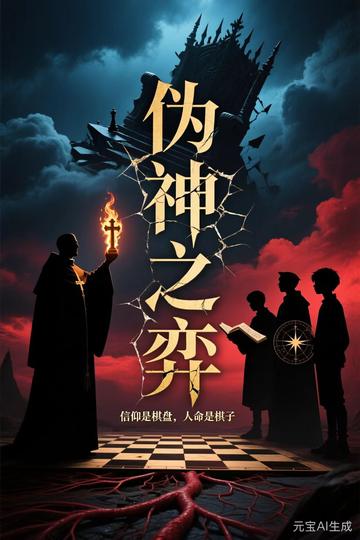
Lu Wei, the regent and the empire's "human calculator". He used mathematics to weigh every human life in the plague, sketched life and death in memorials, and calculated gains and losses in account books. He believed that everything could be measured.
Ye Zhiqiu, the chief judge and the gatekeeper of the Faith Court. When Joshua wanted to burn the heretic boy who "used mathematics to prove God" on the stake, he made the most irrational choice in his life: using his robe as a shield to protect the fire of his thoughts. The price is to be exiled to the north, amidst ice, snow and death, recording the weight of humanity with an old ledger.
Reiner, a young scholar, inherits the legacy of his teacher who was burned. He calculated the trajectories of the stars on parchment, asking a question that terrified the false gods: If God really existed, would He be afraid of being proven mathematically?
From the plague-shrouded streets to the bloody battlefields of the Northern Expedition, from the fierce game of the Faith Court to the life-and-death struggle in the northern penal colony, a life-and-death chess game with the destiny of the country as the focus and thoughts as the blade has begun.
On the chessboard, the false god uses faith as a blade to harvest souls.
Under the chessboard, the calculator, the fire keeper and the questioner use reason, conscience and truth-seeking courage as shields to find the only way to survive in the impossible.
When forged oracles encounter mathematical laws that cannot be tampered with, and when absolute power collides with the immortal fire of thought, the outcome of this "game of false gods" will determine whether an era will fall into the eternal night of ignorance, or whether it will ignite the dawn of reason on the ruins.
"They called me a heretic just because I refused to kneel down and worship the idol they made with their own hands."
"If this is faith, I would rather betray it."