Stats
5.8Score
Synopsis
No synopsis yet.
We haven’t got an English blurb for this one. It appears once the source description has been translated.
Reader comments
In booklists 3



Learning Books
It's the kind that has depth and can be seen through.
38.8MViews942Books2dUpdated




An In-Depth Article That Can Be Called a Masterpiece
Just like the three-body
12.2MViews388Books12hUpdated





There Is a Shortage of Male Videos and Books! ! ! !
There is a shortage of books, please publish your high-scoring male videos now!
325.5kViews385Books3dUpdated
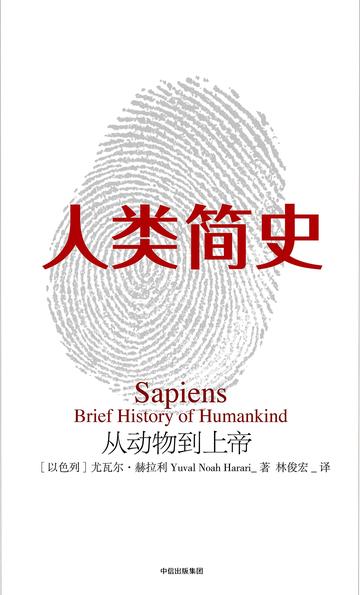
This is not a common history book. According to common history books, this is a history book that is least like a history book. Here you can't see the genealogy of emperors, hear the epics of heroes, there are no palace struggles, there are no tricks and tricks, and there are no boring and obscure data lists. Rather, it carries care for mankind and prospects for the future from beginning to end, using a broad vision and rational reasoning to analyze the traces left in the history of human evolution, and explore the changes in society, life, and human nature, which reflects the author's deep care and concern for mankind. The book shows the evolution process from primitive humans who drank blood like hair to the highly developed Homo sapiens today. The author tells us: Human history is not pure and innocent, but moves forward accompanied by devils and angels. Of course, the future is also unpredictable. When I read it, I instantly doubted: this is not a history book, but a philosophy book. Finally, I came to the conclusion: this is a history book with philosophical thinking. This is also the best translated foreign historical work. It has no Europeanized language structure, the writing is concise and smooth, and the views are clear. Chinese idioms and allusions also appear in the article, and there is no reading difficulty at all.
Although I knew it was a great book when I bought it and put it on my bookshelf, I was still shocked after reading it! I was shocked by the profoundness and profundity of a historian. The history of mankind is indeed quite extraordinary! Even after reading it, I feel that it takes a long time to digest and think about it. There is a new kind of wisdom in my mind that is upgrading and iterating! "70,000 Years ago, Homo sapiens was just an insignificant animal, living its own life in a corner of Africa. But in the next few thousand years, Homo sapiens became the master of the entire earth and a nightmare for the ecosystem. Today, it seems that Homo sapiens can enter the realm of God with just one more step. Not only is it expected to gain eternal youth, but it also possesses the divine power to create and destroy everything."
"A Brief History of Humankind" By reading this book, you can fully understand the development process of human beings. From the explosion of the earth, microorganisms slowly emerged, to chimpanzees becoming the ancestors of humans and chimpanzees, able to walk independently, and social animals hunting and surviving better. With the advent of the agricultural era, hunting time decreased, and more plants and conquered chickens and cattle were used as poultry. Smart and capable people gathered together to control the creation of a slave society. In order to exchange items at equal prices in the market, exchange money appeared. With the emergence of the atomic bomb, the world's pattern changed again. Human beings have the ability to destroy the earth. The emergence of biotechnology can better solve the defects of people's lives and certain organs. What will artificial intelligence bring? Let's wait and see. Looking back at history, we can see that people's happiness is to constantly find where their hearts are, their desires are unlimited, they satisfy themselves, and appropriate goals provide motivation.
This book is quite good. It covers the agricultural revolution, the cognitive revolution, and the scientific revolution. Just like the title of the book, from the beginning of life to the present human beings, it involves evolution, historical knowledge, and the content of the agricultural revolution. The wheat we train is actually wheat that trains us. To see whether a species has evolved successfully, it depends on the number of offspring. The current amount of wheat has become the main food, which is very successful. And why European countries started to explore other continents first? It lies in their understanding of new things. Curiosity, all existing sciences and systems are mainly Western, we need the spirit of exploration, science and technology are the primary productive forces, and the understanding of happiness. What we have always accepted is the pursuit of the inner spiritual world. In fact, we should understand ourselves. What I understand is the Taoist rule of inaction, neither happiness nor sadness. The world's material conditions are constantly enriching, and the less we feel happy, we need to understand the true self and accept all of ourselves, not just enrich the spiritual world.
Very refreshing historiography. Farewell to princes, generals and ministers, there is no more country age. Homo sapiens appeared on this planet as a whole, starting from the cognitive revolution, and gradually moving towards the path of God...
However, the reason why people are afraid of pollution is not solely because of the myths concocted by priests and rulers. Perhaps due to people's innate survival instinct, they will naturally feel disgusted when seeing objects that may contain diseases (such as sick people or corpses). Therefore, if you want to exclude a certain category of people, such as women, Jews, Gypsies, homosexuals, and black people, the best way is to loudly announce that these people are sick and will cause pollution. What will your choices be in some places? Good book. If you have a chance to read the original version without cuts, I highly recommend it.
After reading it, check in. I think this book is suitable for reading twice. The first time is suitable for when you don't have enough knowledge. When you read this book for the first time, you can see many novel perspectives. The strength of this book is that the author systematically explains the evolution of the human world from a very profound perspective (imagination and trust). The first time is to follow the author's thinking. When you read this book again after you have a certain amount of knowledge, you can connect your knowledge with various aspects of the content in this book, so that the reading will be more profound. It is very meaningful to trigger thinking during the reading process. This is your own thinking. Add something bad: When the author mentioned the British withdrawal from the Indian colonies, he believed that the British way of peaceful withdrawal was very good and very gentlemanly. Moreover, when the British withdraw from the colonies around the world, they will leave behind a relatively stable government. I have reservations about this. After all, the UK has left quite a lot of messes everywhere, and the bad ones are bleeding.
It's so perfect, it gave me a fairly comprehensive understanding of the evolution of human civilization at the civilized level. It's like a person who wants to sleep encounters a pillow that perfectly fits the shape of his head.
It systematically and richly tells the process of human beings from birth to today. Many questions that I have thought about before are answered here. But I still don't believe some conjectures. For example, humans all came out of the Great Rift Valley in East Africa and evolved into different races. I feel that it is more likely that many places will evolve independently.
The best book I've read in years. The author rethinks many things from a higher perspective, and it also made me re-examine my own worldview. It is a very interesting book. Although I don't agree with some of the views, overall, the author still presented a pretty good historical picture very objectively and explained where we came from.
Did humans domesticate wheat and rice, or did wheat and rice domesticate humans? Humanity admitted its ignorance and started the scientific revolution. Can humans start a species revolution by admitting their damage to the ecology?
Let us look at the world from more perspectives. For example, changing from a picking society to an agricultural society makes humans harder. Although some of the ideas in this book are yet to be confirmed, it also tells a relatively objective story about the world.
This book is not mainly about history, but mainly about thoughts and worries about the past and future of mankind. Reading this kind of book can make us feel that the hardships in life are really not worth mentioning, and we will be more content after work.
A very grand historical work, this book has greatly enhanced my understanding. It turns out that the development of human beings to this day is an accident. We are not necessarily at the top of the food chain. Nowadays, although human beings continue to thrive, they have become an ecological nightmare. Human history is a binary chaotic system, and where humans will go in the future is a mystery.
I feel that this book is very well written. As I read it, I gradually discovered a "new world" of knowledge. The author's words are very easy to understand and there are many vivid examples. I think the author is also talented and has a very wide range of knowledge. Also, the author is able to grasp the essence of things, looks at the problem very thoroughly, and his views and perspectives are refreshing. After reading it, I further enhanced my understanding of human beings. Only through revolution after revolution did we have modernization today. In short, I still highly recommend this book. You can learn all aspects of knowledge and enrich our knowledge and horizons.
I watched this one right after watching "A Brief History of Today". The author integrates philosophical, ethical, political and other insights into the description of human evolutionary history to inspire thinking. The language of the whole article is fluent and comfortable to read. It looks like a Hollywood blockbuster, which makes people's imagination wide open and can't stop. Thank you Tomato Book for providing such a good book for free!
I regret not reading this book ten years ago. Maybe I would no longer be who I am today.
2025.5.18 From primitive man to Homo sapiens to the so-called "god", everything is unknown. The reason why the future is the future is that we believe it will exist, develop and become a reality! I wish I could live under the rule of humans as long as I live, instead of becoming a subject of "God"!
Religion tells people not to give up hope, there is God in the world. However, science tells people: the God of mankind is mankind himself. (Today's psychology has developed to the "level" of science.) ——The evening of 25/10/11
The perspective is very novel, looking at the world from a historical perspective
Who are we? Where are we? Where will we go? This book explains this question very well, but where will Homo sapiens eventually go? It is difficult to answer or imagine this question in a short life. Or eventually humans will become gods, or maybe they will become commodities on other people's industrial gears. Who knows, it's better to live well now and pay attention to the present.
Although it is called "A Brief History of Humanity", it is actually more like "A Brief History Against Humanity". There are many viewpoints in the book that are novel and unique. It is worth thinking about whether this is the case. However, it is better not to believe the book than to believe it at all. When dealing with some slightly "extreme" views in the book, don't think they are necessarily right just because they are "fresh". You should absorb them selectively and critically after rational thinking.
It will answer a lot of questions in your mind. Is it really useful to judge the direction of history based on the past? Will it change the original direction because of your judgment? The answer is unknown. Are you happy now? What do you want? This is what each of us needs to think about (only personal opinion). Great, super great.
Our current life is a projection of history, and humans have made the same choices for thousands of years. History is only the background of this book, and the sharp criticism of reality is based on it. I hope you won't make the "same" choice again after reading this book.
The theory of evolution in history is well explained, and the content is thought-provoking.
From the history of human development, you can understand the structure of society and understand your own position, so that people will no longer be confused. It is a thought-provoking book.
Top notch book! A must-read book in your lifetime!
I regret not seeing this book earlier
It turns out that I am Homo sapiens. I always thought that I was a human being. It turns out that there were different species of human beings in the past. I learned
From primitive society to agricultural society to industrial society, the role played by Homo sapiens on the earth has become increasingly important. The bloodshed and development, exploitation and charity, cooperation and betrayal along the way have made us deeply aware of the significant influence of religion, politics, and ideology on Homo sapiens. There is never justice in war. When resources cannot satisfy human greed and desires, where will Homo sapiens go?