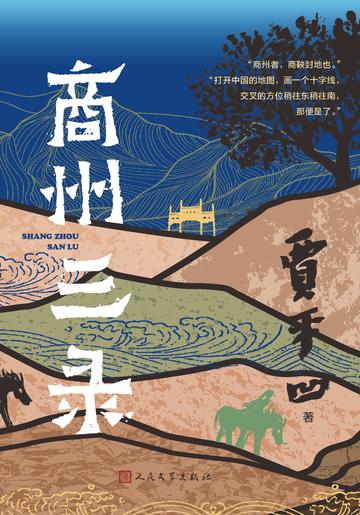
Against the background of the rise of cities, the ancient Shangzhou deep in the Qinling Mountains is a forgotten land that "cannot keep up with the pace of the times." Jia Pingwa said, "What Shangzhou was like in the past, what it has been like over the years, and what it is like now has become an issue that needs to be disclosed to the outside world. Therefore, this is the purpose of writing this little book." "The First Record of Shangzhou" was written in 1983 and contains a total of 14 essays, describing people's events and describing scenes and scenes, each with its own emphasis, trying to depict a relatively complete "Shangzhou world" to readers. "Shangzhou Youlu" is the sequel to "Shangzhou Chulu". It uses eleven paragraphs of prose-like notes to connect Shangzhou's four seasons, customs and anecdotes in spring, summer, autumn and winter into a chapter, forming a school of Shangzhou local landscape painting. "Records of Shangzhou" is the final chapter of "Three Records of Shangzhou". Its writing style is similar to "First Records of Shangzhou", but it pays more attention to the historical and legendary nature of people and events. Although the number of articles included in it is smaller than that of "Shangzhou Chulu", the length and capacity of each article is greatly increased. As the spokesperson of his hometown, the author eulogizes the paradise-like beauty and simplicity of his hometown, Shangzhou, and expresses his praise and commemoration of the pastoral life in his hometown.
Reader comments
This book is like an old friend, telling me the story of Shangzhou. I like the vivid characters in the book, they make me feel the customs and customs of Shangzhou. The author's description of Shangzhou is very delicate, making me feel like I am in that beautiful and simple world. This is not only a book about Shangzhou, but also a praise and commemoration of my hometown. Recommended to friends who like country life, they will definitely have a different feeling.
Very plain words, outlining the simple and beautiful customs. This book suddenly made me understand the difference between art films and genre films. Why do art films have weak stories, but people still watch them? Because of art and life, the beauty of words and images themselves. Not noisy but relying on high-end aesthetics.
The text is vivid and the characters are vivid, worth reading again
This book is like an old friend telling you about his hometown, without boasting or belittling. Let me tell you so much that you will fall in love with this place before you even arrive. Teacher Jia has a solid foundation in language skills and has always liked Teacher Jia's literary works.

This book is like an old friend, telling me the story of Shangzhou. I like the vivid characters in the book, they make me feel the customs and customs of Shangzhou. The author's description of Shangzhou is very delicate, making me feel like I am in that beautiful and simple world. This is not only a book about Shangzhou, but also a praise and commemoration of my hometown. Recommended to friends who like country life, they will definitely have a different feeling.
Very plain words, outlining the simple and beautiful customs. This book suddenly made me understand the difference between art films and genre films. Why do art films have weak stories, but people still watch them? Because of art and life, the beauty of words and images themselves. Not noisy but relying on high-end aesthetics.
The text is vivid and the characters are vivid, worth reading again
This book is like an old friend telling you about his hometown, without boasting or belittling. Let me tell you so much that you will fall in love with this place before you even arrive. Teacher Jia has a solid foundation in language skills and has always liked Teacher Jia's literary works.
Beautiful, simple beauty