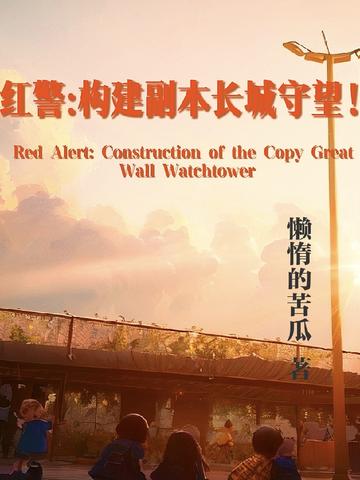
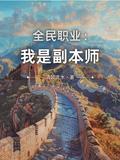
When foreign races invade Huaxia, the protagonist arrives through transmigration with a Red Alert System and sets out to build the ultimate dungeon: Great Wall Watch.
Can't kill the foreign races?
I'll do it!
Can't wipe out the human traitors?
I'll do it!
The Heavenly Dao is unjust, treating humanity like grass and dogs! Then I'll slaughter the heavens themselves.
If the rules can't restrain evil, I'll be the one to do it.
With Red Alert in hand, one thought makes me a god, the next a devil. Every inch of land is soaked in blood, and we will not yield a single step of our homeland.
Kill!
Kill!
Kill!
I'll make all races submit, their heads bowed for all eternity, kneeling forever beyond the borders of the Milky Way. Kill! Kill! Kill!
As long as humanity endures, Huaxia will stand. I am the God of War!!!
I'm curious, is what I wrote good? The first book I wanted to write was about a strange fairy tale. I wrote 200,000 words and finally got to the plot, but I ended up reading it straight to zero. The plot didn't drag on me at all. The villains died immediately, those who could be beaten were killed, and those who couldn't be beaten were run away. The emotional pull was also in place, and it lasted ten pages. Only the first three chapters were slow. Forget it, traffic is the most important. This book is completely enjoyable. You can enjoy it as much as you want. It's all up to the readers.
Why do everyone in the class know that the protagonist is a very powerful person, but outsiders don't? Even if the protagonist wants to make the most of every moment, he still does some meaningless things sometimes. If not, his attitude towards the suspected heroine is too weird. Otherwise, there is something wrong with the protagonist's character, or the logic is illogical. When I read novels, I only look at one very important piece of data, which is the author's participation (imagination is indeed very important, but not as important as this). The lower the better, let's make it clear that the world view and character information are public assumptions for the time being (it is best to extract the world view and character information, separate them with blank lines, and add a synopsis or short story inside). Any other world view plus character information The stories that cannot be obtained are all private settings, that is to say, the stories that need to be supplemented by temporary data are all private settings. If there are too many of these things, it means that the author has a problem with the story or the writing style. Public settings/private settings refer to the author's participation. Public settings give people the feeling of being open and honest, while private settings are just copied. It may not be so serious, but it has this meaning. It is best to state any public information about the protagonist within ten chapters. It is best to emphasize any changes (meaning to express them more than twice). Explain the world view as soon as possible. This can be used later but do not backstab and affect the previous plot (for example, the first paragraph I wrote). State the protagonist's position and specific character (for example, he is lazy or pursues efficiency) The author's highest pursuit is to complete the world view and character introduction and narrate the story, not to make up the story Okay, that's all I have to say. Four stars are just to avoid being dropped.
This book is fun, but there is a knife. I hope the protagonist and his nemesis Bai Ling can be together 🙂🙂🙂. I hope the author will not be ungrateful! Understand!