A fictional setting inspired by the Song dynasties.
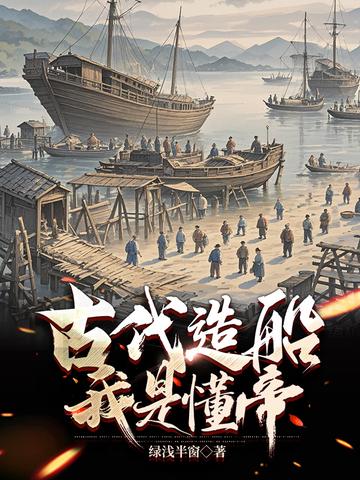
Ancient Chinese shipbuilding flourished during the Song. Technologies such as watertight bulkheads, balanced rudders, bilge keels, metal anchors, and dry docks were centuries ahead of Europe. Ships were even built to extraordinary dimensions: 36 zhang long, 4 zhang and 1 chi wide, and 7 zhang, 2 chi, and 5 cun high, according to Lu You's Notes from the Studio of Learning the Past. This was more than a thousand years ahead of Europe, and both state-run and private shipyards prospered as never before.
Du Zixing, a modern college student, transmigrates into the body of a poor ferryman in ancient times. He has no education, no money, and no parents!
No money? Luckily, the Dragon King drops gear!
No education? Luckily, he discovers a talent for ship carpentry!
No parents? Luckily...
The moment Du Zixing discovers his talent, he drops his bamboo pole and becomes a craftsman on the spot. From then on, there is no stopping him.
Talent alone would be enough, but he is also hardworking and ambitious. From repairing ships and building them to inland shipping and voyages across the sea, from serving ordinary customers to dealing with the people of Hirado, then officials, and even becoming a wanted man, his journey is full of stumbles and spectacular triumphs. In the end, his exceptional skill raises shipbuilding, navigation, overseas trade, and even piracy to heights no one can match.
The keel is a ship's central backbone. In a paper-thin story world, a tale about shipbuilding cannot focus on shipbuilding alone. Shipbuilding is the keel of the story; only by giving scholars, farmers, artisans, and merchants their own rules can we build a complete ancient multi-masted sailing ship.
Whoever commands the great ships controls the economic lifeline. Whoever commands the waterways unifies the people's livelihoods. Whoever commands the warships commands the realm!
This novel draws on historical and modern sources and strives to recreate the society of the time. To avoid inaccuracies, it uses a fictional setting.
This book does draw on a lot of historical data. The technical terms and writing features are very antique. If it weren't for the protagonist's modern time travel identity, I would have mistaken it for a novel from the Qing Dynasty [shy]
The protagonist has special abilities, but he uses them very restrainedly. And it's my favorite battle of wits. The plot unfolds slowly, and impatient readers may be a little overwhelmed.


This book does draw on a lot of historical data. The technical terms and writing features are very antique. If it weren't for the protagonist's modern time travel identity, I would have mistaken it for a novel from the Qing Dynasty [shy] The protagonist has special abilities, but he uses them very restrainedly. And it's my favorite battle of wits. The plot unfolds slowly, and impatient readers may be a little overwhelmed.