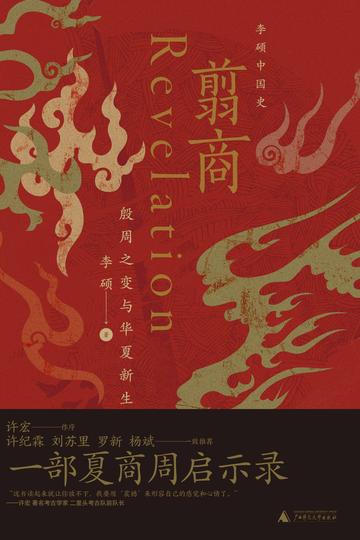
Jian Shang: Changes in Yin and Zhou Dynasties and the Rebirth of China
翦商:殷周之变与华夏新生
- Status
- Completed
- Length
- 320k Words
- Genre
- Historical
- Updated
- 2y ago
- Source
- Fanqie
Stats
2kReads
9.5Score
814Shelves
32Chapters
309Listens
67.5kReads · all time
翦商:殷周之变与华夏新生
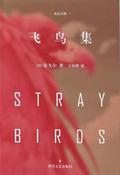
It looks good, is very readable and easy to understand for an amateur like me. Although the details may be a bit far-fetched, after all, there is indeed not much information on the Shang Dynasty, and overall the flaws are not concealed. This book was my introduction to the Shang Dynasty. The bloody and brutal culture of human sacrifice really opened my eyes and had a great impact. The interpretation of the content into a story is so wonderful. As a metaphysics lover, it is refreshing, and the words suddenly feel like they come alive. For thousands of years, successive fortune tellers in later generations have provided many explanations for the Book of Changes, but they are all far-fetched. This storybook-like explanation is actually the most reasonable. However, the author does not agree with the statement that "Gong Zhou made annotations to cover up his father's original intention", because from a metaphysical perspective, the content of Duke Zhou's annotations is not completely unrelated to the original text. I think Duke Zhou was also studying his father's divination, hoping to get the destiny like his father. (I'm not very skilled, so I'm just guessing.) The coup of Duke Zhou later was also very exciting, but what shocked my soul the most was the last paragraph about Confucius. When the author wrote this, I felt that the image of Confucius in my mind suddenly became more complicated. In the past, I only knew that he foolishly hoped to make the world unified through rules (the fact is that underdeveloped productivity and insufficient materials will never make the world unified). The many complexities make me feel that he is not that stupid. All in all, this is a very good book, thank you to the author!
The first half of the book is much more rigorous than the second half. There are many interpretations of Zhouyi, and the author is just one person. Too many inferences will destroy its reliability. However, the writing method is combined with the novel, which adds a sense of plot to the archaeological popular science book, and it is really enjoyable to read it in one sitting. The shortcomings do not hide the good points, especially for non-professional readers.
It feels very surprising. Although I knew that some people would be sacrificed in ancient times, I did not expect that the phenomenon of human sacrifice during the Shang Dynasty was so developed, and people were sacrificed on a large scale. Another very surprising thing is that the "Book of Changes" was actually written by King Wen of Zhou based on his personal experience. I always thought it was a magic book for divination and fortune-telling [laughing and crying]. I didn't expect that the author could interpret the history of Shang and Zhou Dynasty based on the "Book of Changes". It is very novel, but also well-founded. The Duke of Zhou and Confucius made too many efforts to bury this history of human sacrifice, and secular moral concepts made life seem so precious.
This book is so interesting! It allowed me to understand the sacrificial customs of the ancients, and also how much effort the Zhou people made to end the Shang Dynasty and the custom of human sacrifice. The author Li Shuo is so amazing, and his writing about Confucius is also very innovative! This book is like a time-travel drama, taking me back to ancient times. I think it's a bit like "The Romance of the Three Kingdoms", both about historical changes and heroes. But "Jian Shang" is more mysterious and imaginative. I recommend you read this book, you won't be disappointed!
You still have to read history for yourself. Previously, I kept seeing videos on the Internet advocating that the Shang Dynasty suppressed the Zhou Dynasty. People in the comment section were so noisy that I was stunned for a moment. This book is very good as an introductory book. It contains the latest archaeological historical materials. However, because I am not a history buff and just want to understand popular science, I found it a bit boring after reading it. I read it intermittently for almost a month before finishing it. However, as a popular science book, it is still very interesting. It is very professional and worth reading. It is recommended. What surprised me most in the book was the interpretation of Zhouyi. I was once interested in metaphysics. Someone recommended me to read Zhouyi, saying that if I understood Zhouyi, I would understand everything. But in the end, I couldn't understand a little bit. . . I didn't expect that the Zhouyi could be viewed from a historical perspective, and I also didn't expect that the Zhouyi was actually the diary of King Wen.
It's very powerful, it opened my eyes, especially the complete human sacrifice ritual system of the Yin and Shang dynasties that was unearthed earlier. The first time I killed multiple people, I killed them in a certain posture, the second time I killed many people, how I killed them, and the third time, it made my scalp numb. Therefore, Duke Zhou was great. He completely ruined the Yin and Shang civilization and re-edited a set of logic for the Zhu Xia civilization. In order to completely bury the Yin Shang, especially the civilization of human sacrifice, all records were destroyed. Even the great achievement of abolishing human sacrifice that he was doing was not allowed to be recorded in history books. He wanted everyone to completely forget the matter of human sacrifice, and future generations could only discover the truth through archaeology. To a certain extent, it can be regarded as whitewashing the merchants, focusing all the evil of the merchants on King Zhou. All the mistakes are the fault of King Zhou. The merchants are innocent and are being held hostage. Of course, if human sacrifices are still performed, they are "Yin stubborn people" and will be completely suppressed by Duke Zhou. Of course, only the "Book of Changes" left by his father could not be destroyed by Duke Zhou, so he chose to find a way to make future generations think differently and divert it to fortune telling. The I Ching is actually a set of Morse codes written by Ji Chang, which hides the forgotten strategic layout and progress of the Yin and Shang civilization and the Jian Shang. Of course, some people with great wisdom can decipher this set of codes and discover the truth in the truth. Confucius discovered it when he saw the Qian hexagrams of the I Ching in the Song Dynasty, so he read the I Ching more and more frequently in his later years, and was very fond of Zhou Gong. He also praised Confucius more and more for discovering the truth of the world and the taboos buried by the Duke of Zhou, but Confucius did not point out the taboos buried by the Duke of Zhou. He did not want these buried civilizations to revive, hoping to be completely forgotten by the world. Later, the officials of the Jin Dynasty actually came to see the Yi Jing of the Song Dynasty. They also discovered the buried taboos and lamented the greatness of the Duke of Zhou.
Before that, my understanding of the Xia, Shang and Zhou Dynasties was probably only a few pages in a thin history book or a list of gods. After reading it, I felt that history was so grand and heavy. Thousands of years ago now, I not only lamented their wisdom, but also lamented their cruelty. Regarding sacrifices, I only thought they were animals, crops or people being executed. I never imagined that the scale was so large, the number was so large, the time was often so long, and the process was so cruel. Wine ponds and meat forests used to be thought of as debauchery, but now we can see their true origins. Just like what the author said about finding hope in the dimness, seeing that someone may have tried hard during this period is a little bit touching, and humanity is still there. Duke Zhou was really great. He hid this dark history and, together with the Zhou Dynasty, put an end to human sacrifice. Later, there is the inheritance of Confucius. I am really grateful to have these people. Pay tribute.
Obviously at the bottom, Hehe is at the top. It is difficult to be sincere, and it is not easy to maintain the king. The heavenly position is suitable, so that it does not hold back the four directions. The Zhizhong family came from the Yin Shang Dynasty to marry into the Zhou Dynasty, and she was called a concubine in Beijing. It's about Wang Ji and Wade's trip. Da Ren was pregnant and gave birth to King Wen. King Wen of Wei, be cautious. Show God, and be blessed. If you don't return your virtue, you will accept the country. The Heavenly Prison is under me, and my destiny is gathered. King Wen first set up the throne, a match made in heaven. In the sun of Qiaozhi, in the river of Wei. King Wen Jiazhi, a great country has a son. The great nation has a son, the sister of Tian Tian. Wen Ding is auspicious and welcomes Wei personally. Build a boat as a beam, but don't show its light. There is a destiny from heaven, and this is King Wen. During the Zhou Dynasty in Beijing, the daughter Wei Xin was reunited. The eldest son, Wei Xing, was born as King Wu. Protect your life and attack the great merchants. The journey of the Yin and Shang Dynasties was like a forest. Aim at Muye and defend Hou Xing. God comes to you and has no other thoughts. The fields of Makino are vast, the sandalwood chariots are shining brightly, and the four-cylinder wine is flying. When Wei's master pays homage to his father, Wei's eagle rises at the same time. King Wu of Liangbi attacked the great merchants and went to the Qingming Dynasty.
It's hard to believe that such an academic book can convey the visual sense of a novel. The archaeological information is so detailed that it gives people the feeling of being in their shoes. It is a very enjoyable process to peep into the truth and context of development from the gaps in history. Some of my own concepts have also been adjusted and improved.
Before reading "The Scissors", I heard many readers mention that many of the contents in the book are the author's speculations. Reading the opening chapter, it turns out that as the rumors indicate, most of the interpretations of oracle bone inscriptions in the book begin with the word "speculation." But then I thought about it, modern people's interpretation of ancient history relies on fragments of archaeological excavations, piece by piece, speculation, and perfection. After all, they have never experienced that era, so they naturally cannot accurately restore the original appearance of history. There are two core reasons why this book deeply attracted me. The first is the exploration of the Yin and Shang Dynasties, or more precisely, the exploration of King Zhou of the Shang Dynasty. When I was a child, I watched "The Legend of the Gods", and the images of the wine pool, the meat forest, the deer platform, and the Chaoge song were already engraved in my mind, and I was always full of curiosity. This book just gave me an opportunity to learn more about King Zhou: It turns out that the real "meat forest" is not roasted animal meat, but the mutilated limbs of human animals. It is a common sacrificial scene in the Yin and Shang Dynasties, not exclusive to King Zhou; the Yin capital does not look like a square city surrounded by tall city walls in our inherent knowledge. The second is the issue of "human sacrifice" that the book focuses on. In that barbaric era, did our ancestors really survive like savages? How to move towards civilization step by step? These questions made me eager to find answers in the book. When I listened to the podcast before, I learned that the real King Zhou was not as lewd, violent, and incompetent as portrayed in movies and TV dramas. Instead, he was an intelligent and capable monarch. The book also cites records from the "Historical Records of Yin Benji" as evidence: "Emperor Zhou was gifted in discerning quick diseases, was very sensitive in hearing and seeing, had extraordinary physical strength, and was able to handle fierce beasts." If you think about it carefully, we will see that our current understanding of King Zhou mostly comes from the history books compiled by the Zhou people after the Zhou Dynasty destroyed the Shang Dynasty. In order to demonstrate the legitimacy of the conquest of the Shang Dynasty, the Zhou people would inevitably vilify King Zhou. This is not difficult to understand. The book also explains a lot of the hexagrams and lines of the "Book of Changes". This part of the content is difficult for me to understand, and many rare words are even harder to identify. Fortunately, the book is equipped with detailed annotations. Interestingly, I also have a set of "I Ching" on my bookshelf, which has been gathering dust for a long time and has not yet been opened. It was purely by chance that I bought it: I took an open class by an old gentleman by chance, and I was quite fascinated by it. I placed an order on the spot. I originally planned to study it in my spare time, but I never dared to open it rashly. The cruelty of human sacrifice during the Yin and Shang Dynasties is simply outrageous from today's perspective. They did not simply sacrifice human beings, but went to great lengths to kill them. Just like the ancient Roman arena, they treated this inhuman sacrificial process as a feast for the eyes. When I read the description of the sacrificial scene in the book, I often got chills down my spine. With the values of modern people, it is impossible to imagine such a bloody scene: in the eyes of merchant aristocrats, slaves are no different from livestock, and they are even more valuable because of the "ornamental" nature of the sacrifice, nothing more. The book also mentioned that merchants had a way of sacrificing animals, cattle or sheep, called "Mao". Specifically, the person or animal was cut in half from the middle and hung for public display. The description alone is enough to make people shudder. In addition, there is an interesting knowledge point hidden in the book: the ancestors of the Qin State, which unified the six kingdoms, were actually descendants of merchants who were hunted down by the Western Zhou Dynasty and forcibly moved to the Western Lands (the descendants of the Shang royal family were enfeoffed by the Zhou Dynasty and established the Song State). No wonder I recently watched "Da Qin Fu" and saw that the Qin people were warlike, which made me feel like "the reincarnation of history". The core context of the book "Jian Shang" is the birth, rise, prosperity and destruction of Shang culture, and the core throughout is the religious culture symbolized by "human sacrifice". During the Yin and Shang Dynasties, the culture of human sacrifice was extremely popular. After Zhou destroyed Shang, Duke Zhou deliberately erased this bloody religious culture. Perhaps it is out of fear of human sacrifice, or perhaps because he is unwilling to admit the dark history of his ancestors providing "human sacrifices" to the merchants. Regardless of the original intention, Duke Zhou added the "Xiang Zhuan" to the "Book of Changes" written by King Wen, reconstructed the connotation of this obscure classic with the interpretation of "Zhou Formula", and also allowed future generations to have a glimpse of the Yin and Shang history that Duke Zhou hoped to present.
It's good to see free ones on Tomato 😄
Tomato finally has this book. It wasn't available when I searched for it last year. It's free. It's so good. You can't even find it with other software. Some software still charge money if you find it. This book is also very good. I read part of it before but stopped reading it. It was recommended by a friend.
It took me a whole week to read this book. After reading it, what impressed me most was the phenomenon of human sacrifice in the Shang Dynasty and the author's interpretation of the "Book of Changes" from an academic perspective. I thanked the author for his rigorous attitude towards history. I remembered a sentence, the history of the Chinese nation is a history of suffering, and forgetting suffering is tantamount to betrayal.
Most people who know something about history know that human sacrifice existed in the Shang Dynasty, but not many people have carefully explored the demise of human sacrifice. Perhaps most people agree that it naturally faded out along with the "evolution" of history. Good book
Very nice. I am just a very amateur history buff. I used to think that the history of Xia, Shang and Zhou was very mysterious and I didn't know much about it. After reading this book, I actually learned a lot about this period of history. Then I need to re-understand Confucianism. Previously, the Internet was full of misinterpretations of Confucianism (this shows that you should read more and read less marketing accounts). !), Don't be led astray by those unverified and realistic opinions on the Internet; and the chapters about exploring the origin of Chinese civilization shocked me a little. We are still the children of China, and our bones are still engraved with benevolence, justice, propriety, wisdom and trust, so there is a reason why saints are called saints.
Not bad [blowing kiss] It's just that some "noble" people in the comment area are criticizing... For example: We can't use current concepts to judge history... I'm curious, why are there people everywhere who like to criticize others from a high position? Everyone was talking well, but suddenly a "sane" and "understanding person" Barabala came out and gave a sarcastic lecture... It simply ruined the mood [laughing] Such people are either sick or inhuman [laughing awkwardly]. And his point of view itself is not valid in my opinion... It is nonsense to look at history without using current concepts. Let's not talk about how you, a modern person, developed ancient concepts. Just say that without comparison, how can we see the changes, development and progress in history? And if modern people don't use modern concepts to judge history, do they use primitive concepts? Isn't this just a disease? If this is the case, then history will lose its meaning of existence. History will have no past and future, only the eternal present...
The author used a large number of archaeological results and historical materials to illustrate the huge cultural differences between the Shang and Zhou dynasties. Due to the lack of historical data in ancient history, the author has a lot of personal reasoning, which needs to be verified by further archaeological excavations. But the point of view is indeed novel, it says something that has not been said by predecessors, and it can inspire more latecomers.
The article describes the development process from Shang to Zhou, which is more like the charge of barbarism and civilization, and the transformation of human beings from animals into "human beings" with moral restraints. The person who was "the first to eat crabs and tomatoes" is great, not to mention the Zhou family who initiated a fight against "theocratic power" and "human sacrifice" that lasted for thousands of years. At that time, there was not even a theory of morality for later generations. Gods were endowed with great power and could control the life and death of human beings, which were the laws and regulations at that time. When I read the article, I could understand King Wu of Zhou. Even if he succeeded in overthrowing the Shang Dynasty, he was still afraid that the "gods" would punish him. He was frightened and uneasy all day long. If it were us, we would not necessarily be better than him as the "first person". Thanks to Duke Zhou and others for their efforts, Chinese culture has entered a relatively civilized stage and improved its progress. Looking at history, even in an oppressed environment, the ancients could still make declarations such as "Keep a respectful distance from ghosts and gods" and "Princes, generals, and generals should be kind to each other." It is really great that people have ideas and creativity!
Very good, let God bring peace to the people. The God of speed and majesty has many destiny. He was born to be a good man, but his destiny is to be unlucky. Nothing has a beginning, nothing has an end.
We have to admit that this is an extremely bold book of imagination, but we also have to admit that this is also an extremely wonderful book of imagination. Readers can put aside their critical mentality and read it, which may be more helpful to you.
Hanzhang is Jian Shang! After reading it, I can understand why Confucius said, "Yu Yu is so literary that I follow the Zhou Dynasty." Why did he admire Zhou Gong so much? The Master discovered a dark and turbulent truth. He had already seen the abyss, but looking back 500 years ago, the descendants of the merchant and Zhou Gong met again at the starting point of another turmoil. What's more, I haven't dreamed of Duke Zhou for a long time! Is the ritual broken and the music ruined? No. At least it's much better than the previous era! Therefore, in five hundred years a king will surely emerge. Isn't it another "Perfect World"? The Emperor of Desolate Heaven who has been arbitrary for all eternity?
A very clear sequence of events, recreating the situation at that time from the perspectives of sacrifice, race, God, destiny, and benevolence, as well as the necessity of dynasty change. It's my first full-length historical book, and it's fascinating.
Well-founded and rigorous reasoning, like a scientific research paper written by a science student. Although the phenomenon of human sacrifice is terrifying, it is reasonable if you think about it carefully. After all, humans have survived and grown up from fighting with animals. In the eyes of primitive tribes, other tribes may be the same as animals, and it is only natural to cook and sacrifice animals!
The mysterious bird of destiny descends and gives birth to Shang! Although bloody, it does conform to the historical laws of social development, and it is not a scandal. Instead, we should face it squarely
I have always heard that there were sacrifices in the Shang Dynasty, but this book describes it so realistically that sometimes it is still unbearable. The real scene is so cruel. It's hard to imagine that the enlightened businessmen at that time could still be so ignorant.
This is a strange book. What is strange is not only the author's fluent language, but also the exposure of the mysterious and treacherous Yin Shang culture. After reading it, I couldn't help but lament the tragedy of King Wu. I also had a deep understanding of the greatness of Duke Zhou, and I also admired Confucius's painstaking efforts. Many times, you and I feel that we are mediocre just because there are so many outstanding ancestors who filled the hell before anyone knew it.
There are historical facts, analysis, and comments. It gave me a lot of inspiration about the changes in the Shang and Zhou dynasties and the Zhou and Kong dynasties. There is a touch of historical black humor in the words. It is short and concise and worth reading.
A masterpiece that fills the gaps in the history of the Shang and Zhou dynasties
Postscript: "Perhaps, people should not gaze into the abyss; although the abyss is there." It seems to be said by Zhou Gong and Confucius. I feel that the author and them are connected in the historical time. A kind of shock that I don't know how to describe moved me to the point of being overwhelmed.
What amazes readers the most in this book is the explanation of "The Book of Changes". Although King Wen wrote the Book of Changes in order to study the technology of divination, he inadvertently and cryptically recorded the Zhou people hunting animals for merchants, the sacrifices of merchants, and the life of King Wen himself who was imprisoned and whose sons ran for him. Eye-opening.