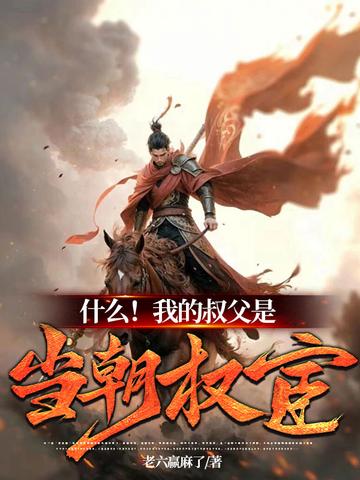
No System. The setting is a fictional Yang Dynasty modeled closely on the Tang Dynasty.
The powerful eunuch Di Lishi sends men to Lingnan to bring back his long-lost mother and nephew, the protagonist Feng An, but they run into a rebellion in Annan.
Feng An uses Di Lishi’s influence and his own background as a member of the Feng family of Gaoliang to persuade local strongmen to lend troops and put down the revolt.
Thanks to his military achievements, Feng An enters the imperial court with ease, only to discover that the court is tangled in conflicts among the imperial family, eunuchs, aristocrats, great clans, and humble-born officials.
Realizing that too many factions in the capital are holding him back, Feng An is unable to make a difference there. He eventually goes to Ganzhou in Longyou. In Ganzhou, he roots out traitors, brings order to the martial world, repels the Northern Hu, and attacks Tibet, rising step by step to become the military governor of Longyou.
By then, tensions between the Yang court and the regional powers have intensified. Local warlords grow stronger and raise the banner of rebellion. The Great Yang Dynasty is plunged into turmoil, and Feng An is drawn into the conflict.
After the rebellion is quelled, the court is too weak to control the regional warlords. Feng An rises to power and begins reforming the country and developing its productive forces. He uses the eunuchs to sideline the imperial family and push through reforms nationwide, making the Great Yang Dynasty strong enough to overwhelm the surrounding peoples before embarking on a campaign of conquest.
This book features martial arts, the martial world, and cultivation techniques, but the martial arts are low-level. Even a grandmaster at the peak of their training cannot withstand an army’s powerful bows and crossbows.
Feng An will awaken memories of his present-day life in his dreams, and there is also a storyline involving an anti-drug police officer!
The book features many wars, with enemies ranging from domestic rebels to Tibet, the Northern Hu, Mendu, the Kingdom of Gokula, India, and the Arabs.
The female lead is a supporting character whose role is to help the protagonist win over the merchant class.


I think it looks great. This book is actually a little bit more refreshing when you read the back part of it. The most important thing is this book, I think it is particularly rational. First, there is no golden finger. Second, it is very consistent with the idea that most people will not be able to major in science and engineering after time travel. For example, the author said that glass can only be burned at a high temperature of 1700 degrees! But ancient furnaces basically could not reach this temperature. So even if you know that sand can burn glass, you still can't make glass. This book is designed to encourage more people to develop innovations to promote development! After reading the following words, I feel that the author's writing rhythm is getting better and better!
This book is well written, but I can only say goodbye because the character of the protagonist and some of the book's settings are not to my taste. I prefer the hero rather than the protagonist. So leave a five star and say goodbye