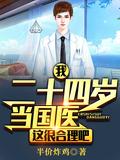
[It's not that specialists are looked down upon, emergency services are more cost-effective]
[Invincible + Miracle Doctor + System + Pretentious and Cool Articles + Patriotism]
Lin Yi traveled through a parallel world and became a general practitioner in a community hospital.
Lin Yi, who coincided with the expansion of the Provincial Central Hospital and awakened the general medical system, was recommended by his teacher for an interview.
Neurosurgery: "Will it treat patients with cerebral infarction?"
Lin Yi: "Yes."
Cardiothoracic Surgery: "Will surgery be performed?"
Lin Yi: "It will also be 100 million points."
Imaging Department: "B-ultrasound, cardiac ultrasound, magnetic resonance imaging, which one will it be?"
Lin Yi: "The city is worth 100 million points."
All the department heads shook their heads in disgust, "If you know a little bit of everything, you know nothing."
Eventually, Lin Yi was sent to the emergency department and became a triage doctor.
Day 1: Lin Yi rescued a migrant worker who had steel bars piercing his body;
Day 2: Lin Yi rescued a car accident patient whose upper and lower bodies were separated;
Day 99: A nine-month-old pregnant woman who suffered from congenital heart disease was saved by Lin Yi...
All the department directors cursed, "The patient can be cured by going to the emergency department, so what do we need to do?"
Patient: "It's not that I look down on specialists, but Dr. Lin's emergency care is more cost-effective!"
Emergency Department: "Dr. Lin Yi is not only the pride of China, but also the brightest beacon in the world's medical history!"
Lin Yi: "I'm sorry, in order to save my sister, I have to learn more about all kinds of diseases..."
Reader comments
The highest praise for medical novels is often those that can seamlessly integrate professional depth and story charm, such as:
"You can see the warmth of human nature in the cold light of the scalpel, and read the weight of life in the writings in the case book."
This kind of evaluation usually contains several core points:
- Professional details stand up to scrutiny: For example, surgical procedures, case analysis, and precise use of medical terminology make industry readers feel "authentic and credible", and non-professional readers can also understand medical logic through the plot.
- Resonance between characters and medical ideals: The protagonist or group of doctors are not only skilled in technology, but also reflect the reverence for life (such as the choice when facing conflicts between doctors and patients, the sense of mission during rescue), making the medical spirit concrete.
- Story tension and reality projection: Medical events are used to connect social issues (such as medical resources, ethical dilemmas, doctor-patient relationships), allowing readers to think about the human nature and social significance behind medicine in a tense plot.
- The balance between emotion and rationality: There are both thrilling moments on the operating table (rational professionalism) and joys and sorrows in the ward (emotional resonance), such as using a case to reveal the complex connection between family and destiny.
In short, a good medical novel is like a "scalpel" that can not only cut through the delicate texture of the medical world, but also cut through the faint light in the depths of human nature, allowing readers to see the double shock of "medical skills" and "people's hearts" in the story.
It looks and sounds good. I can't get enough of it by posting a few more chapters.










The highest praise for medical novels is often those that can seamlessly integrate professional depth and story charm, such as: "You can see the warmth of human nature in the cold light of the scalpel, and read the weight of life in the writings in the case book." This kind of evaluation usually contains several core points: - Professional details stand up to scrutiny: For example, surgical procedures, case analysis, and precise use of medical terminology make industry readers feel "authentic and credible", and non-professional readers can also understand medical logic through the plot. - Resonance between characters and medical ideals: The protagonist or group of doctors are not only skilled in technology, but also reflect the reverence for life (such as the choice when facing conflicts between doctors and patients, the sense of mission during rescue), making the medical spirit concrete. - Story tension and reality projection: Medical events are used to connect social issues (such as medical resources, ethical dilemmas, doctor-patient relationships), allowing readers to think about the human nature and social significance behind medicine in a tense plot. - The balance between emotion and rationality: There are both thrilling moments on the operating table (rational professionalism) and joys and sorrows in the ward (emotional resonance), such as using a case to reveal the complex connection between family and destiny. In short, a good medical novel is like a "scalpel" that can not only cut through the delicate texture of the medical world, but also cut through the faint light in the depths of human nature, allowing readers to see the double shock of "medical skills" and "people's hearts" in the story.
It looks and sounds good. I can't get enough of it by posting a few more chapters.