Tang-dynasty ceramic tea ware mainly consisted of tea braziers, water boilers, and tea bowls. A considerable number of the braziers were ceramic, while the water boilers were mostly wide-mouthed. Yue kiln celadon was the most highly esteemed type of tea bowl. Song-dynasty ceramic tea ware also mainly consisted of tea braziers, water boilers, and tea bowls. During this period, water boilers were mostly narrow-mouthed, and Jian kiln black ware was the most highly esteemed type of tea bowl. Tang- and Song-dynasty ceramic tea ware can be discussed through a range of sources, including books, poetry, and paintings. The Yuan dynasty was a transitional period between the Tang and Song dynasties and the Ming and Qing dynasties, and its tea ware reflected this transitional character. Ming-dynasty ceramic tea ware mainly consisted of tea braziers, water boilers, tea bowls, and teapots. In addition to books, poetry, and paintings, it can also be discussed through novels. Jingdezhen kiln white porcelain was the most highly esteemed type of tea bowl, and the tea ware made in imperial kilns was exceptionally fine. Teapots appeared in the mid-to-late Ming dynasty, and Yixing clay teapots earned a strong reputation. In the Qing dynasty, white porcelain from Jingdezhen kiln remained the mainstream choice for tea bowls. Lidded bowls became widespread and commonly used, while teapots, particularly Yixing clay teapots, were already in extremely widespread use.
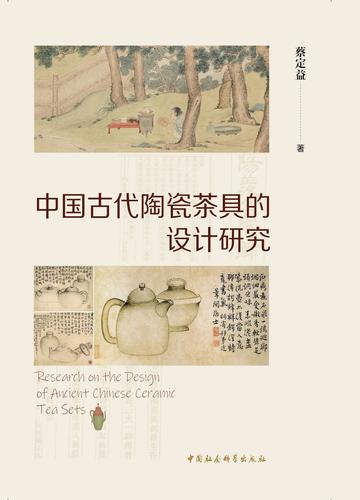



This book introduces in detail the development of ancient Chinese ceramic tea sets. From the Tang Dynasty to the Qing Dynasty, the characteristics of tea sets in each period are clear at a glance. The book is very rich in content, not only describing tea sets in books, poems and paintings, but also mentioning the relationship between people of different classes and tea sets. It felt like opening a historical picture of tea sets, which gave me a deeper understanding of ancient tea culture. "In the north of the throne, there are imperial self-admonitions, purple peony songs, organ poems, thousand-leaf peony poems, etc., Which are very detailed." From this sentence, we can see that the tea sets at that time were not only practical products, but also works of art!