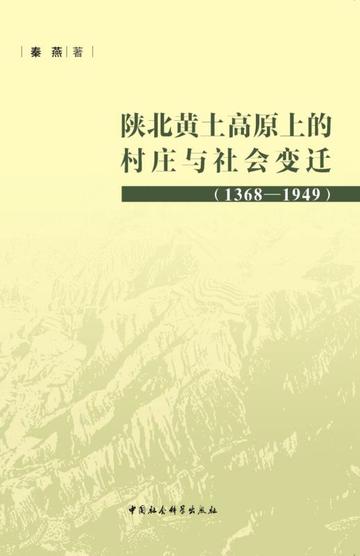
This book uses rich local literature to conduct a relatively in-depth and systematic study of the villages on the Loess Plateau in northern Shaanxi from the Ming and Qing Dynasties to the early Republic of China. The content includes: the natural environment and development history of the Loess Plateau in northern Shaanxi, the formation of villages, daily life in villages, relationships inside and outside villages, state power and villages, etc. The author deeply discusses the regional characteristics of village formation, village generation mechanism, village community, village boundaries, and the "modernity" transformation of rural society by state power, and puts forward his own unique insights. As a regional research case, this book can provide a type of comparison with village research in North China and South China, and will help to further advance research on Chinese village history and rural social history. It has high academic value.
Reader comments
This book is very interesting! Through rich local literature, the author has conducted in-depth research on the historical changes of villages in the Loess Plateau of northern Shaanxi, and has unique insights. I especially like the description of daily life in the village in the book, which makes me feel like I am immersed in the scene. However, I kind of disliked one of the characters in the book, he was so selfish. Overall, the writing style of this book is very simple and the writing style is good. It is worth reading.





This book is very interesting! Through rich local literature, the author has conducted in-depth research on the historical changes of villages in the Loess Plateau of northern Shaanxi, and has unique insights. I especially like the description of daily life in the village in the book, which makes me feel like I am immersed in the scene. However, I kind of disliked one of the characters in the book, he was so selfish. Overall, the writing style of this book is very simple and the writing style is good. It is worth reading.