Energy is the basis of production and life, and it is also an important force promoting the progress of human civilization. Traditional fossil energy is a precious wealth given to mankind by nature. When people use them, they also have a negative impact on the human living environment. In addition to producing large amounts of sulfur oxides, nitrogen oxides, dust and other pollutants, they also lead to a sharp increase in the emission of greenhouse gas carbon dioxide. The report of the United Nations Intergovernmental Panel on Climate Change confirmed that carbon dioxide has an important impact on global climate change. Currently, new energy sources such as renewable energy, hydrogen energy and nuclear energy have become the focus of attention again. Most new energies are non-carbon energy (such as solar energy, wind energy, hydro energy, nuclear energy, etc.) Or carbon-neutral energy (such as biomass energy, etc.). They are environmentally friendly and clean energy. However, in order to achieve their large-scale, safe and reliable application, they require extensive support from new technologies. Solar energy and wind energy among new energy sources have low energy density and instability. It is necessary to improve the energy conversion efficiency and the stability of power output. Therefore, it is necessary to improve its system composition (such as the use of wind, solar and multi-energy storage complementary systems, etc.) And the application of advanced control methods (such as model predictive control, etc.). Nuclear energy among new energy sources is one of the most commercially valuable energy utilization methods. However, the safety and reliability technology for nuclear power plant operation and the safe disposal technology of nuclear waste are still in the process of continuous development and improvement. Hydrogen energy in new energy is an efficient and clean secondary energy. In order to promote its large-scale application, hydrogen energy needs to continue to make new breakthroughs in many aspects such as preparation, storage, transportation and efficient application. This book focuses on new energy and related industries and is divided into six parts: Chapter 1: Rich and Colorful - Energy Knowledge; Chapter 2: The Mother of Energy - Solar Energy; Chapter 3: Rapid Development - Wind Power; Chapter 4: Fourth Energy - Biomass; Chapter 5: Technology Leadership - Future Energy; Chapter 6: Efficient and Clean - Smart Services. The book uses popular language, introduces relevant scientific principles and knowledge, and explains the local characteristics and industrialization development of Jiangsu Province. It is an excellent book for the public to understand the development of new energy technology and related industries, and to improve scientific literacy in the field of new energy.
Reader comments
This book is rich in content, written in easy-to-understand language, and introduces the various types and developments of new energy sources. It reminds me of the book "A Brief History of the Future". They both make me full of expectations for future energy development. Moreover, the author also mentioned the local characteristics and industrial development of Jiangsu Province in the book, which is of great practical significance. I think this book is a good read for people who care about new energy and can increase our understanding and understanding of new energy.
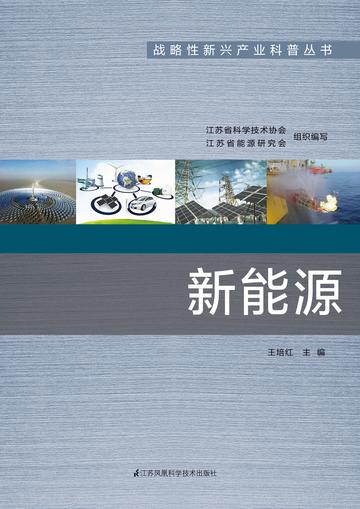





This book is rich in content, written in easy-to-understand language, and introduces the various types and developments of new energy sources. It reminds me of the book "A Brief History of the Future". They both make me full of expectations for future energy development. Moreover, the author also mentioned the local characteristics and industrial development of Jiangsu Province in the book, which is of great practical significance. I think this book is a good read for people who care about new energy and can increase our understanding and understanding of new energy.