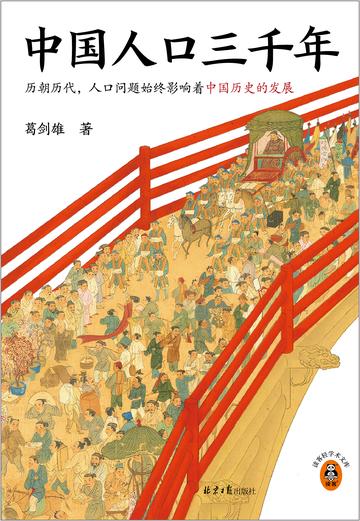
Throughout the past dynasties, population issues have always been the key to China's historical development. Population is not only related to war strength, but also inseparable from food production, finance and taxation, the number of taxes and servitude, etc.:
The policy of focusing on agriculture and suppressing commerce that has been followed since the Qin Dynasty may seem pedantic, but in fact it is to ensure the country's population growth; an important reason why the Tang Dynasty was able to quickly create a prosperous age was to absorb millions of foreign people; with a population of over 100 million, the Southern Song Dynasty could survive in the cracks of Mongolia and Jin for 152 years; in the Ming Dynasty, the clan population of as many as 200,000 overwhelmed the finances and accelerated the demise of the Ming Dynasty. The nomads are constantly at war with the Central Plains. The fundamental reason is that they must obtain prisoners of war through war to replenish their population...
The history of population is a condensed history of China, and population is a key to grasping the true history. It not only affects China's past, but will also determine its future direction.
Open this book and Fudan University professor Ge Jianxiong will take you to look at Chinese history from a population perspective.
Throughout the past dynasties, population issues have always been the key to China's historical development. Population is not only related to war strength, but also inseparable from food production, finance and taxation, the number of taxes and servitude, etc.:
The policy of focusing on agriculture and suppressing commerce that has been followed since the Qin Dynasty may seem pedantic, but in fact it is to ensure the country's population growth; an important reason why the Tang Dynasty was able to quickly create a prosperous age was to absorb millions of foreign people; with a population of over 100 million, the Southern Song Dynasty could survive in the cracks of Mongolia and Jin for 152 years; in the Ming Dynasty, the clan population of as many as 200,000 overwhelmed the finances and accelerated the demise of the Ming Dynasty. The nomads are constantly at war with the Central Plains. The fundamental reason is that they must obtain prisoners of war through war to replenish their population...
The history of population is a condensed history of China, and population is a key to grasping the true history. It not only affects China's past, but will also determine its future direction.
Open this book and Fudan University professor Ge Jianxiong will take you to look at Chinese history from a population perspective.
Reader comments
This book interprets Chinese history from the perspective of population, which is a very novel perspective. Moreover, the policies of focusing on agriculture and suppressing commerce and the foreign population in the Tang Dynasty mentioned in the book gave me a new understanding of history. It turns out that population issues have such a big impact on the development of a country! I think this book is worth reading. It can help us understand Chinese history more comprehensively.
The changes in population are explained very clearly. Although I disagree with some of the views, it can be seen that the author has consulted a lot of information and deserves a five-star rating for this effort!
Population is the foundation of a country and society. Only by understanding the basic knowledge about population can we better analyze historical events from a historical materialist perspective.
A good book worth reading, it improves people's awareness and answers many questions about population.




This book interprets Chinese history from the perspective of population, which is a very novel perspective. Moreover, the policies of focusing on agriculture and suppressing commerce and the foreign population in the Tang Dynasty mentioned in the book gave me a new understanding of history. It turns out that population issues have such a big impact on the development of a country! I think this book is worth reading. It can help us understand Chinese history more comprehensively.
The changes in population are explained very clearly. Although I disagree with some of the views, it can be seen that the author has consulted a lot of information and deserves a five-star rating for this effort!
Population is the foundation of a country and society. Only by understanding the basic knowledge about population can we better analyze historical events from a historical materialist perspective.
A good book worth reading, it improves people's awareness and answers many questions about population.
In line with the current situation