Stats
8.8Score
9Chapters
Tags
Synopsis
Reader comments
In booklists 7
A Book Where You Can Learn Real Skills
Any book will do
284.9MViews563Books13hUpdated
Study Books
Are there any books that are helpful for studying? Please recommend! ! ! ! ! !
101.4MViews648Books7dUpdated
A Book That Will Make Your Brain Faster After Reading It
46.7MViews661Books1dUpdated
Have You Ever Read a Book That Made You Want to Study Hard?
Save the children who don't want to study😭
21.1MViews348Books11hUpdated

A Book on Self-Discipline and Learning Methods
A book on self-discipline and learning methods
7MViews545Books1dUpdated
I Am Looking for Books to Improve Myself, Whether It Is About Knowledge or How to Deal with People.
I want to read a book like "Rich People Think Differently from You".
5.6MViews777Books15dUpdated
Books That Provide Exposure to Different Professional Knowledge
Not only reading novels, but also wanting to learn a lot about daily medicine, sleep life, agricultural planting, technological transformation, and literary creation are also the best choices for entertainment.
4.6MViews1kBooks9hUpdated
It says that if you read a book and don't understand what the book is about or what it means, there are probably three reasons. The first one is reading skills. The second is that the book you read exceeds your understanding. The third point is that the book has no nutrition and no reference value. Not high quality. If you don't enjoy reading, don't read. The most important thing about reading Happy point 1 Point 2 is useful Point 3 is understanding. Point 4 output. Point 5 Practice.
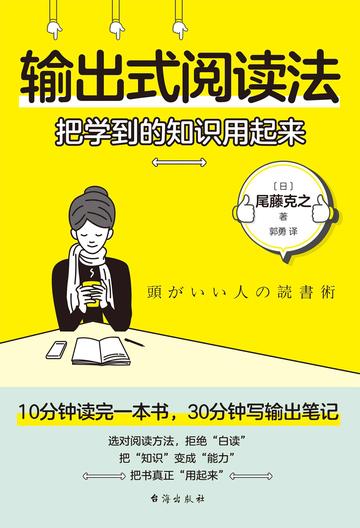
Topic: "Input & Output" loops over and over again Premise: The most important thing is to read happily at your own pace. Reading is to receive information, accept what should be received, and discard what should not be received. Benefits of output: First, sharing information is an important means of social communication. Second, by sharing information, it is easier to organize. Third, you can deepen your memory. Hope to achieve: spend 10 minutes to read a book, and then use 30 minutes to output. Recommended habits to develop: First, keep a reading diary. Second, start with easy books. Third, put the book where you can see it at a glance. The author's reading method: Read only one-third of each page, and skip any expressions or words you don't understand. Draw notes while reading, using a black pen for the first time and a red pen for the second time. The method is based on the "Pareto's Law" and it can be concluded that the important part of a book is only about 20%, and the main energy and time should be placed on these 20%. The remaining 80% can be discarded in a drastic way. The author recommends: When you first start reading, set the goal to understand 60% of the content in the book in 10 minutes, and then gradually increase the understanding to 80% and 100%. Set "output" as the purpose of reading. In order to output, you must first understand deeply. The author understands the content: First, read the table of contents and grasp the overall framework of the book. Most business and practical books will put the most critical content in the first chapter. If the first chapter is interesting, you can continue. Second, pay more attention to the explanations of pictures and brackets. Most of the footnotes are relatively unfamiliar and can be omitted so as not to disrupt the logic of reading. Third, from the perspective of reading, students learn to think about problems from multiple perspectives (the author's perspective), which allows them to understand the author's intentions faster and more deeply, and learn more from the book. Fourth, after reading a book, read your sketches and annotations again. Looking back at the places you focused on reading can further deepen your impressions and make them permanently imprinted in your mind. Key points for book selection: First, give priority to books that few people read (to avoid being unable to think independently). Second, clarify "what you want to gain from reading." Third, it is better to read first-hand books than second-hand books.
A very practical book. The methods in the book are very practical and are all applied. It is very helpful for people who want to read a lot of books but don't know how to read them and feel confused. The review I wrote is actually an exercise after reading this book. After reading the book, you must output it. It may be difficult at first, the words you write do not convey the meaning, and the logic is confusing. These are not important. What is important is that you have started, slowly persist, and set a specific time for yourself to read and finish writing the notes according to the book. Slowly, as the reading time increases and the reading knowledge continues to accumulate, you will become more and more different. I like it very much and highly recommend it to friends who like reading. If you have time to read this book, you will definitely gain something different.
I started reading with a skeptical attitude towards the author's idea of "reading a book in 10 minutes", but while reading and practicing, I only spent an hour on this 50,000-word book, which was much more efficient than before. Not only did I write notes, but I also remembered many key points. The author's method of "reading only the left third but not affecting the understanding of the full text" is very effective. The first step [input] has been completed, and then it is [output] time. I am going to spend 30 minutes writing articles and notes. I wish everyone can study effectively and learn knowledge.
The important thing about reading is to read with a purpose, so that you can grasp the core of the article and achieve your goal of improving yourself; with a clear goal, you can accurately know why you want to read that book, and you can read quickly and acquire knowledge.
Because it is a book that provides reading methods and strategies, it is suitable for quick reading and extracting main information, but the structure is not clear enough when reading. However, a logical and circular introduction is also good, making it easier to understand the reasons and significance of each approach and choice.
Do you suffer from anxiety because of reading? I have read a lot of books but cannot output them to the outside world. I read word by word silently. It is difficult to understand the content. I am distracted by reading. I have no systematic learning method and no time for reading. I have weak expression ability and forget easily. I still need to force myself to read. When you are anxious to obtain knowledge and methods from the reference book and become confused, you might as well try to learn how to use the reference book first. First, take a few minutes to read the preface table of contents (a map of a book to see if it is the journey you want to start and decide whether to go with the author). Don't let reading become a burden, enjoy reading!
Reading can turn other people's knowledge and experience into your own wealth. After mastering efficient reading methods, we can turn more people's knowledge and experience into our own wealth. In other words, the efficiency of accumulating spiritual wealth can be increased many times. This booklet is very detailed and the methods are compact and practical.
Learn and use, read efficiently📚 In today's era of information explosion, the problem we often face is that we read a lot of books but cannot remember the content. This book introduces an output reading method, which allows us to read books more efficiently and actually use the knowledge we have learned. Method overview: The output reading method emphasizes reading for the purpose of output. In the process of reading, constantly think, summarize and output. You can transform the content in the book into your own knowledge and experience by taking notes, writing reflections, and communicating with others. Reading skills: The speed reading method improves reading efficiency by grasping keywords and key sentences to quickly browse book content; Intensive reading method, in-depth analysis and understanding of important chapters and paragraphs; Thematic reading method involves reading multiple related books around a specific topic to broaden your knowledge. Mentality adjustment: Reading mentality and habits are very important. Maintain a proactive reading mentality; View reading as a means of self-improvement rather than a task; It is necessary to develop good reading habits, read regularly, and continuously accumulate knowledge. [Three core questions] 1. How to learn the output reading method? : Output reading method is a reading method that uses the learned knowledge, which can deepen the understanding and memory of knowledge and improve the reading effect; The practical method is to output knowledge by writing reviews, taking notes, and telling others. If you learn specific skills through books (for example, reading books on time management), you must use the methods in the books to plan your own schedule and improve work efficiency. 2. What are the key points of output reading? : When reading a book, you can record the key contents while reading, use a mind map to sort it out, and write down your own thoughts and feelings; The most important point is: it takes time and energy to output knowledge, even if you encounter problems such as not knowing how to output and low output quality in the process; (at the beginning, you will definitely not know which angle to start from, and you will feel unable to write) 3. Is it important to learn the output reading method? : The important thing is personal growth, and you must have a mentality of continuous growth. Output reading is just one method; For those who want to grow, mastering this method can improve their thinking ability, expression ability, learning ability, etc. Through continuous knowledge output, they can exercise their logical thinking and written expression skills, and become more confident and calm in work and life. Content Sharing 1. "The purpose of reading is not to read the book once, but to transform the content in the book into your own knowledge." 2. "Output reading can help us better understand and remember the content in the book." 3. "Outputting through writing reflections, taking notes, etc. Can deepen your understanding of books." 4. "Reading with the goal of telling others about the contents of the book will be more efficient." 5. "The output reading method allows us to use the knowledge we have learned and truly realize the value of knowledge."
I have not read this book word for word, but to learn the content of this book, the method of intensive reading and speed is to choose a book with purpose. If you want to enjoy the process of intensive reading, read it slowly. If it is some reference books, you can read it quickly. The methods are: one-third reading method. You can roughly understand the content of a book by just reading the left page. Don't say it silently. Memory curve, review in one day, review in a week, review in a month, read the first page today, read the first and second pages tomorrow, read the second and third pages the day after tomorrow, and then read the sixth and seventh pages a week later, and then read the first page. Review it again after a month and you will be able to remember the contents of the book. Come on, practice it Don't recite silently, read one third, output, and review
My biggest personal feeling after reading this book is that reading is not only about input, but also the necessity of output for reading. At the same time, how you read depends on your personal purpose. If you just want to read some business books and don't have much time, then you may need to read them quickly and master the knowledge. But if you just want to enjoy the process of reading, then you can choose intensive reading. But more importantly, reading is a process of enjoyment. If you think reading is painful, then you can give up the book you are reading, because not only will you lose your enthusiasm for reading, but it will also be detrimental to developing reading habits. At the same time, the author also mentioned some memory methods in the book, such as the Ebbinshaus curve, speed reading methods, such as the 28/20 rule and the third reading method, as well as how to choose the reading books you need and how to output them. In general, one of the biggest feelings this book gave me was that I suddenly realized that when I was reading before, I might have only cared about the input and not so much about the output process. This will benefit me a lot from my subsequent reading. In addition, I have also marked the key points in this book, so if I forget anything later, I will also go to the highlighted places to recall and deepen my understanding! This is the second time I have published a book review, as the author said at the end of the book, "Although this is just a small step in outputting after reading, it is also a big step in helping you to enrich your life!"
If it cannot be exported, it does not count as reading. Reading without output is equivalent to white reading. After you finish reading, you can output it, and then you have truly finished reading a book. Effective output will help you improve your understanding. Therefore, you might as well set "output" as the purpose of reading. Come on💪
Read "Output Reading Method" again Overall, the author Katsuyuki Oto talked about an important thing, input-output, to achieve true reading and self-growth. Let's solve the input problem first. How to read? Start reading the books you like, read them in the way you like, develop a reading habit, take notes conveniently, and write a book review after reading. Among them, reading skills are mentioned, such as Pareto's 80/20 law, which states that you only need to read 20% of the content of a book to grasp 80% of the essence; another example is the author Katsuyuki Oto's own one-third reading method to achieve rapid reading. Not to mention finding a large chunk of time and finding a comfortable environment, the ultimate goal is for readers to complete efficient output. Everyone knows that there are benefits to reading and sharing. I only say "Think before you act, and act before you think." Act first, then improve, and we will become better versions of ourselves. When I first read it, I felt that the author, Katsuyuki Oto, wrote it very well. Now that I read it again, I found that there are many overlaps in it, which is very cumbersome. But this is not the original work, just a translation. In other words, this is originally "second-hand knowledge", so it does not evaluate the original work. In addition to outputting, you can also strengthen your memory by reading related books again. Similar good ideas will be mentioned repeatedly by different authors. But no matter how you say it, what the author Katsuyuki Odo said makes sense. "Please enjoy reading."
I read this book in 38 minutes using the "one-third reading method" mentioned in the author's book. Since the title of the book is "Output Reading", the focus is also on this: Reading is to change your life. First, start with output, start by writing a three-line or even 100-word summary, and practice your writing summary skills. When writing, assume the role of the author and imagine what kind of readers the text is intended for, what it conveys to them, and how it is conveyed. After finishing writing, read it again the next day, read it aloud, read it to others, revise it and share it again... Repeat the process... I think of Franklin who trained his writing skills by throwing the article into a drawer for a while and then taking it out to revise... In short, it is necessary to output, and improve writing and expression during the output process.
This book is mainly about various methods, ideas and suggestions for reading. Personally, I think there are four most important points in summary: 1. The way you read depends entirely on your own preferences. Do whatever makes you feel comfortable. 2. If you want to improve the reading efficiency of business books, you can try the one-third or one-half reading method (introduced in the book). 3. Prioritize reading the table of contents, preface, first chapter, and ending to judge whether this book is helpful to you and whether it is worth investing your time. This method is very similar to Hua Luogeng's "guessing reading method". 4. While reading, you must also learn to "output" and be able to write or express the content in the book in your own way, so that you can better absorb the content of the book. Generally speaking, this book corrects the current reading situation of most people, and also provides an extension of reading suggestions. You can expect to spend 30 minutes to 2 hours reading it. If you feel you can, you can re-read it to deepen your impression.
One-third reading method, this is the biggest gain after reading this book. If the purpose of reading is to read a lot and grow quickly, the 'one-third' reading method feels like you can try it when reading certain types of books.
Keep reading and keep outputting; you must not only study and experience with your heart, and feel the author's sincere dedication, but also express your own feelings and insights with your heart. Improve through learning and improve through sharing; learn with the attitude of a primary school student, convert and absorb, insist on output and make knowledge a part of yourself.
This book gives answers to the confusion of reading, as well as solutions and methods. It is clearly expressed, comprehensive, easy to understand, and easy to operate. Input to output is the accumulation and release of reading, and it is also the best efficiency conversion. The purpose and result are clear and eye-catching, but all these require Persistence in practice and long-term transformation into a good habit will make you gain something from the time you put in. Otherwise, the lack of sense of gain will affect the experience of happiness, motivation will decrease, and you will spend three days fishing and two days drying the net, and slowly lose the meaning and goal of reading. Therefore, no matter how good your ideas and methods are, you need to make unremitting efforts and form "excellent habits" in order to achieve a better self! [[Like][laugh]
The first point: Practical, you can use it actively after reading and understanding it Second point: The language and writing are easy to understand, and the use of life examples is strong in argumentation. Point 3: Clearly explain how to read Point 4: Reading it makes you think🤔
I was shocked after reading it. I never thought that I could only read half of it. What's even more shocking is that reading half of it doesn't affect my understanding. I have always wanted to solve the problem of low reading efficiency caused by silent reading, but I have never been able to do it. Now I finally found a way to make up for it. So excited to read this book.
To be honest, I didn't like reading this type of book before, but I accidentally read this book and learned a third of the author's reading skills. After reading this book, the only keywords that remain in my mind are: input, output, happy reading, and one-third reading method. Regarding my own requirements, I hope to compile a similar reading note later.
Whether it is the choice of books, the purpose of reading, how to read, and how to remember, the author has a very deep understanding, and passed it on to me in a straightforward way, which benefited me a lot and made me really get started!
This three-minute reading method must be based on a lot of reading. The ancients said that reading a hundred times will make its meaning self-evident. The only skill in reading is to read a hundred times. The first thing is to encounter a good book, read it intensively, read it carefully, and read it repeatedly. The second thing is to read enough books and read various types of books. The so-called memory ability, understanding ability, and output ability are all things that come naturally. You can't get it quickly or by chance. Haste makes waste…
The author is a practicalist. We may have heard the views in the book, but rarely use them. The author gives a lot of simple and easy-to-use tips, which is very good. The author makes a summary for each article to facilitate finding the key points, reviewing and memorizing. Personal gain, enjoyment of reading is the most important.
This book mainly talks about input & output, as well as some writing tips that can be used for speed reading using the 1/3 reading method except for business and utility books. Just reading books without outputting cannot be internalized into your own knowledge. You can gradually improve the output quality by picking good words and sentences - organizing the entries - writing notes on readings - writing 100 words of book reviews - writing 1500 words of reflections.
Read more, the best way to grow is through output. The way to improve your cultivation is to read classics and textbooks. The output starts with reading notes. You can first write a 100-word review to summarize the ideological content of the book. With these 100 words, you can write a 1,000-1,500-word book review. When reading, you should read with a purpose, set a deadline, use the countdown method to read and take notes, try to finish reading in 10 minutes, write the book review in 30 minutes, and end the battle in one hour. The premise is to learn to read efficiently: for a business book, you can basically grasp 70% of the content in the book by reading the first and last chapter of the preface. If you only read the left third of a page, you will almost understand the entire page. This is the application of the 80/20 rule in reading. Ebbins Forgetting Curve: Reread this book every day, week, and month, and you will basically never forget this book. Visit more physical bookstores
I used to read a book in a month, but I still couldn't remember it word by word. After reading this book, I learned how to output and improve my efficiency. I believe that reading a book is beneficial.
Output reading method-Secretary ①Reading guidelines: For reading, the 80-20 rule also holds true. Only twenty percent of a book is important. So, I only read fifty percent of it, or even less is fine. When it comes to understanding, don't strive for 100% (Of course, I personally think that many books are full of nonsense, and there is no need to read them all. Note: Except for academic and professional books...) ②One-third method: Achieve speed reading by reading only one-third of a book. (The author says: It only takes ten minutes to read a book.) (Personal opinion: If a book can be read in ten minutes, then the book is indeed shallow, at least it is not a book on principles of economics, capital, or basic psychology...) 😑 ③Purpose reading The reason why I read this book was actually the title of this book that attracted me. At the same time, this is also my purpose. From this there is no need to mention reading with a purpose. (Stop it, I want to skip to the output part!) ④Select books Generally speaking, the proposer of the concept and the generator of knowledge are the people closest to the original meaning of the knowledge concept. It takes 10,000 hours to become an expert. This fallacy has been misinformed for nearly two decades and comes from "Outliers". The author referred to a paper. As this fallacy spread, the author of the paper finally couldn't stand it anymore, and later wrote a book called Deliberate Practice. The original intention is that becoming an expert requires an average of 10,000 hours of effective deliberate practice. As a result, when it comes to unusual talents, it becomes violent theory, and it only takes 10,000 hours to become an expert. (😅) ⑤How to filter news (To be precise, how to get the information you want accurately and quickly in today's unreliable news media context?) : To be thought about... No solution yet. ⑥Civilization is a story woven by all mankind.
If you want to remember: review that day, that week, that month What you output is your own Output allows you to find blank areas of understanding and review them for supplementary corrections. For horizontal books, 60 percent of the information is obtained by reading the left third When writing an article, you should have a clear purpose. The first three lines should summarize your central idea. After reading this book, I discovered that I could actually read a book in one hour. I thought I had never read a book, but unexpectedly, I had read seven books in it.
I read the book published in 2022 for the first time in 2025. The one-third reading method described in the book was very helpful to me! Because everything in school was about intensive reading, my reading speed was very slow. After graduation, I didn't want to read in detail anymore. It was very tiring, and I missed a lot of good books. The one-third reading method was the first speed reading method I learned from a book. I hope I can use this method to read more in the future. With speed reading and intensive reading, I can get twice the result with half the effort.