Stats
5.8Score
Synopsis
No synopsis yet.
We haven’t got an English blurb for this one. It appears once the source description has been translated.
We haven’t got an English blurb for this one. It appears once the source description has been translated.


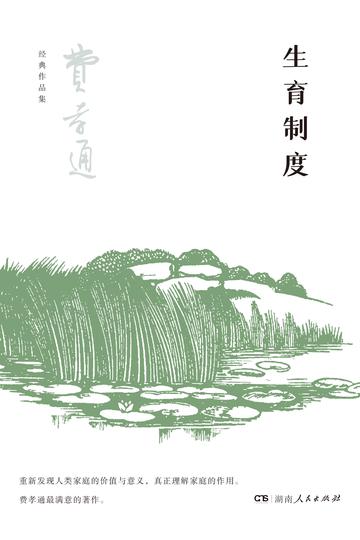
This book provides an in-depth exploration of the nature and impact of the reproductive system from a sociologist's perspective. Fei Lao's unique perspective gave me a deeper understanding of marriage and family. Concepts such as "social succession" in the book are very enlightening and reminded me of "Country China". This is not only an academic book, but also very helpful for us to think about family problems in real life. It is worth reading!
After reading some chapters, mainly the parts that I have doubts about society, the three chapters of dual-line education, single-line emphasis, and continuation, I feel that my positioning is clearer.
I read this book with the view of how to treat the non-marriageism of contemporary young people. However, what this book talks about is a bit too in-depth on this issue. This is not a bad thing. We are all under the same tide of the times. It will be beneficial for us to face the future if we clearly understand the underlying system of the ultra-stable society before us. The author attributes the fertility system to the maintenance of social structure, a social structure born out of the great division of labor in society, in which people adapt to it, and thus the fertility system was born. However, the division of labor in agricultural society will not change as a whole, so there will be an unchanging system. What we are facing now is a society with an ever-increasing division of labor. No one knows what the next pig will be. Powerful people can predict and prepare in advance, but the underlying social system that affects everyone can be understood and faced calmly by everyone. This is the meaning of this book. It is an account book of the past, reconciled by generations after generations.
I came here after watching "Hometown China" and especially supported Mr. Fei's views on the conflict between parents and children, so it played a big role in dealing with my parents' relationship.