How did Ximen Qing gain huge wealth and high-ranking official status step by step by struggling in shopping malls and official circles?
What is Pan Jinlian's life experience and love journey? How does she struggle to find a better future?
How do the servant girls of Ximen Mansion, the monks, Taoists, witches, and aunts in the society live?
What are some festival customs from the Ming Dynasty that are still used today? How much does it cost to eat, buy clothes, buy a house and buy land? What kind of rise and fall of the world are reflected in the daily meals described in "The Plum in the Golden Vase"?
…
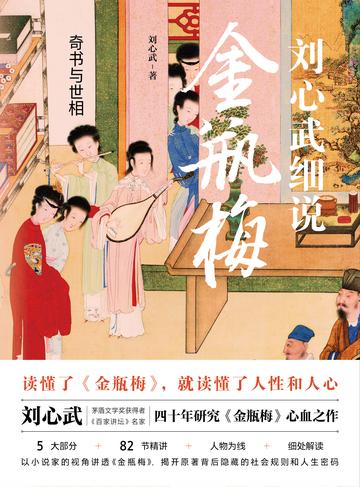
"Jin Ping Mei" is the first of the four "wonderful books" of the Ming Dynasty and one of the masterpieces of ancient Chinese literature. It is an important reference work for studying the social style of the middle and late Ming Dynasty in China. Its overseas influence even surpasses "A Dream of Red Mansions".
"Jin Ping Mei" can be described as a giant text version of "Along the River During the Qingming Festival". From the family life of the nouveau riche who were both businessmen and officials, to the various aspects of the world from the palace to the market, they are all described in detail, realistically and vividly.
This book is the culmination of Liu Xinwu's many years of research on "Jin Ping Mei". It is an alternative popular reading book for the public readers.
The book is divided into five parts, with a total of 82 chapters. It uses characters as clues to sort out the fate of the main members of Ximen Qing's house, including Ximen Qing and his wives and concubines Pan Jinlian, Li Ping'er, Wu Yueniang, etc., As well as the maids, male servants and other people in the Ximen family. The stories of officials, businessmen, prostitutes, monks, Taoists, witches, three aunts and six wives who had close contact with the Ximen family. At the same time, the artistic originality, writing style, textual gains and losses of "Jin Ping Mei" are commented, as well as its profound impact on "Dream of Red Mansions".
Through Liu Xinwu's popular and interesting narration, readers can fully understand the story of "Jin Ping Mei", as well as the various ways of living beings and human feelings hidden behind the story of the Ming Dynasty.
Reader comments
It is recommended to read the original work once or twice before reading this book, and then read the original work again, which will be of great benefit.
Very good, I'll buy it and take a look
The introduction is fascinating.
Not bad, you can give it a try
You can refer to it
Not bad
Not bad, not bad
Real and objective. Close to real life.
Teacher Liu Xinwu eloquently tells the story of Jin Ping Mei in a lively, interesting and easy-to-understand way, making people want to read it.
It is recommended to read the original work once or twice before reading this book, and then read the original work again, which will be of great benefit.
Very good, I'll buy it and take a look
The introduction is fascinating.
Not bad, you can give it a try
You can refer to it
Not bad Not bad, not bad
Real and objective. Close to real life.
Teacher Liu Xinwu eloquently tells the story of Jin Ping Mei in a lively, interesting and easy-to-understand way, making people want to read it.