Since Jiaqing succeeded to the throne, the Qing Empire's finances have been in deficit year after year, the bureaucracy has become increasingly corrupt, the people are in dire straits, and the White Lotus Sect uprising has gained momentum. Since then, the glory of the imperial system has gradually dimmed, the Qing Empire has turned from prosperity to decline, and China has gradually fallen behind the West. Until 1840, when the British army invaded the Pearl River Estuary, China began its modern history of poverty and weakness.
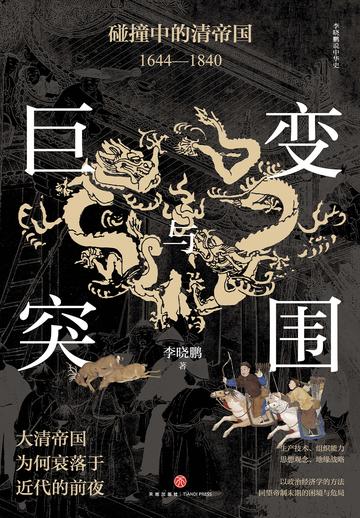
However, the crisis in modern times did not come suddenly, but had long been hidden under the rule of the Qing Empire. From the establishment of the Central Plains, to the overthrow of the Southern Ming Dynasty, to the governance of the Kangxi, Yongzheng, and Qianlong dynasties, the Qing court gradually stabilized the foundation of its rule and finally pushed the imperial system to its peak. Unexpectedly, the world situation had quietly changed dramatically. What challenges did the rule of the Qing Empire face? From the "prosperity of Kangxi, Yongzong and Qianlong" to "the decline of Jiadao", what governance methods were based on the prosperity of the Qing Empire, and why did it suddenly decline? On the eve of modern times, why did the Qing Empire lag behind the West? The author of this book, Li Xiaopeng, uses the analysis method of political economics to examine the final peak of the imperial era from the perspectives of production technology, organizational capabilities, ideological concepts, and geostrategy, and takes us through this turning point again.
Reader comments
The Qing Dynasty replaced the Ming Dynasty with a backward, barbaric but healthy civilization that replaced an advanced but decadent civilization.
The rulers of the Qing Dynasty were based on preventing the Han Dynasty.
Qianlong's reply to the letter rejecting Britain's relaxation of trade policy was definitely not careless or hot-headed. He regarded this reply as a serious political decision, and he thought clearly about the ins and outs. The so-called "Chinese products are all available" was just a grand excuse given by Qianlong to himself. The core reason for the rejection was to prevent the unruly British from colluding with the Han people and causing the Han people who had been brainwashed by the literary prison to have any inappropriate ideas and endanger the rule of the Qing Dynasty. Seclusion and literary inquisition are actually complementary policies that jointly achieve the goal of ruling the civilized and progressive majority with a barbaric and backward minority.
Comparing the records of China recorded by missionaries who arrived in China during the late Ming Dynasty with the records of the British mission who arrived in China during the Qianlong period, we can see the tremendous changes that China has undergone since the Ming and Qing dynasties: from a prosperous and civilized country that was the envy of Europeans, to a tragic and backward place.
Although the military success of the Qing Dynasty and the military success of the Han and Tang Dynasties look similar on the map, there are essential differences. During the Han and Tang dynasties, there were neither enemies nor trade on the sea. The south was the rear area and the north was the country's economic center. It actively defended to the north and opened up the Silk Road to the west, connecting the civilizations of the two rivers, which had great strategic value. During the Qing Dynasty, the Silk Road was interrupted, powerful enemies emerged overseas, trade routes had long been diverted to sea routes, and the south was the country's economic center. In the end, the Qing Dynasty did not pay attention to the development of sea power. This was a huge strategic mistake that caused the Chinese nation to miss major development opportunities in the era of great navigation and the industrial revolution.
The author's views and discussion are refreshing, especially the discussion on the impact of the Ding Revolution in the Ming and Qing Dynasties is very convincing. His view of the history of civilization is also unique and worth recommending.
Well written, great
The point of view is sharp, the content is detailed, and it is very convincing. It is worth saving.
This book gave me a deeper understanding of the history of the Qing Dynasty. The author Li Xiaopeng uses the analysis method of political economics to reveal the reasons why the Qing Empire turned from prosperity to decline. I like the portrayal of historical figures in the book, especially Qianlong. His governance made me think deeply. This book made me understand that the development of a country needs to keep pace with the times and continue to innovate in order to gain a foothold in the torrent of history.

The Qing Dynasty replaced the Ming Dynasty with a backward, barbaric but healthy civilization that replaced an advanced but decadent civilization. The rulers of the Qing Dynasty were based on preventing the Han Dynasty. Qianlong's reply to the letter rejecting Britain's relaxation of trade policy was definitely not careless or hot-headed. He regarded this reply as a serious political decision, and he thought clearly about the ins and outs. The so-called "Chinese products are all available" was just a grand excuse given by Qianlong to himself. The core reason for the rejection was to prevent the unruly British from colluding with the Han people and causing the Han people who had been brainwashed by the literary prison to have any inappropriate ideas and endanger the rule of the Qing Dynasty. Seclusion and literary inquisition are actually complementary policies that jointly achieve the goal of ruling the civilized and progressive majority with a barbaric and backward minority. Comparing the records of China recorded by missionaries who arrived in China during the late Ming Dynasty with the records of the British mission who arrived in China during the Qianlong period, we can see the tremendous changes that China has undergone since the Ming and Qing dynasties: from a prosperous and civilized country that was the envy of Europeans, to a tragic and backward place. Although the military success of the Qing Dynasty and the military success of the Han and Tang Dynasties look similar on the map, there are essential differences. During the Han and Tang dynasties, there were neither enemies nor trade on the sea. The south was the rear area and the north was the country's economic center. It actively defended to the north and opened up the Silk Road to the west, connecting the civilizations of the two rivers, which had great strategic value. During the Qing Dynasty, the Silk Road was interrupted, powerful enemies emerged overseas, trade routes had long been diverted to sea routes, and the south was the country's economic center. In the end, the Qing Dynasty did not pay attention to the development of sea power. This was a huge strategic mistake that caused the Chinese nation to miss major development opportunities in the era of great navigation and the industrial revolution.
The author's views and discussion are refreshing, especially the discussion on the impact of the Ding Revolution in the Ming and Qing Dynasties is very convincing. His view of the history of civilization is also unique and worth recommending.
Well written, great
The point of view is sharp, the content is detailed, and it is very convincing. It is worth saving.
This book gave me a deeper understanding of the history of the Qing Dynasty. The author Li Xiaopeng uses the analysis method of political economics to reveal the reasons why the Qing Empire turned from prosperity to decline. I like the portrayal of historical figures in the book, especially Qianlong. His governance made me think deeply. This book made me understand that the development of a country needs to keep pace with the times and continue to innovate in order to gain a foothold in the torrent of history.