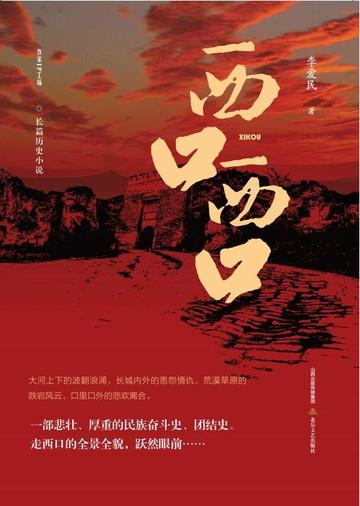
This book is a full-length historical novel. The time is limited to the mid-Qing Dynasty to the late Qing Dynasty. Through the tortuous journey of the three little dragons of He, Bao and Pian - Li Xiaoduo, Chen Jiafeng and Guo Wangsu - from the west entrance, it shows the hardships of the mainland Han people in seeking to survive outside the country, as well as the indomitable spirit of having the courage to fight against fate. At the same time, through the coexistence, unity and exchanges between the Han people and the Mongolian people, the nomadic culture and farming culture of each other penetrated and integrated with each other, promoting the long-term common progress of the Mongolian and Han peoples. The work has a grand structure, detailed historical materials, various characters, and complex stories. It artistically reproduces the major historical event of Walking to the West Exit. It is the first complete literary work on the theme of Walking to the West Exit in China.
Reader comments
The long historical novel "West Gate, West Gate" published in 2022 has more than 270,000 words and took 22 hours to read.
This book depicts a magnificent historical picture of human beings taking the West Exit through the story of Li Xiaoduo, Chen Jiafeng, and Guo Wangsu who took the West Exit from the three counties of "Hequ, Baode, and Pianguan" in northwest Shanxi from the mid-Qing Dynasty to the late Qing Dynasty. The article is full of foreshadowings and intricate clues, showing the hardships and hardships of the mainland Han people in seeking to survive outside the world, as well as the indomitable spirit of having the courage to fight against fate. At the same time, it records the coexistence and exchanges between the Han and Mongolian peoples, and the mutual penetration and integration of farming culture and nomadic culture, thus promoting the long-term common development and progress of the Mongolian and Han peoples.
Taking the West Gate is one of the most famous population migration events in modern Chinese history. During the more than 400 years of history from the mid-Ming Dynasty to the early Republic of China, countless people from Shanxi, Shaanxi, Hebei and other places left their hometowns and went to Inner Mongolia, where they either took jobs and suffered hardships, or fled for refuge. Some came back in the spring and autumn, while others took root and settled down. The most representative ones are Hequ, Baode and Pianguan counties in northwestern Shanxi and Shenmu, Fugu, Yulin, Jingbian and Dingbian counties in northern Shaanxi. This route through the west exit is undoubtedly the most representative golden route. The basic itinerary of this route is - people from northern Shaanxi exit directly from the ancient city of Fugu, while people from northern Shanxi have to cross the Yellow River, gather at the ancient city of Fugu, exit together with the fellow villagers from northern Shaanxi, cross the "black boundary", and then go west through wastelands, grasslands, bridges, and deserts. …
"West Exit, West Exit" shows us: with what tenacious perseverance our ancestors once challenged the limits of human existence and life, and what kind of brilliance they created. This spirit of resistance that the author eulogizes and does not succumb to fate is the soul of this novel. This spirit of struggle is also a huge driving force for a nation to become prosperous and strong!
Read a book, learn about a thrilling history, and feel the vicissitudes and changes of the years!
I am particularly interested in novels about the real life of the people in the late Qing Dynasty and the Republic of China, which is equivalent to the life of my grandparents. I often think about what it would be like to be born in that era. I guess I was also a farmhand who was busy with farm work during the day and went to bed early at night.
Very, very good about the struggle history of Shanxi merchants! From this book, I see what our society is most in need of right now: integrity, righteousness, affection, intention, being with us in life and death, and never leaving! The people in the book live a difficult life, a meaningful life, a life of flesh and blood, and a life of iron and steel! Looking at our current era, most people live like walking zombies, which feels very sad!
The details are vivid and the knowledge of human geography is very familiar.
It truly shows the miserable situation of the people at the bottom of Zuoxikou.
I haven't seen such good work in a long time! [Like][Like][Like]
Not bad, very contemporary.
Good, good, good looking
It looks good. Will it be made into a TV series "Walking to the West Exit"?
This book reflects the folk customs and sentiments of the Yellow River Basin and the life experience of the Mongolian people in the grassland, who cherish each other for life, and can be united and integrated at the same time.
The storyline is vivid and touching
Fascinating read, simple language
The story is truly touching and worth reading.
Very nice novel.
A long history and a deep understanding of customs and customs
I have read the whole book, thank you to the author for your hard work🙏🙏
The book is well written and the content is true. It describes the real life of Shanxi and Shaanxi people in that era. It makes people feel like they are there.


The long historical novel "West Gate, West Gate" published in 2022 has more than 270,000 words and took 22 hours to read. This book depicts a magnificent historical picture of human beings taking the West Exit through the story of Li Xiaoduo, Chen Jiafeng, and Guo Wangsu who took the West Exit from the three counties of "Hequ, Baode, and Pianguan" in northwest Shanxi from the mid-Qing Dynasty to the late Qing Dynasty. The article is full of foreshadowings and intricate clues, showing the hardships and hardships of the mainland Han people in seeking to survive outside the world, as well as the indomitable spirit of having the courage to fight against fate. At the same time, it records the coexistence and exchanges between the Han and Mongolian peoples, and the mutual penetration and integration of farming culture and nomadic culture, thus promoting the long-term common development and progress of the Mongolian and Han peoples. Taking the West Gate is one of the most famous population migration events in modern Chinese history. During the more than 400 years of history from the mid-Ming Dynasty to the early Republic of China, countless people from Shanxi, Shaanxi, Hebei and other places left their hometowns and went to Inner Mongolia, where they either took jobs and suffered hardships, or fled for refuge. Some came back in the spring and autumn, while others took root and settled down. The most representative ones are Hequ, Baode and Pianguan counties in northwestern Shanxi and Shenmu, Fugu, Yulin, Jingbian and Dingbian counties in northern Shaanxi. This route through the west exit is undoubtedly the most representative golden route. The basic itinerary of this route is - people from northern Shaanxi exit directly from the ancient city of Fugu, while people from northern Shanxi have to cross the Yellow River, gather at the ancient city of Fugu, exit together with the fellow villagers from northern Shaanxi, cross the "black boundary", and then go west through wastelands, grasslands, bridges, and deserts. … "West Exit, West Exit" shows us: with what tenacious perseverance our ancestors once challenged the limits of human existence and life, and what kind of brilliance they created. This spirit of resistance that the author eulogizes and does not succumb to fate is the soul of this novel. This spirit of struggle is also a huge driving force for a nation to become prosperous and strong! Read a book, learn about a thrilling history, and feel the vicissitudes and changes of the years!
I am particularly interested in novels about the real life of the people in the late Qing Dynasty and the Republic of China, which is equivalent to the life of my grandparents. I often think about what it would be like to be born in that era. I guess I was also a farmhand who was busy with farm work during the day and went to bed early at night.
Very, very good about the struggle history of Shanxi merchants! From this book, I see what our society is most in need of right now: integrity, righteousness, affection, intention, being with us in life and death, and never leaving! The people in the book live a difficult life, a meaningful life, a life of flesh and blood, and a life of iron and steel! Looking at our current era, most people live like walking zombies, which feels very sad!
The details are vivid and the knowledge of human geography is very familiar.
It truly shows the miserable situation of the people at the bottom of Zuoxikou.
I haven't seen such good work in a long time! [Like][Like][Like]
Not bad, very contemporary.
Good, good, good looking
It looks good. Will it be made into a TV series "Walking to the West Exit"?
This book reflects the folk customs and sentiments of the Yellow River Basin and the life experience of the Mongolian people in the grassland, who cherish each other for life, and can be united and integrated at the same time.
The storyline is vivid and touching
Fascinating read, simple language
The story is truly touching and worth reading.
Very nice novel.
A long history and a deep understanding of customs and customs
I have read the whole book, thank you to the author for your hard work🙏🙏
The book is well written and the content is true. It describes the real life of Shanxi and Shaanxi people in that era. It makes people feel like they are there.