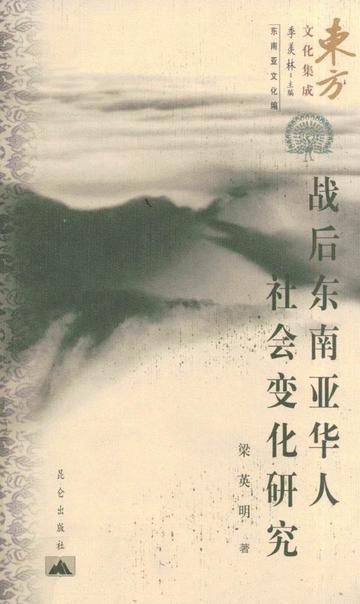
Southeast Asia is an area where overseas Chinese live together. After the end of World War II, the colonies in Southeast Asia became independent one after another, and the vast majority of the original overseas Chinese have also adopted local nationalities and become Chinese citizens of various countries. The transformation of overseas Chinese society into a Chinese society has brought about major changes in the political, economic and cultural life of Chinese people in various countries. This book starts from the historical process of the transformation of overseas Chinese in Southeast Asia into Chinese after the war, and studies the changes in the political status of Chinese, the growth of Chinese economic power, the rise and fall of Chinese education, the evolution of Chinese associations, the development of Chinese newspapers and periodicals, the process of Chinese integration into local society and the problems they face, as well as the changes and characteristics of the relationship between Chinese society and the country of origin, etc. It provides a more in-depth analysis of the reasons, processes and results of the transformation of overseas Chinese society in Southeast Asia into Chinese society and its profound impact on the development of Chinese society. Liang Yingming (1931), a returned overseas Chinese from Indonesia, was born in Xinhui, Guangdong. He returned to China in June 1955 and became a professor. Since 1991, he has served as a professor at the Institute of Oriental and African Studies at Peking University, deputy director of the Center for Overseas Chinese Studies at Peking University, a member of the Asia-Pacific Research Center at Peking University, and secretary-general of the Board of Directors of the Gong Shichu Foundation of Peking University. He was elected as the executive director of the Overseas Chinese Historical Society of China. After graduating from Ba Cheng Middle School in Jakarta in 1950, he stayed at the school as a literature and history teacher for 5 years.